Dr. Martin Luther continues his commentary on Deuteronomy with this brief introduction in chapter 18 – translated by Richard R. Caemmerer in Luther´s Works Volume 9, pages 174ff:
All these—since they are human inventions without the Word of God—must be condemned among the people of God, whose life and works must be governed by the sure Word of God.
He closes off his introduction with the careful and yet insightful comments on the various sages, soothsayers, guessers, cunning enchanters and other pagan abominations:
The third and last addition to all that has been said concerning the outward worship of God is the command to beware of the abominations of the Gentiles, which he lists here in order. He enumerates nine, all of which conflicted with the true and pure worship of God instituted through His Word. Even if we cannot vouch for the Hebrew with certainty throughout, we distinguish these with plausible conjectures, somewhat in this way: The first, which Moses calls קֹסְמִים, we call “seers” or “soothsayers”; it is taken in a good sense only rarely, just as the name “prophet” is sometimes taken in an evil sense. Seers, therefore, are those who prophesy the future or interpret Scriptures and the words of God, but do so according to their own understanding. The second are the מְעוֹנְנִים, who, as the Jews and almost all others agree, are observers of days. The third, מְנַחֲשִׁים, we call augurs, although they are so termed because they watch birds. Nevertheless, in Num. 23:23 this word signifies observing other things too: “There is no augury in Jacob, etc.”; and Gen. 44:5: “Is it by this that my master divines?” The fourth, מְכַשְׁפִים, we think are really sorcerers and wizards (Ex. 22:18): “You shall not permit a sorceress to live.” The fifith are חוֹבְרִים, of whom the psalm attests that they are soothsayers, when it says (58:5): “It does not hear the voice of charmers or of the cunning enchanter.” The sixth, אוֹבוֹת, is the python, the spirit spoken of in Acts 16:16, which reveals things that are secret and concealed; in the vernacular we speak of “wise men and women.” The seventh, יִדְעֹנִים, are fortunetellers, interpreters of signs, or guessers. The eighth, those who inquire of the dead, consult nocturnal spirits and ghosts, which they think are sometimes the souls of the deceased. The ninth, whom Moses puts in first place, purify their sons or daughters through fire; that is, they give of their progeny to the idol Moloch, as he says elsewhere (Lev. 18:21). All these—since they are human inventions without the Word of God—must be condemned among the people of God, whose life and works must be governed by the sure Word of God.
St. Paul was probably the missionary par excellence. Winfred Boniface did quite a magnificent job of missionizing the Germans. Hudson Taylor in China could be quite relevant as a missionary to the Far East too. However all three did not go through a Seminary training like we know it today. Paul learnt the trade at the feet of a Jewish rabbi. Boniface was a Roman Catholic priest and Hudson Taylor trained as a physician before striking out East. Yet all three were doubtless suitable missionaries. How does Seminary education in South Africa include missiological formation?
Missionaries are different. There is not a standard mould formatting all subsequent witnesses of Christ. Therefore their formation is also risky business. Optimum outcomes are not guaranteed. A number of those, who were trained by best practices during the last century and who by human standards would have past every test with flying colours still got the disqualifying message from their hosts: “Missionary – go home!” That moratorium cameafter the century had kicked off with such exuberant optimism: “World Evangelisation in this generation”. Things in mission seemed so doable, practical and manageable that relatively sensible, sober and sophisticated missionaries and their societies and institutions felt it’s the time to just get on with it and finish the job. The anniversary Edinburgh 2010 will remind us of this unrealistic confidence. That and the unfinished business of Christian missions especially cross-culturally to the still mind boggling number of literally billions of so-called “unreached” people, who yet have had no contact with the gospel of Jesus Christ in Muslim countries, India and China should leave no doubt in us about the urgency of missions today. That adds to the relevance of the given topic, how to incorporate missiological formation into Seminary education?
In hindsight it seems to have been a lot easier years ago to give a definite answer to this question, but the experience in Missions over the past decades warn us that our attempts today might be just as utopian as those proposed in Edinburgh. Successful missiological formation remains an open question perhaps even more so than before. The Lord of the Church and all the world opens and closes doors as he desires. There are times conducive to missions and others in which evangelisation seems impossible. Our Lord prophesied that there would be times coming, which would be night preventing any work. The Holy Spirit calls, saves and keeps people by faith in Jesus Christ as he wishes by deploying his effective instruments of grace, wherever it pleases him. God’s timing and placement in history determine missionary outcomes. We are not masters of our destiny never mind that of Seminarians, Churches or the universe. The Church and its evangelistic mission remain part of the triune God’s mission and thus subject to the clause of St. James: If the Lord wills, we will do this or that, here or there. The triune God alone determines growth, success, failure or retreat – even in missions. However it is he, who has all authority in heaven and on earth, who said: “Fear not, but rather go and make disciples of all nations, baptizing and teaching them.” Under his guidance and motivated by his promise the Church faithfully continues with calling, training, installing, ordaining and sending men to do the work Christ has mandated it to keep on doing until he comes. Like the Father sent him, he sent us. In his authority we do his work and put all our faith and hope in him. Knowing Him and his pledge, we are assured that this endeavour in missions is not in vain, but rather accomplish all he wants to have done and accomplished when- and wherever he stipulates.
The words of our Lord: “Peace be with you. As the Father has sent me, even so I am sending you… Receive the Holy Spirit. If you forgive the sins of any, they are forgiven them; if you withhold forgiveness from any, it is withheld,” which are part of the confessional services of Christian congregations throughout the world, demonstrate how the very inner workings of the Church are determined by its mission to all people. Therefore even when the Church seems so busy with itself as in a confessional service, it is being missionary. The universality of this good news is the reason for its global reach crossing all borders of language, culture, tradition, race, politics, ideology and economics be that in New York or in Timbuktu or Hong Kong. The missionary dimension of the gospel pushes the Church continually outward and beyond its own limitations and borders. In Löhe’s words: “For mission is nothing but the one church of God in its movement, the actualization of the one universal, catholic church.” This is because Church and mission are two sides of the same coin. Even St. Paul the missionary cannot be understood without him being a theologian and today we realize that Martin Luther the reformer was also very missiological and a influential missionary – even though he did not get far beyond Wittenberg, Germany.
So foundation and goal of missions are not in question, but how to do this best is. The strategy varies, because times and places, people and situations vary and in this it is also opportune to look at how missiological formation is optimally carried out during Seminary education.
Africa – like everywhere else – is part of the global village. You have Africans from all over the continent living in a rural village like Hermannsburg never mind the rest of Europe. Training missionaries at any Seminary today does not have the luxury of aiming all its strategies at just one homogenous people. Only a few decades ago Seminarians were more or less uniform in their worldview, whereas today’s are as pluralistic as the fellow-citizens of the world. Pluralistic backgrounds, traditions, languages, cultures, qualifications, skills, values and frames of reference characterise the setup of every Seminary class. Just consider that South Africa has eleven official languages, Uganda has 43 living languages and Nigeria even 514. Compared with that China has “only” 292. Although Mission is a global affair on six continents it is also true that most countries today are a world in one country. For a long time mission no longer is a one-way traffic [if it ever was!], but rather a dialogue, networking and intricate merging of horizons of giving and taking, sharing one world, living together in one world, flexible, on the move and sharing constantly changing paradigms with ever changing citizens of the earth. At a Seminary like ours the teachers don’t know the context of their pupils back home. We staff members are not the experts about the mission field the students are coming from and going to. The students have far more first-hand experience, know-how and expertise about this. So also in this process of Seminary education the teachers are not the have’s, and the students the have-nots. Rather they are partners in an ongoing educational and learning process deliberating about how best to carry out our Christian calling into God’s mission wherever he sends us and in whatever service and ministry he wants us. Obviously Seminary is not only a one-to-one situation between teacher and student [or even worse computer and student], but rather a network of relations between dozens of students from very different walks of life, countries, tribes, age groups plus a wide range of teachers from various continents. Future pastors and missionaries in a global village need this exposure and what a blessing is it not, that again more than twenty teachers challenged our students to grow in their perspective of God’s works, miracles and wonders throughout the world and through many ages. Living together at close quarters in Seminary helps Seminarians to understand other Christians, traditions and cultures first-hand – and everything in the light of God’s word which dominates the Seminary atmosphere and permits optimal spiritual growth and missional formation, because they are thereby encouraged to look at foreign ways, words and worlds and learn to understand them from a theological perspective.
This is vital Seminary education and students are thereby already formed missiologically. Luther writes that Christians know where they are coming from and where they are going and that they therefore have all reason to not give up, but rather keep the faith and be joyful, because their Lord is coming for sure! This is another witness Christians – and especially Seminarians on the way out into the world – need to internalize and which they owe to the world in a confident message of hope and comfort. Even if we Christians suffer like the rest of the world or even worse, we have a sure hope in God’s future and a peace, that passes all understanding – and everybody is welcome to share this hope and to receive it as a free gift from Christ our Saviour. Missiological formation at Seminary reckons with this migratory character of Christians under the cross and in the suffering of this world and especially of missionaries consciously crossing the borders of disbelief. However it also has to take into account the uncertainty exerted by constant changes on humanity and the compensation traditional religions, rational ideologies and other human schemes offer without giving real and sustainable outcomes. This necessitates that Seminarians seriously take into consideration the ways of this world in thought, word and deed. They need to sympathize with the people in this world without getting lost to the world. The diversity and complexity of our existence in this world should prevent any reader from expecting to many straightforward, simple recipes for missiological formation’s inclusion into the Seminary education even in a small Seminary like ours in Tshwane [Pretoria, South Africa]. We don’t have a list of thirty “Do-Missions-yourself” steps with a give-back guarantee if this methodology doesn’t work out. We are not a technical college, which teaches missionary engineering (cf. Elert). Rather we are a Lutheran Seminary, which tries to give a good account of what Lutherans teach about God and the world and to live accordingly every day of our lives. It is an explicit aim of our Seminary to have the Seminarians get to know this over a period of four years before they are deployed again into many different countries on this continent in the hope that they will then demonstrate this Lutheran way of godly life and teaching to people, who are not familiar with it yet inviting them also to be part of this new life with Christ.
Churches have used their Seminaries to equip pastors optimally for the challenges facing the church in its context. The current slogan from theologians at the University of South Africa to have their students grow strong roots into the foundations of the Christian faith and to have them simultaneously grow strong wings to fly into the promised future of the triune God illustrates the idea. Seminaries teach what the Church has been teaching on account of Christ’s commission [Mt.28, 20a] all along in the traditional disciplines of biblical, historic, dogmatic and practical theology. These areas belong to Seminaries core business whether they taught in Enhlanhleni [Umsinga], which is the poorest part of South Africa or in its capital Pretoria. The direction from rural areas into urban centres dominates in Lutheran Churches in Southern Africa as well as their tendency to raise the academic standard consistently – starting off with rudimentary schooling, tertiary education and finally homing in on university level graduation and accreditation. Another common denominator is the change from the vernacular to English as medium of instruction. That brings a number of other changes with it too: Literature, books, library, World-wide-web; international studies and teacher/student exchange come to mind. I am confident that these changes will help Seminarians to not only be “bush-wise” in rural areas like Umsinga, Marang or even Matongo or but rather street-wise in metropolitan areas like Tshwane, Lagos, Nairobi and/or Khartoum. This enables the students to join University [Sport, Culture, Academics and Politics], to be at home in the public forum [Movies, Restaurants, Banks, Museums, Parks, Zoo, Medical Centres, Media, Embassies, Libraries and State Theatre] and comfortable moving around on the modern highways on the ground, in the air and across the world-wide-web. As theologians the contact with other churches [Greek Orthodox, Roman Catholic, Anglican, Baptist, Dutch Reformed and all sorts of independent sects and groupings] grants exposure to the wide range of denominations out there. Added to that are other religions and ideologies [Hindu, Muslim, Buddhist, Christian Science, Traditional African Religion], who are all occupying space in the modern metropolitan areas. Although this is not so much part of the formalized training it does prepare them for the world we are living in. Experiencing this first-hand with fellow-Seminarians gives the opportunity for critical reflection, discussion and a responsible integration into an accountable frame of reference.
During their Seminary education the students are encouraged to do some advanced studies in missiological and pastoral theology accompanied by practicals and internships in various congregations and institutions of the Church. The aim is to expose our students to parts of the Lutheran Church, which they are not familiar with. For example our Seminarians have visited the following congregations and institutions during their studies.
St. Peters in Fairlands [German/English congregation of the Free Evangelical Lutheran Synod in South Africa, which serves a modern suburb of Johannesburg]
St. Thomas in Phoenix [A English congregation of the Lutheran Church in Southern Africa serving predominantly people from an Indian township in Durban on the Indian Ocean]
Ohlangeni Lutheran Church [A congregation with seven different parishes served by a team of a German missionary and a Zulu pastor in a rural area of KwaZulu having a unique men’s ministry including a cattle improvement project and a debating forum]
Themba High School [A high school serving Zulu children in Mpumalanga]
Mafeking Lutheran Church [A village/rural congregation serving SeTswana people]
Serowe Lutheran Church [A village congregation serving SeTswana and Basarwa people and having an orphanage, HIV/Aid’s ministry and also active outreach ministry to people living on the border of the Kalahari desert]
Francistown Lutheran Church [A urban congregation with a ministry in a traditional Tswana village and also a growing refugee ministry]
These missionary experiences broaden the perspective of our students. They hear Professors from abroad, missionaries from the continent and local experts teach history, theology and practice of missions. They are exposed to conferences of the Africa Institute for missions [Hammanskraal]; courses of the Inner City Mission [Tshwane] and post-graduate studies in Missions at the University of Pretoria. However “missiological formation” is also included in regular Seminary education. Let me explain: Wherever the Christian faith is professed there this confession airs its intrinsic missionary perspective, which is given by the universality of the gospel of the triune God, who is the only true God over all. Therefore all members of the Christian faith baptized into the holy, Christian and apostolic Church are thereby integrated into the apostolic mission of the Church. Just as all other aspects of Christian nature and character need to be explained, elaborated and taught to the Christian congregation and especially the catechumens and new converts, so also this missiological and/or apostolic dimension of the Church, congregations and Christians needs to be communicated, practiced and filled with everyday life. This happens and most of our students are aware of this when they arrive at Seminary. They now want to deepen their insights and broaden their perspectives and hone their expertise.
In the threefold setup of reading, meditation and temptation Seminarians are to get to know the origin and foundation of the Church and the Christian faith, its life and teaching throughout history and how it lives and teaches in the present age and world.
Therefore these theological studies are only the first aspect of the Seminary education even if it remains a substantial and vital one. Very important are also the other aspects running simultaneously in Seminary, which are not so readily formulated and a lot less examinable and controllable in their outcomes than these theoretical basics in theological theory. They are aptly summarized by the further steps of meditation and temptation or if you will, the pastoral and missiological formation of students. See by learning theology, the student is confronted with the ecclesial roots of the Christian faith, which is more or less his own too. This the student reads and hears and starts to comprehend as he begins to meditate, think, pray and chew on them. By not having to work for housing, clothing or food he is free to dedicate his time, energy and compassion to think on these higher, theological and eternal things of God’s reign and mission. Seminary provides the necessary space and time for this reading of the Christian matrix and also for its meditation. Again and again, day in day out the Seminarian is literally bombarded with God’s word and Luther’s teaching. From morning to evening he is subject to the flood of theology pouring over him – in class, in chapel and in his own office or residence. The Seminary is the hot-house of theology!
Because of this optimal environment Seminary easily becomes an ideal setting and Seminarians often have difficulty moving out and on. However it needs to be stressed again, that Seminary is just a thoroughfare even if is most times seems like quite a peaceful one. Just like Jesus admonished St. Peter on the Mount of Transfiguration to desist from building houses and settling down up there, but rather to descend once again, so also Seminarians have to learn that theirs is not to stay at Seminary, but rather to move out into the mission field – even if it is the more difficult and challenging route. It is only a fraction of graduates, who come to return to Seminary as teachers. The majority is utilized outside of Seminary in the world. Therefore Seminary does not specialize predominantly in training future professors, but focuses rather on the education and formation of future pastors, evangelists and missionaries.
Obviously the temptation does not stay outside the Seminary gates either. This temptation of the theologian or student of theology is brought about by the confrontation with the world. Here on this cutting edge the theologian is tempted by disbelief, false belief, doubt, ignorance, despair and other great shame and vice. It’s not only the news from home, the media, the colleagues or the visitors who bring this along to the Seminary. No, these things come from inside the Seminary and its Seminarians. The theologian has no other way out than to fall back on to the study/reading of just the external Words taught in and by the Christian Church throughout the Ages. It is like the constant regression of any Christian to his initial baptism into the Christian life, which characterizes the daily life of every faithful necessitated by the abiding fallenness of even the most justified saints. Especially the theological learner, who is breathing excess of theology continues to chew on temptation simultaneously and therefore needs to regress persistently to the font of all wisdom, grace, peace and truth – the Word of God. Wherever a student is engaged in this truly existential hermeneutical circle and whenever this fusion of horizons takes place because he does not prematurely shy away or flee this divine mill, winepress and saintly formation, that’s where the theologians life and the practice of theology becomes the all encompassing reality of Christian existence. Here his own ideological and philosophical conceptions are transformed by the workings of the Holy Spirit into the realities of Christian faith. Obviously this can happen anytime and anywhere. It has been the conviction of the Church that Seminary is a conducive environment for just this theological experience, which forms the true theologian. Just like the old church fathers in the desert the Seminary does not offer distraction from this vital confrontation of God’s word and worldly temptation in our own soul, mind and heart, but rather allows and encourages Seminarians to face up this continual struggle under the cross head-on – depending not so much on our own strength or ability, but rather with the never-ending plea: Kyrie eleison, Christe eleison and yet again Kyrie eleison! And it is a Seminary – like in the rest of the Church – where the Seminarians may hear again and again the brotherly encouragement of the father confessor: God be merciful to you and strengthen your faith!
The idea is that the gifted people, who come to Seminary have been recommended by their congregations/churches or do so due to an inner calling or persuasion. They do not come to Seminary because they want to become something for which they are not suited. On the contrary, they have the potential and want this aptitude to be developed, expanded and fine-tuned. Seminary – like primary and high school, like vicarage and other ecclesial courses and training programs – is a stepping stone on the way. It is neither the beginning or source nor the end or goal of the theological existence.
Seminary as suggested above is like the seminal hothouse, where seedlings are planted and grown under optimal circumstances for growth because it grants protection from adverse conditions outside and gives everything required for strong development and progress. However Seminary is not a cloister giving permanent shelter, but on grants a temporary condition for Seminarians before they necessarily return into the real world outside, where strong winds blow into your face and the heat is turned above or below far beyond moderate comfort levels.
In the time at Seminary Seminarians are encouraged to experience and practice so called “real life situations” in an experimental or controlled environment – like learning to walk with a walking aid. This does not only hold true for the worship situations like preaching, teaching and leading the liturgy, but also for Bible studies and discussions, interaction amongst brothers, friends, fellow students, teachers, guests, visitors and strangers. They witness, partake, suffer and thus experience these things besides learning-by-doing themselves. Living with fellow Seminarians on close quarters for at least four years makes for a very intensive experience – hopefully not too depressing. Just like nobody can fool his wife, so it is very difficult to fool a fellow-Seminarian over that course of time and at such short distance. That makes it more and more difficult to live in illusion about ourselves. It prevents self-righteousness, because we learn to accept the judgment of others over us – even if it only happens hard way. We get to know others too – the good, the bad and the ugly! You can take my word for that. That could prevent us from despairing about ourselves too, because brothers in the faith support us and accept us, because they forgive us as Christ has forgiven us – even though they know me and what I am, the worst of despicable sinners! Seminary thus becomes a school in the Christian creed in the justification of sinners by faith alone!
It is also a school to differentiate the two kingdoms and reigns of Christ. At Seminary dishes need to be washed, leaves need to be raked together and disposed of, dust needs to be vacuumed and blocked toilets need to be freed. Test have to be written, assignments need to be researched, papers need to be finished. All that does not happen by faith alone, but through dirty works. Blessed are those Seminarians, who learn in time to get their hands dirty and recognise that their calling into the office of the ministry is one of pastoral service. It does not come as a surprise then, that our Lord preferably used the example of shepherd, gardener and fisherman to describe his calling and that of his disciples. All of them get their hands pretty much fouled up – calloused, stained, cut, bruised and tarnished. However we all know how those very hands – by they of our mother or our father – can be very soothing, comforting and healing for that matter. Another point is that these people shepherds, gardeners and fishermen often [not always] work in teams and our Lord sent out his disciples in twos. I believe that we should be very careful not to be too quick to leave any pastor, evangelist or missionary to his own devices, but rather support him with a team. This is good tradition in the Church universal and even in the local one too!
At the Lutheran Theological Seminary in Tshwane we try to train Lutheran pastors, missionaries and evangelists for Africa. No doubt, quite a mouthful, but that’s what this institution has been doing more or less adequately for the past century or so. How do we want to do justice to the expectations of people, Christians, congregations and Churches or institutions utilizing pastors in congregations, schools, military, prisons, hospitals, care-centres, orphanages across Africa? And even more radically, but most importantly, what does the triune God expect of a Seminary like ours?
David Bosch has pointed out, how important it is to read the Bible from a missiological perspective. In the mean-time even Church history is being looked at from this angle. At CS St. Louis they have at least one specialist for missions in every traditional discipline. I believe there is a lot in favour to take up this cue and to practice our entire theology along this line of thought in South Africa. Just as CTS Ft.Wayne offers a PhD in Missions I believe the Lutheran Church in Africa needs to pursue this too. We need serious missiological studies from a Lutheran perspective to research the history, practice and theology of missions in the African context. That will help to strategize the way forward until finally all planning and missionizing will come to an end, when the Lord comes again to make manifest, what he has fulfilled in glory.
At last the triune God is manifest as focal point of the universe. The Father has enthroned the lamb Jesus Christ amidst all the heavens and all the powers therein for everyone to behold. The cherubim and seraphim, the glorious company of the apostles plus the goodly fellowship of the prophets, the noble army of martyrs and that victorious multitude, which nobody can number from all nations, tribes, people and languages assembled to proclaim his praises: “He is the king of glory, the everlasting Son of the Father”, who has finally come to be our judge. He judges heaven and earth, the living and the dead without favour and bias solely on the grounds of his everlasting will revealed to us by the Holy Spirit active in and through faithful pastors and evangelists, teachers and preachers, congregations and churches throughout the ages in word and deed, through hymns, creeds and sermons of all kinds, but also through his most venerable sacraments as the “verbum visibile” to taste and to see, how friendly their gracious Lord is! It is they who taught us everything he entrusted to his disciples throughout the ages. Granting a safe haven to the Church as God’s people on their sojourn through time and space on their way home, while they are continuously calling, inviting and welcoming all those others by the wayside with the good tiding: Christ came into this world to save sinners. So come, there is still room for you too!
The list of previous scholars in the Old Latin School is long. You find famous people amongst them: Paul Luther, personal Physician of the Saxon elector; Wilhelm Weber, the Physicist and inventor of the electro-magnetic telegraph (forerunner of the iPhone) and Johann G. Galle, the astronomer and discoverer of the planet Neptune. The latter is one of three now decorating the outside of the Old Latin School together with Hans Sachs and Friedrich Brandt.
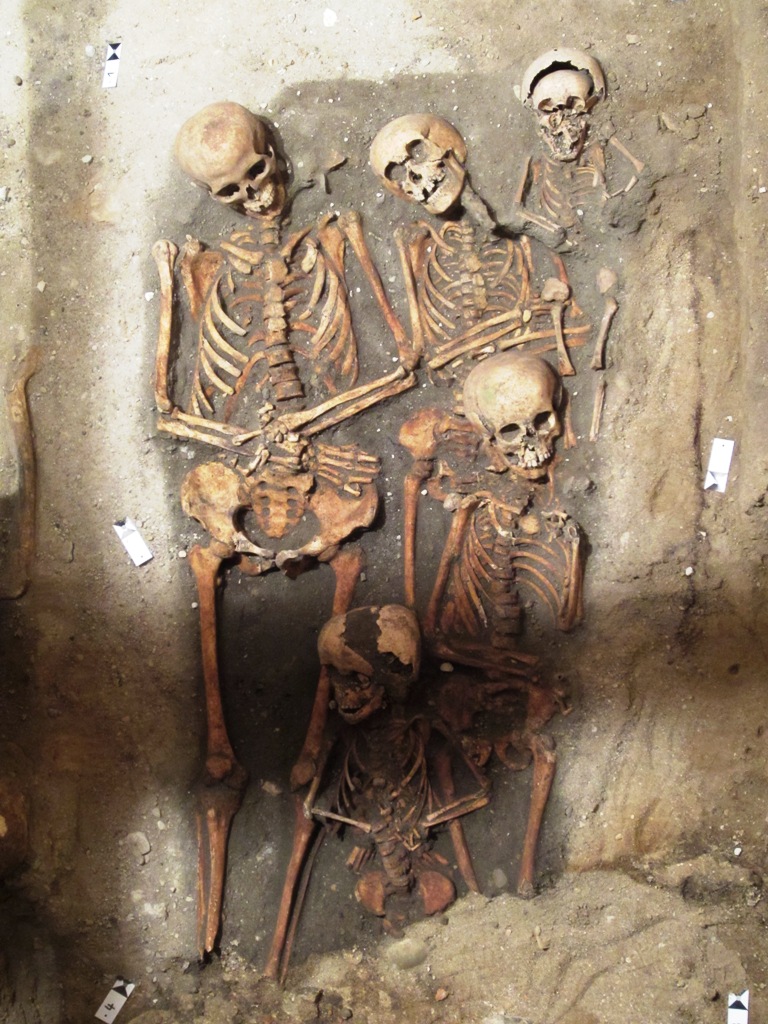
Check it out: That´s what they found, when they dug deeper into the foundations of the Old Latin School to fit in the elevator (lift). Remember, it was originally part of the bigger cemetary of St.Mary´s and there was a bone-house here before the Old Latin School was built back in 1564.
Today those skeletons are in safe-keeping in Halle – and the appropriate authorities watch over them. Further research is expensive, but we´re working on it. Hopefully, you´ll be able to see them up in the Old Latin School one of these days. Hey, they´ve been part of the family here for much longer than me 😉
A big Thank you goes to President Matthew C. Harrison for sharing these pictures.
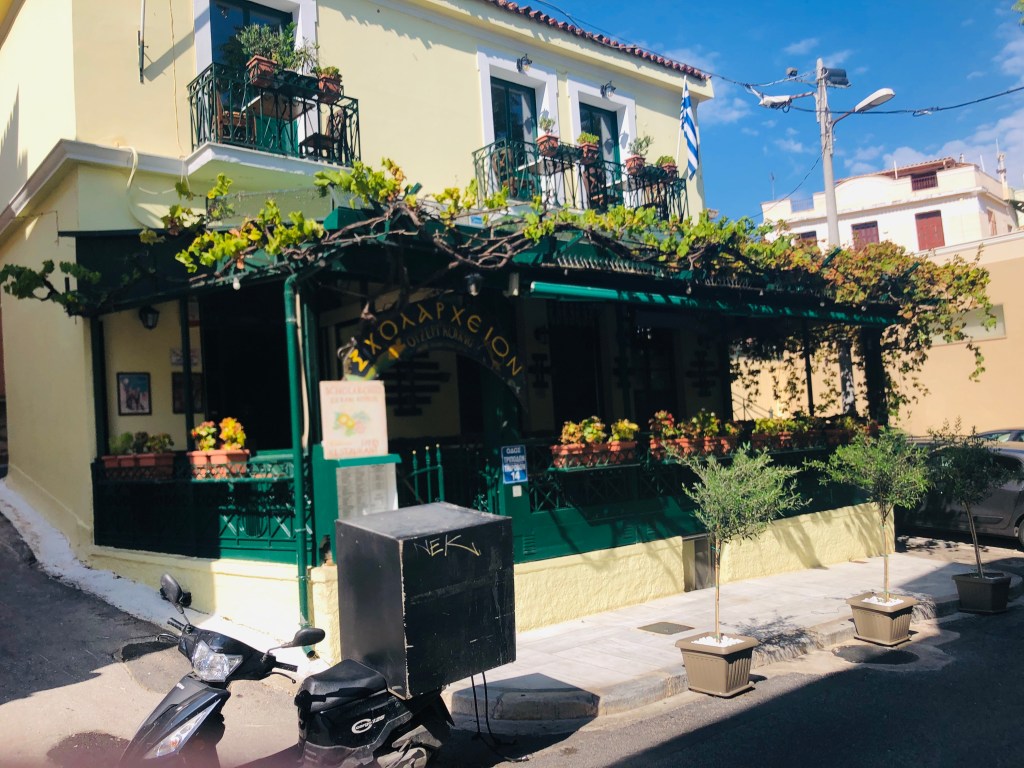
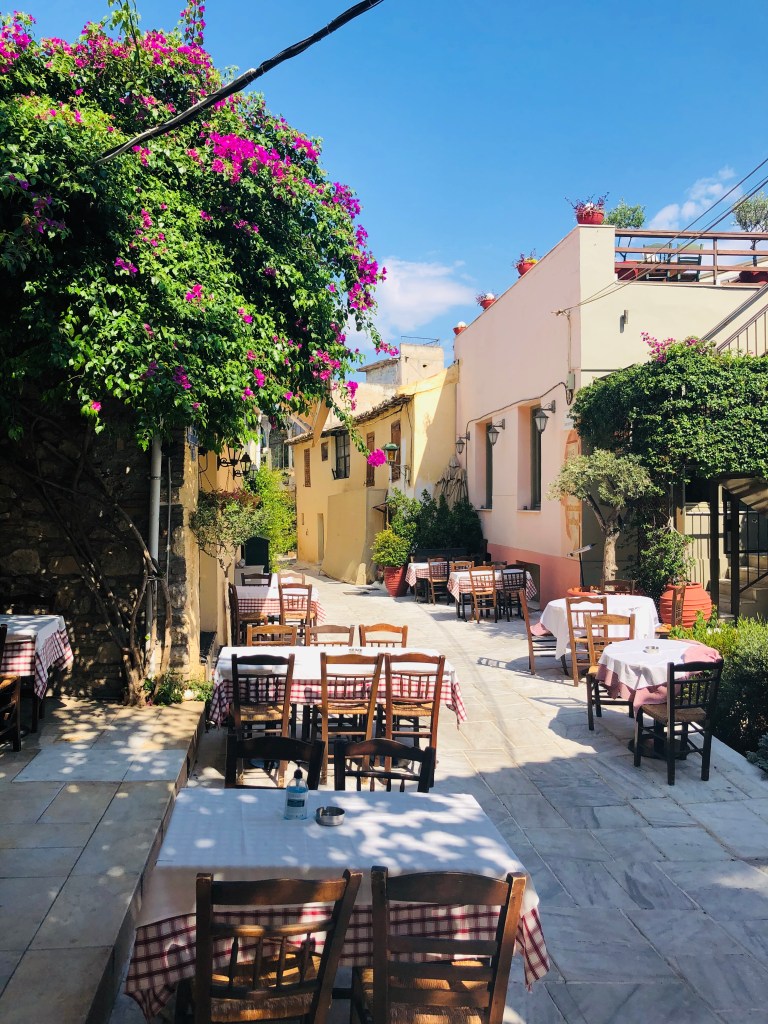
Nach einem schönen Wochenende auf Pilion ging es Richtung Athen und zwar in die Nähe des Hafens Piräus in die Wohnung eines Chinesen, der einen Schlüsselverwahrungskästchen nutzte. Das war sehr praktisch. Da haben wir das Auto noch mal geparkt und konnten Verandas auf 2 Seiten nutzen. Die Wohnung war perfekt ausgerüstet und war verkehrsmäßig gut gelegen. Wir konnten nicht nur am nächsten Tag das Auto gut zurückbringen, um dann nach noch einem Einkaufsbummel in der Altstadt mit dem Bus zurückzukehren, sondern waren auch nah an der Buslinie zum Flugplatz X96. Ich war sehr dankbar, dass wir das Auto problemlos wieder abgeben konnten. Wie gut, dass wir kein Unfall oder Unglück damit hatten! Abends sind wir noch mal zum Fischessen ausgegangen und haben auf dem Nachhauseweg eine tolle Schokoliere für den Nachtisch gefunden, die noch am späten Abend offen war. Das war ein schöner Abschluss dieser Zeit in Athen.
Ein schönes Land und eine schöne Stadt
Am Dienstagmorgen haben wir alles gut in die Koffer verstaut und machten uns rechtzeitig auf den Weg zur Bushaltestelle. Das war gut, denn der erste Bus rauschte einfach an uns vorbei und so mussten wir nochmal eine halbe Stunde warten. Dieses Mal waren wir – und unsere Mitfahrkumpanen (Mutter & Tochter) aber gut gerüstet. Mit winkenden Armen stürzten wir uns vor den nächsten Bus um ihn zum Halten zu bringen – und stiegen dann glücklich in diesen relativ leeren Bus ein und kamen nach einer guten Stunde pünktlich am Flugplatz an. Nach der Gepäckabgabe haben wir noch Frühstück gegessen – kalte Küche – und warteten dann gemütlich auf den Abflug. Wir hatten gute Plätze und konnten sogar noch etwas ausruhen auf dem Flug über den Balkan zurück nach Berlin. Hier haben wir uns von Halle C nach A gemacht, um uns noch kostenfrei auf Corona testen zu lassen. Bundeswehr und Charité waren gut vertreten – und wir waren fast die einzigen, die getestet werden sollten. Das war alles sehr professionell und nachdem wir die nötige Papierarbeit erledigt hatten, gings auch sehr schnell. Zuhause bekamen wir dann 2 Tage später die befreiende Nachricht, dass bei uns das Virus nicht feststellbar sei. Das war eine große Erleichterung – und nicht nur für Angelika, die ja dann schnell wieder in den Schulbetrieb musste.
Inzwischen hatten Vivian ein paar Runden gedreht und holte uns dann direkt nach dem Test ab. Das ging nach einigen Versuchen und Abwarten reibungslos, obwohl ich erstmal wieder umdenken und mich an die Gangschaltung gewöhnen musste. Vivian hat uns auch gut durch den Berliner Verkehr manövriert – besser als jedes Handy – und als ich dann doch falsch abgebogen war, kamen wir mit ihrer Hilfe bald wieder auf den rechten Weg. Wir fuhren über Landstraße nach Hause – und dabei wurde ich nur an einer Stelle vom Blitzer überrascht. 15€, aber keinen Eintrag: Das ist nochmal gut gegangen! Vivian brachte uns auf den neusten Stand bezüglich der Alten Lateinschule – Topfpflanzen, Post und sonstige Geschäfte – und wir sie zurück nach Hause, um dann glücklich wieder unsere kl. Dachwohnung zu beziehen. Das war fast so warm wie in Griechenland – aber mit guter Aussicht auf Regen und baldige Abkühlung. Nach 3 Wochen Griechenland freuen wir uns schon auf das nächste Mal – und unseren kommenden Urlaub!
Die Zeit in den Klöstern war uns nicht zu lang. Gerne wären wir noch geblieben, aber wir haben ja ganz ähnliche Verhältnisse daheim – wenigstens ich in der Alten Lateinschule. Da ist auch von morgens bis abends der Fremdenverkehr, doch vorher und anschließend gehen wir unserer Beschäftigung hinter verschlossenen Türen nach – und das alles auch zum Glockenschlag von St.Marien, die zwar nicht so abwechslungsreich sind wie die orthodoxen Glockenmelodien, aber dafür um so pünktlicher. Die Klöster haben auch alle an bestimmten Wochentagen geschlossen, so daß sie ihren alltäglichen Geschäften nachgehen können, obwohl z.Z. der Touristenandrang sehr kärglich erscheint und sie sicherlich auch sonst viel mehr durch die Besucher eingebunden sind als in dieser Zeit.
In der Kalambaka kauften ich mir einen Schäferstock für 7.00€. Das erschien mir preiswert und ich habe ja ein Faible für Stöcke. Nachdem Angelika ihn durch den Zoll und die Gepäckabfertigung getragen hat, gebrauche ich ihn jetzt auf der Jagd als Zielstock und zwar noch öfter als die Bestecke aus Olivenholz. Er ist fast so praktisch wie der Honiglöffel, den wir auch noch erstanden haben. Vater und Sohn waren beide sehr hilfsbereit bei der Auswahl. Es gab auch richtige Krück- und Bischofsstöcke, aber die brauche ich ja nicht mehr und das hätte höchstens noch Erinnerungswert gehabt. Traditionell gebrauchen die Griechen die auch um ihre Streitigkeiten auszusortieren – und zwar mit Gewalt – praktisch wie ein „nut-cracker“ auf die Birne bzw Fangstock um die Fußfesseln.
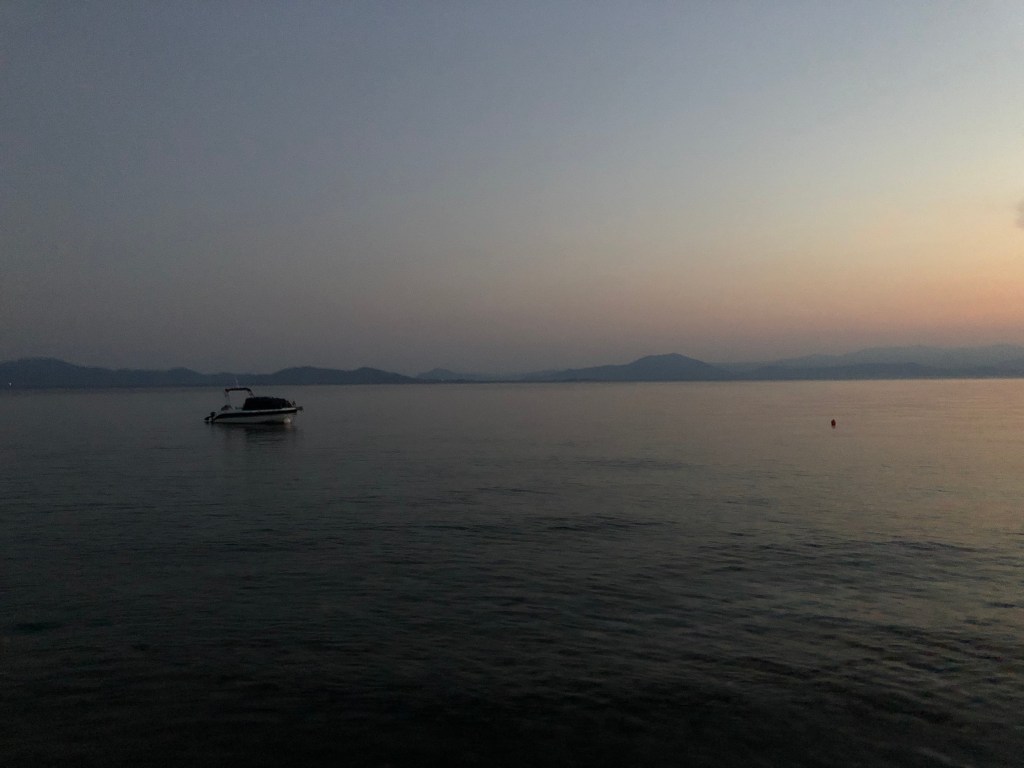
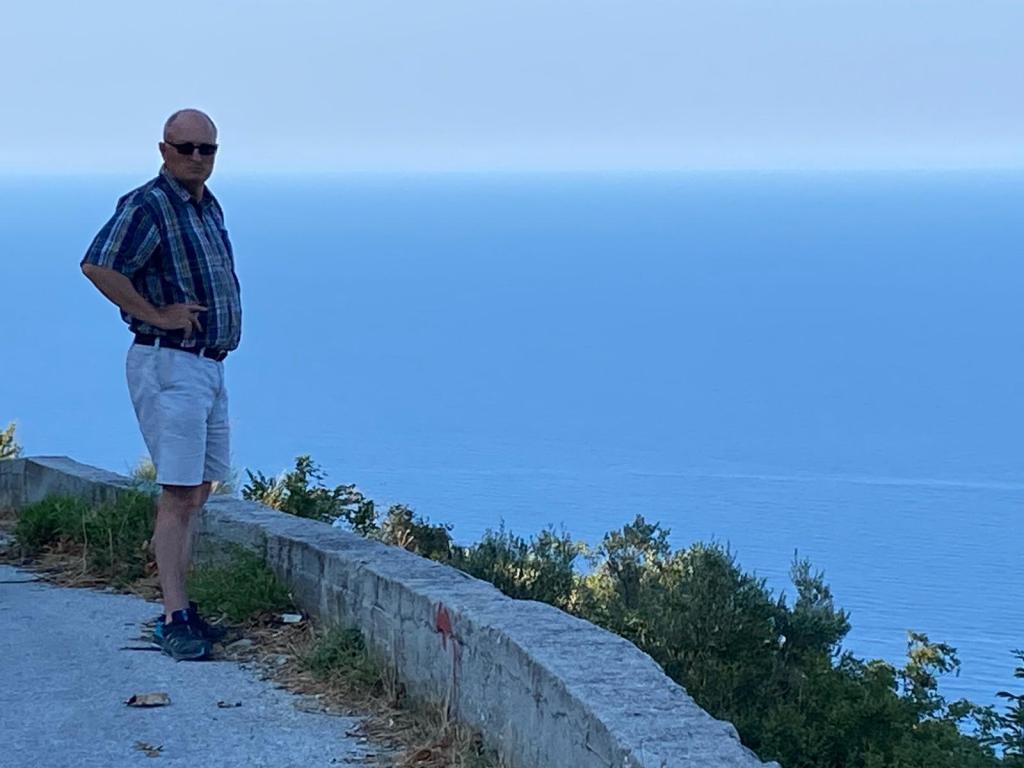
Über Landstraße und Autobahn fuhren wir dann an Volos vorbei und zu unserer nächsten Herberge – in Gehabstand von Kala Nera – dem schönen Strand – unter dem Piliogipfel und auf der Pilionhalbinsel, die den Pagasitischem Golf umrahmt. Da war die Mutter des Vermieters zwar sehr rede- und sprachgewandt. Ihr ganzes Wesen strahle Gastfreundschaft aus, aber wir verstanden kein Wort. Zur Sicherheit wandten wir uns telefonisch an ihren Sohn und der hat uns dann erklärt, dass seine Mutter uns nur Tomaten, Paprika und Eierfrüchte schenken wollte… Es war ein kl.Zimmer und der Balkon war tagsüber in der prallen Sonne. Darum sind wir diese letzten Tage meist unterwegs gewesen und zwar zum Strand, zum Schwimmen und zum gemütlichen Rundfahren über Berge und durch tiefe Täler bzw immer am schönen blauen Meer entlang. Es sind berühmte Strände wie Fakistra Beach oder dem märchenhaften Argo Kiriaki. Agria ist der Geburtsort des Komponisten Vangelis(1492: Conquest of Paradise). Ferien pur. Der deutsche Schriftsteller Werner Helwig schrieb drei Romane, deren Handlung im Pilio spielt: Raubfischer in Hellas (1939), Im Dickicht des Pelion (1941) und Gegenwind (1945). So schön wars und zu kurz! Ich habe noch nicht mal angefangen diese Romane zu lesen…
Wer die Wahl hat, hat die Qual und so wars auch mit uns. Griechenland in 3 Wochen hat natürlich auch endlose Möglichkeiten und so haben wir allerlei Szenarien durchgespielt: Inselbesuch (Santorini/Korfu), die heiligen Klöster vom Athos, Spuren des Paulus in Philippi und Thessaloniki, Chalkida/Evia haben wir alles nicht gemacht.
Durch Corona war auch das Festland längst nicht so überlaufen und auf den Stränden viel Platz. Da haben wir uns dann entschieden die hl. Klöster von Meteora zu besuchen und dort würden wir uns dann entscheiden, was wir anschließend machen wollten. Bisher ging es ja gut mit den Entscheidungen und so waren wir ganz getrost, dass auch die letzte Woche gut ablaufen würde. Schließlich war Meteora ja ziemlich zentral – und wir waren so gut platziert weitere Ziele anzufahren. Dass unsere Heimreise von Athen starten würde, hat uns wenigstens einen Fixpunkt determiniert. Dahin würden wir schließlich wieder zurückkehren.
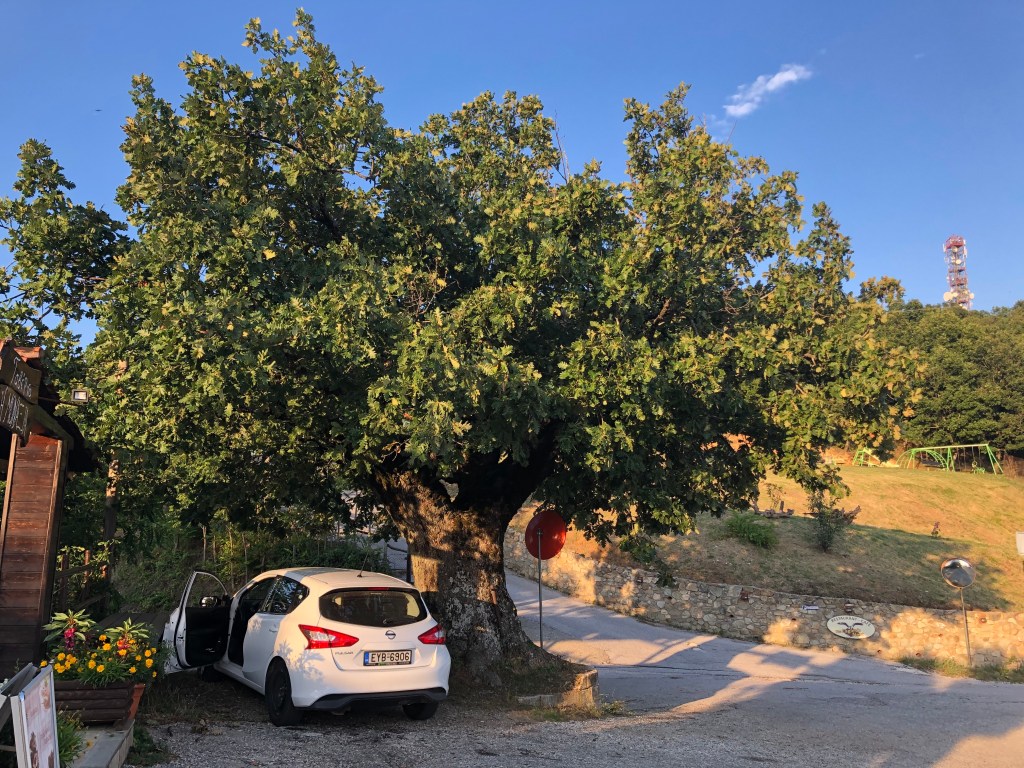
Vom Flugplatz ging es dann auf der Autobahn gehen Norden. Wir kamen gut voran und auf der Suche nach einer Rast- und Gaststätte fragten wir mal bei einer Tankstelle, doch der Tankwart meinte nur, dass das nicht in dem Dorf zu haben sei. Wir fuhren also ziemlich zielstrebig die Klöster an. Irgendwo wollten wir in einem Schattenplatz Rast machen, aber den zu finden, fiel uns nicht so leicht. Wir kamen also in ziemlicher Mittagshitze in Kalambaka an und zogen dort in vielleicht unsere schönste Wohnung auf dieser Reise. Das war eine Herberge von Dimitra direkt unter einem der Klosterfelsen und obwohl das Auto etwas weiter im Schatten geparkt wurde, war dieses einfach nur idyllisch. Unsere Tür war auf dem Erdgeschoß hatte dicken Mauern, die aber hell angestrichen und wie die restliche Einrichtung geschmackvoll hergerichtet war. Es gefiel uns so gut, dass wir den Mietvertrag hier verlängern wollten, aber das ging nicht, da schon Nachmieter angesagt waren. Also hatten wir die 2 Übernachtungen und knapp 3 Tage voll auszukosten. Draußen saßen wir mit Blick auf das Bergkreuz und in der Wohnung hatten wir plenty Platz und auch eine gut eingerichtete Küche und im Badezimmer war auch eine Waschmaschiene 🙂
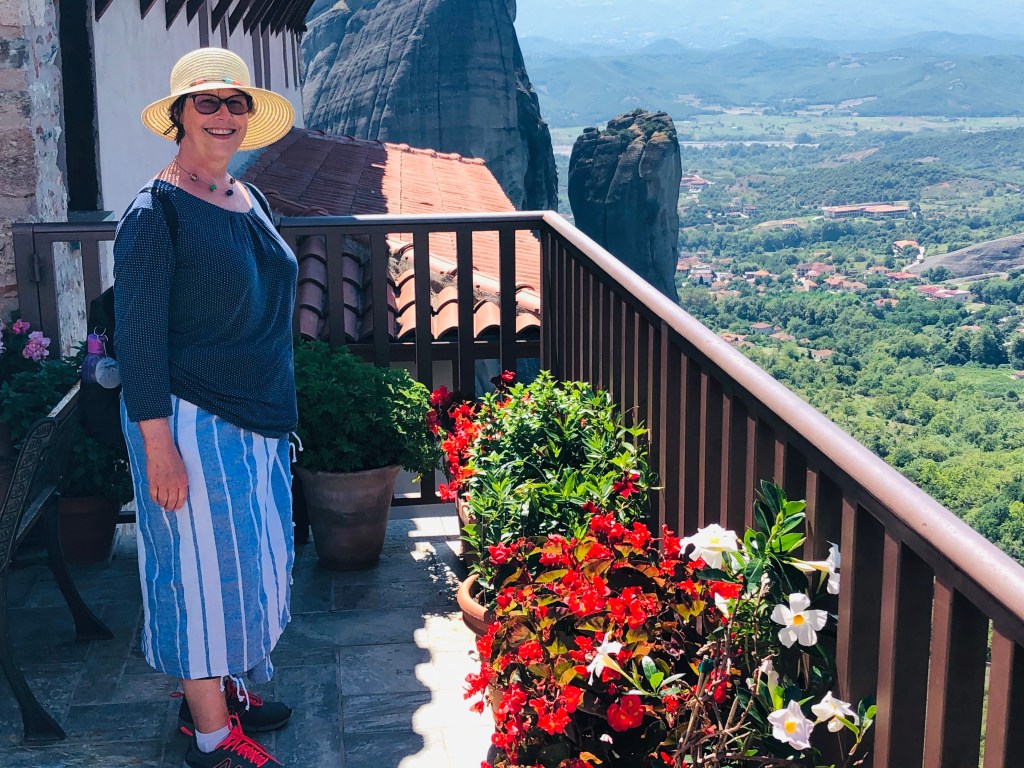
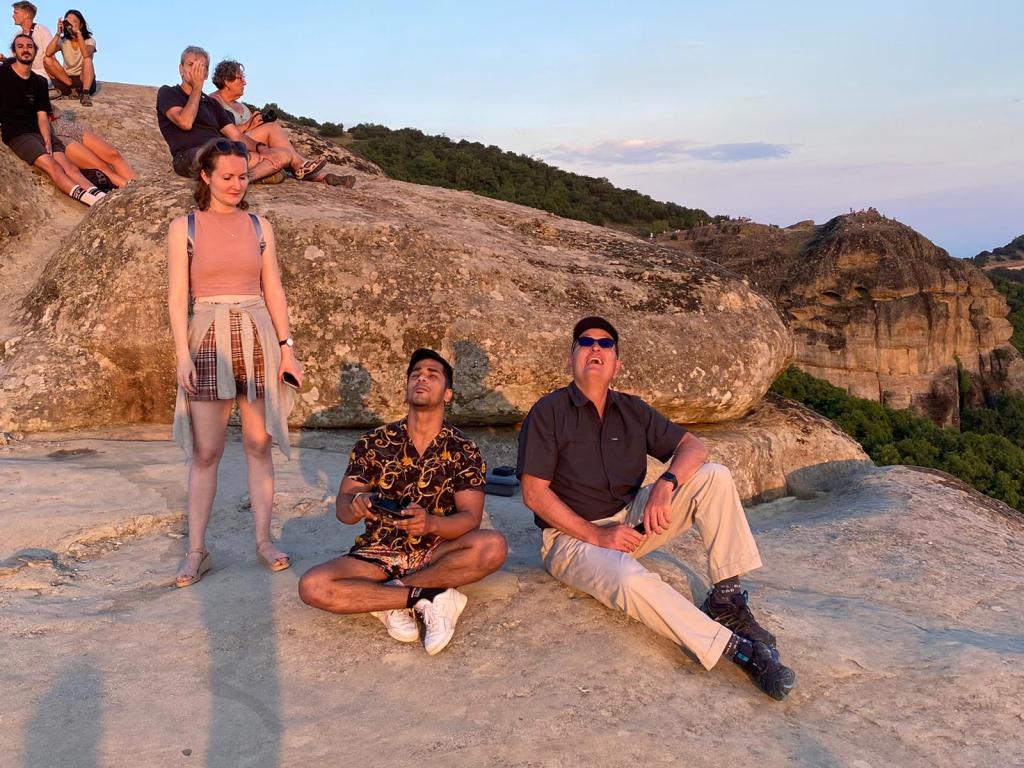
In diesen Tagen besuchten wir alle Klöster dort. Bestiegen hohe Berge zu Fuß und machten auch eindrückliche Rundfahrten mit dem Auto. Wir kauften uns hier Ikone, Schäferkrücke und manche Mahlzeit – auch ganz oben in den Bergen: Monaxia oder im Lieblingsrestaurant von Dimitria. Das war gemütlich, aussichtsreich und herrlich entspannend. Den berühmten Sonnenuntergang beobachteten wir zusammen mit anderen Touristen auf einem der hohen Felsen. Dort lernten wir Sami und seine Patricia aus Berlin kennen. Er fotografierte hier mit seiner Drohne und störte gekonnt die romantische Atmosphäre, aber ihn brachte das nicht aus der Ruhe. Im Gegenteil, die Aufmerksamkeit, die er erregte, schien ihm zu gefallen. Einige Tage später hat er seine Drohne dann verloren, weil er sie zu hoch hat fliegen lassen. Scheinbar ein herber und kostspieliger Verlust – geschweige denn von den malerischen Filmen, die so hops gingen.
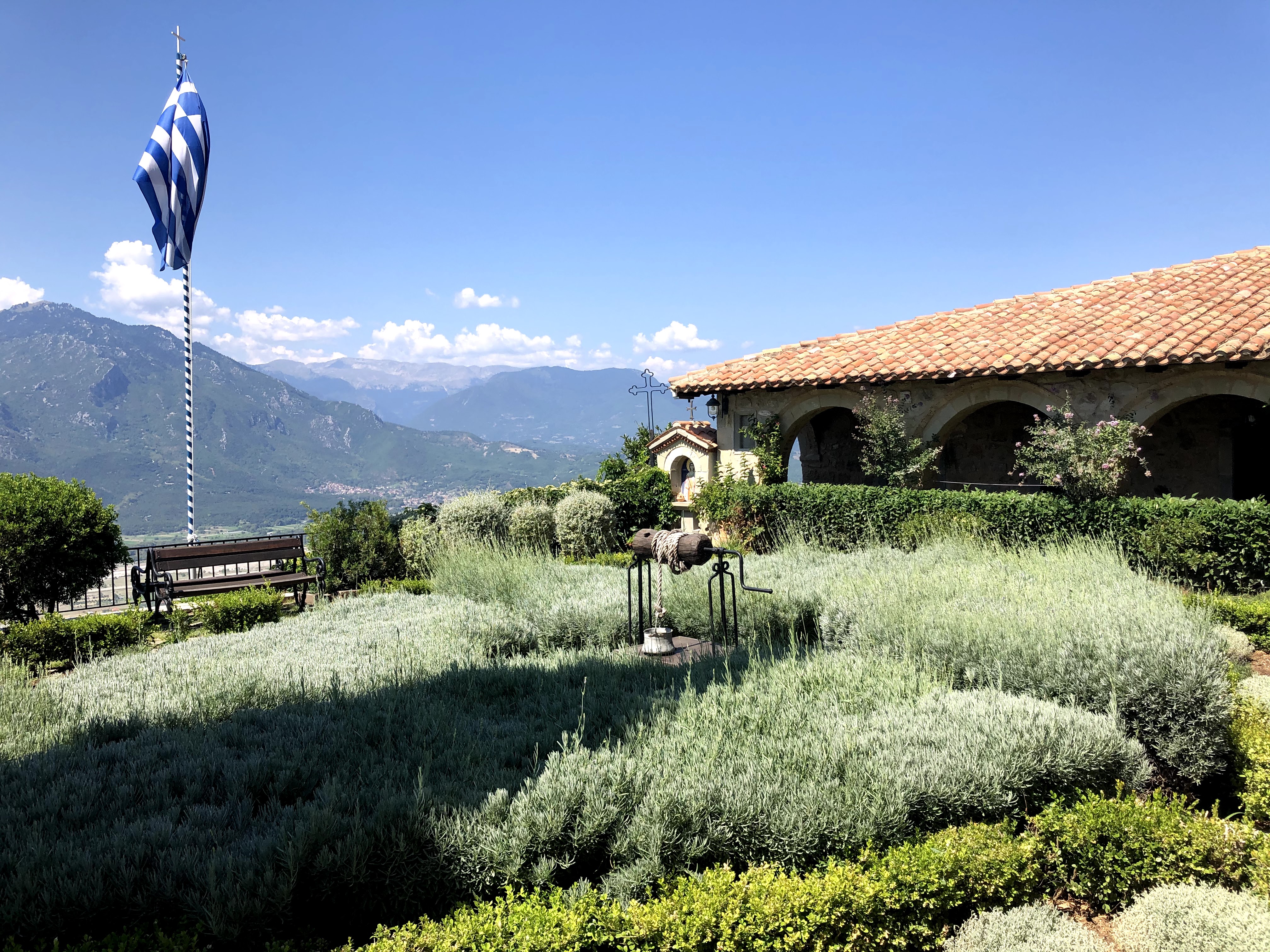
In den Klöstern hatte der griechische Wiederstand gegen die Türken überlebt. Sie haben Schulen und Ausbildungsstätten gefördert und sind in diesen luftigen Höhen ihrer geistigen Beschäftigung nachgegangen. Heute leben da in den verschiedenen Klöstern und Konventen auch wieder eine Reihe mehr oder weniger junger Nonnen und Mönche. Unsere Gastgeberin berichtete von den festlichen Andachten, die sie dort oben sonntäglich feiern. Auch wir haben die hübsch ausgeschmückten Gotteshäuser mit ihren Ikonen, Kerzen und Weihrauchständern aufgenommen so gut es ging. Man versteht die Psalmensänger: „Wie lieblich sind Deine Wohnungen Herr Gott Zebaoth!“
Angelika musste sich bei jedem Besuch ihr Badetuch umwickeln. Ich fand, es stand ihr hervorragend, aber sie wollte davon gar nichts wissen. Wir mussten auch stets die Masken tragen und auch sonst Abstand halten. Das war in den schmalen Gängen, Treppenhäusern und kl. Höhlen gar nicht so einfach. Die Klöster sind Horte orthodoxer Heiligkeit und haben mich doch sehr beeindruckt. Sie sind schön eingerichtet, gut gepflegt und offensichtlich auch gut besucht. Selbst in dieser Epidemie waren Busse unterwegs – auch wenn fast keine Chinesen und Inder zu sehen waren – außer unser Drohnen-Sami. Viele griechische Familien waren unter den Besuchern. Immer wieder hörte man Eltern ihren Kindern erzählen von den vielen Wundern und bedeutungsvollen Zeichen dieser geschichtsträchtigen Orte. Nebenbei lese ich ja den Reisebericht von Lord Robert Byron: „The Station: Travels to the Holy Mountain of Greece“ (iBooks) und Lawrence Durrell: “The Greek Islands“ (Kindle). Da kriegt man das auch gut mit – und ist viel besser als kurze Sketsche. Also, wer Zeit und Lust hat, dürfte damit gute Unterhaltung finden.
In Patras mussten wir uns langsam an die Idee gewöhnen, dass Christophs Flug nach Berlin für Dienstag festgelegt war, weil Easyjet uns ja noch in Deutschland Bescheid gegeben hatte, dass sein Flug am Freitag ausfiel. Solche Ausfälle machen, dass dann auch die zugesagten Termine fragwürdig erscheinen. Das bringt natürlich gewisse Unruhe mit sich. Außerdem herrschte ja auch Corona – und gerade auf den Flugplätzen. Da kam ebenso natürlich die Frage auf, ob wir uns inzwischen angesteckt und somit für Rückflüge disqualifiziert seien. Schließlich mussten wir nach Athen zurück, um dort für die Heimreise parat zu sein. Deswegen fuhren wir am Montagmorgen über die weitgestreckte Rio-Andirrio-Brücke und dann gen Osten am Korinthischen Golf entlang über Delfi und nach Athen. Dort hatten wir ein Quartier für eine Nacht in der Nähe des Flughafens, um Christoph rechtzeitig dort abzuladen. Wir hatten ja noch eine Woche zusätzlich.
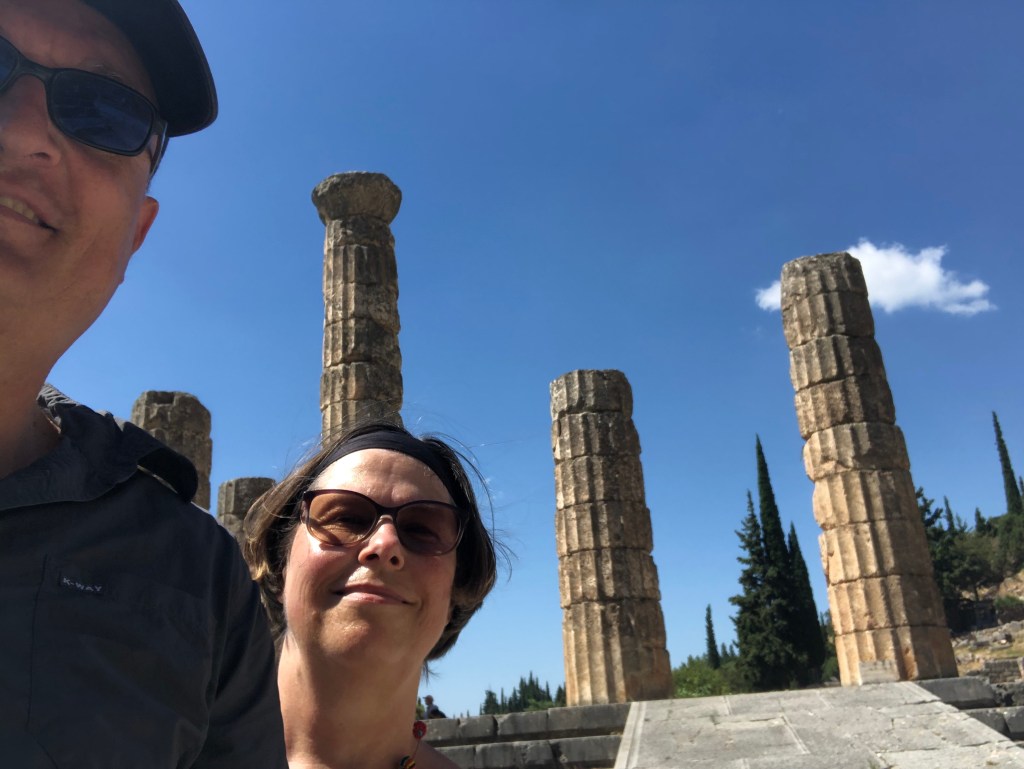
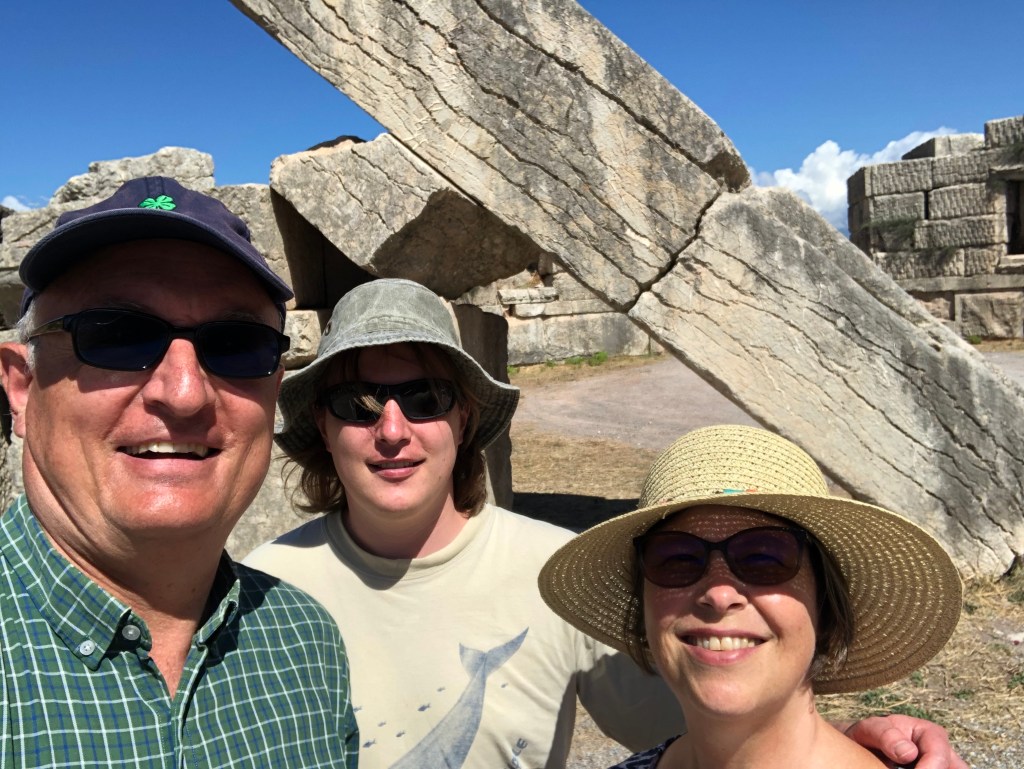
Delfi war ein Höhepunkt für Christoph und somit kam seine Reise auch zu einem guten Ende. Hier waren wie in Epidauros und Mykene mehr Ausländer unterwegs als wir sonst sahen. Trotzdem waren die riesigen Parkplätze für hunderte, wenn nicht tausende Gäste erschreckend leer. In der Reihe am Kartenkiosk brauchten wir nicht lange warten, das Auto hatten wir neben der Straße am steilen Abhang im Schatten eines Olivenbaumes geparkt. Wir waren ready für noch ein Haufen Ruinen und alter Bausteine. Doch mit dieser Fülle und komplexen Heilsanstalt hatten wir nicht gerechnet. Die geschichtlichen Bezüge waren sagenhaft und man konnte sich gut vorstellen, dass das mal ein politisch bedeutsames Zentrum gewesen sein muss – fast so wie heutzutage das Wirtschaftstreffen in Davos, wenigstens bis vor kurzem. Hier – im Orakel von Delfi – wurde ja die Weissagung laut, dass die Griechen unter Menelaus den troyanischen Krieg endlich gewinnen würden. Wär hätte gedacht, dass das dann Jahrzehnte dauern würde? Delfi verlor an Bedeutung als Rom die Macht im Mittelmeer übernahm. Da haben auch die Versuche der römischen Kaiser den alten Glanz und politische Bedeutsamkeit zu restaurieren nicht gefruchtet, da hier kein politisches Machtgefüge mehr zuständig und ausschlaggebend war. Schließlich hat Theodosius I (392 AD) die Schließlung dieser heidnischen Kultstätte veranlaßt. Die mythische Vorstellung, dass hier der Mittelpunkt (Nabel) der Erde und Zentrum der Welt lag – weil das riesige Ei – der Omphalos (Nabel) – dass die Adler im Namen Zeus hatten fallen lassen, gerade hier aufgeprallt und somit den Mittelpunkt angegeben hatten – war schon merkwürdig. Das Gefühl ist so ähnlich wie wenn man in Rom im Vatikan auf dem Petersplatz steht (bzw auf dem dem Forum Romanum, wo sie ihren umbilicus urbis feiern oder in New York auf der großen 5th Avenue oder vielleicht auch in Jerusalem, aber das letztere würde ich noch nicht wissen. Das will ich noch erleben… Das Museum war auch sehenswert, auch wenn das Postamt geschlossen und der kl. Laden nicht viel hergaben.
Die vielen Schatzhäuser für die Opfergaben dem Apollon (Er der nachmalige Vater des Heilsgottes Asklepios) geweiht, der Schauplatz für die Pythischen Spiele, Tempel und Gymnasion sind alle ausgiebigst zu bewundern und passen wunderbar in dieser herrliche Landschaft des griechischen Festlandes. Delfi war definitiv eine Reise wert!
In Athen angekommen, haben wir nochmal im Meer geschwommen nachdem wir auf dem Parkplatz reife Feigen vom Baum schmausten – so viel wir wollten. Morgens waren wir dann in einem großen Bogen zum Flugplatz gekommen und Christoph flog ohne nennenswerte Zwischenfälle bis Berlin, wo Vivian ihn abholte und nach Wittenberg brachte. So endete sein Urlaub in Griechenland und unser ging noch eine Woche länger, aber das kommt morgen dran…
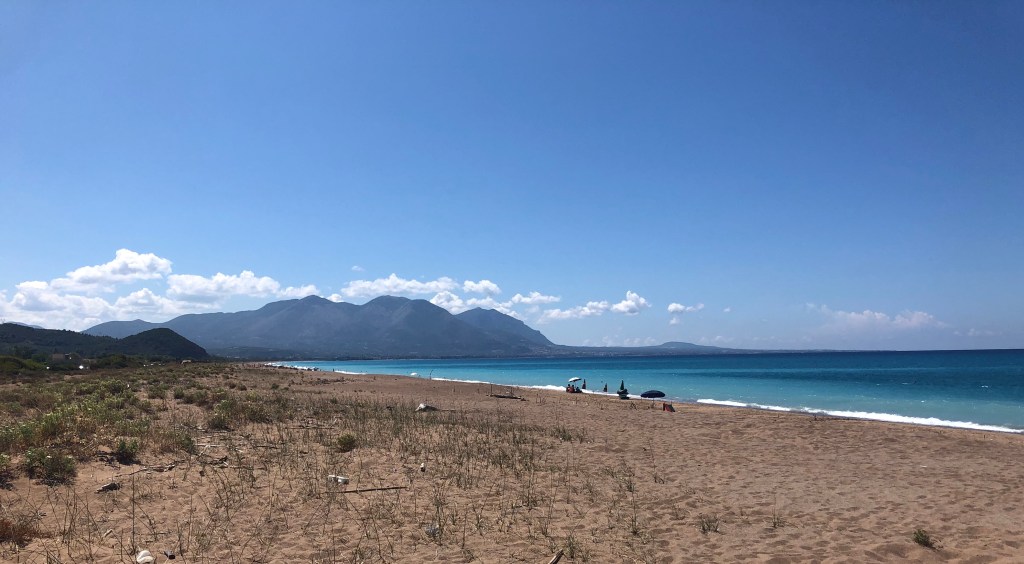
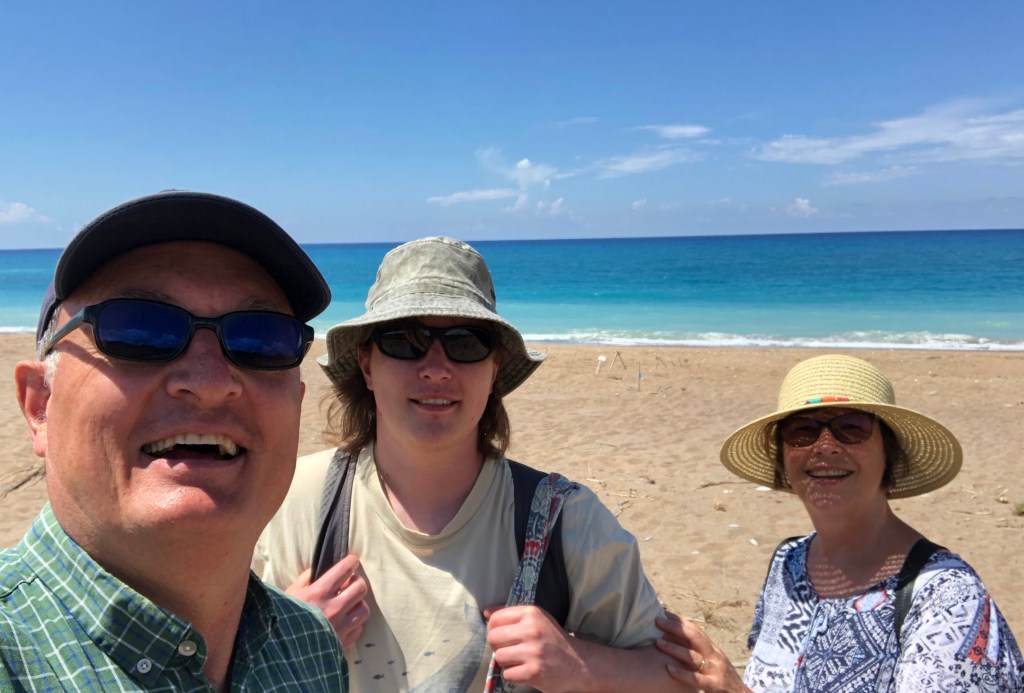
Von Korinth gings dann geradlinig über die Peloponnes auf gut ausgebauter Autobahn und Zollstraße nach Kalamata – durch viele Tunnel und malerische Landschaften. Dort hatten wir knapp 500 Meter vom Strand in einer kl. Ferienwohnung Platz für 2 Übernachtungen. Zuerst hatten wir uns überlegt Sparta zu besuchen, aber vorerst hatten wir genug von Ruinen, alten Fundamenten und unzähligen Steinen. Außerdem hatte das Schwimmen in griechischen Gewässern es uns angetan. Wir hatten ja schon im Golf von Korinth Salzwasser geschluckt – und zwar an den malerischsten Stränden, die wir noch gesehen hatten. Da wollten wir mal sehen ob das im Messenischen Golf ähnlich wäre. Vielleicht hatten wir auch endlich Lust auf Urlaub pur – im Wasser plätschern und vor uns dahin driften, abkühlen und uns von der Sonne wieder abtrocknen lassen. Es war herrlich. So haben wir es dann auch gehalten.
Zwischendurch sind wir dann auch mal auf den Markt gefahren, wo wir Oliven, Weintrauben, Honig und auch Gemüse einkauften. Dazu auch Wein in Plastikflaschen vom Händler. Er schien ganz überzeugt zu sein, dass er den besten Wein Griechenlands verkaufte. Wie sauer stieß mir dagegen auf, dass der schöne, gelbe Wein bestenfalls mit Essig zu vergleichen war. Als Strafe habe ich dann regelmäßig davon getrunken. Kalt aus dem Eisschrank wars aber auch nicht besser. Naja, Strafe muss sein. Fragt sich nur, wofür?
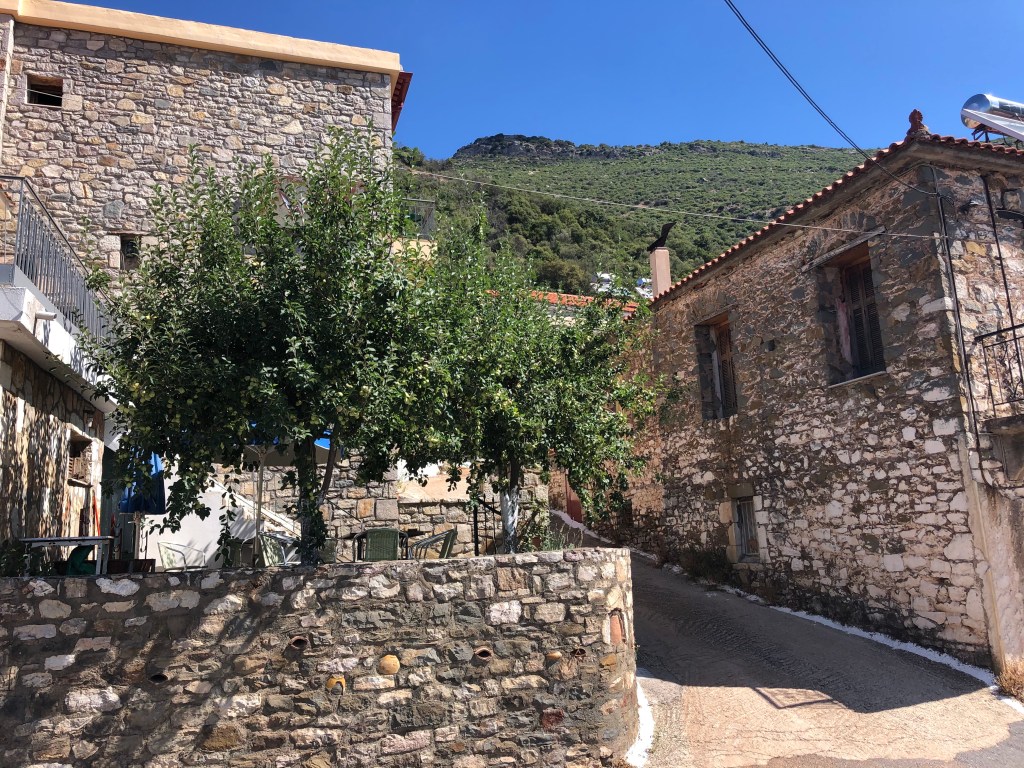
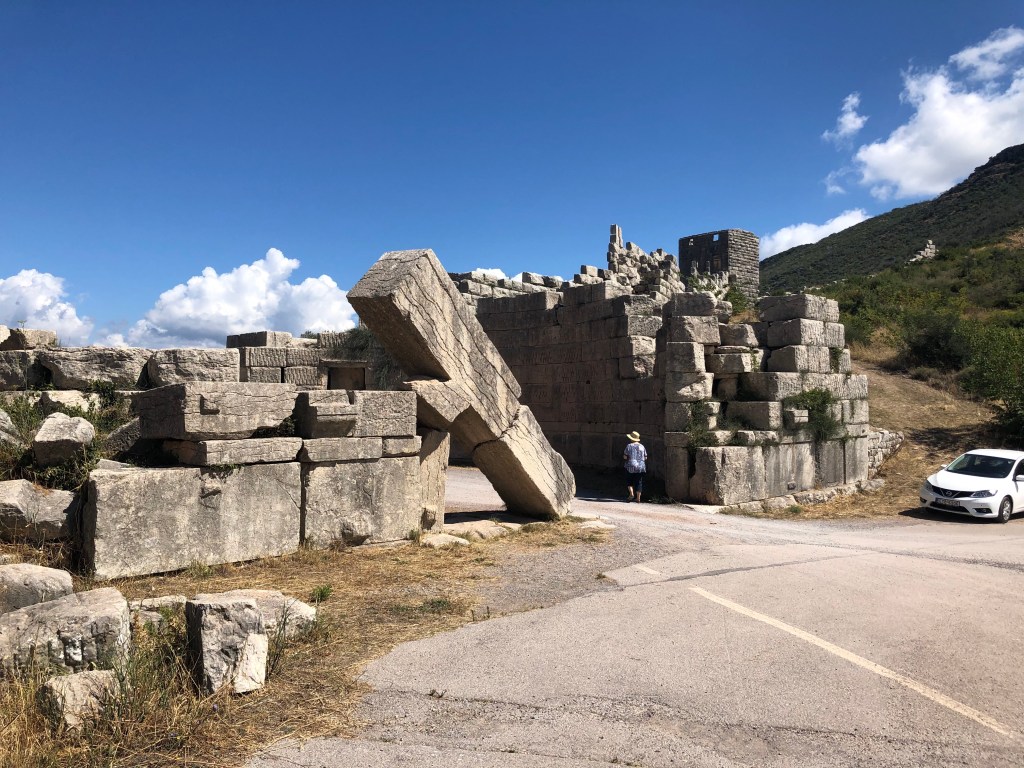
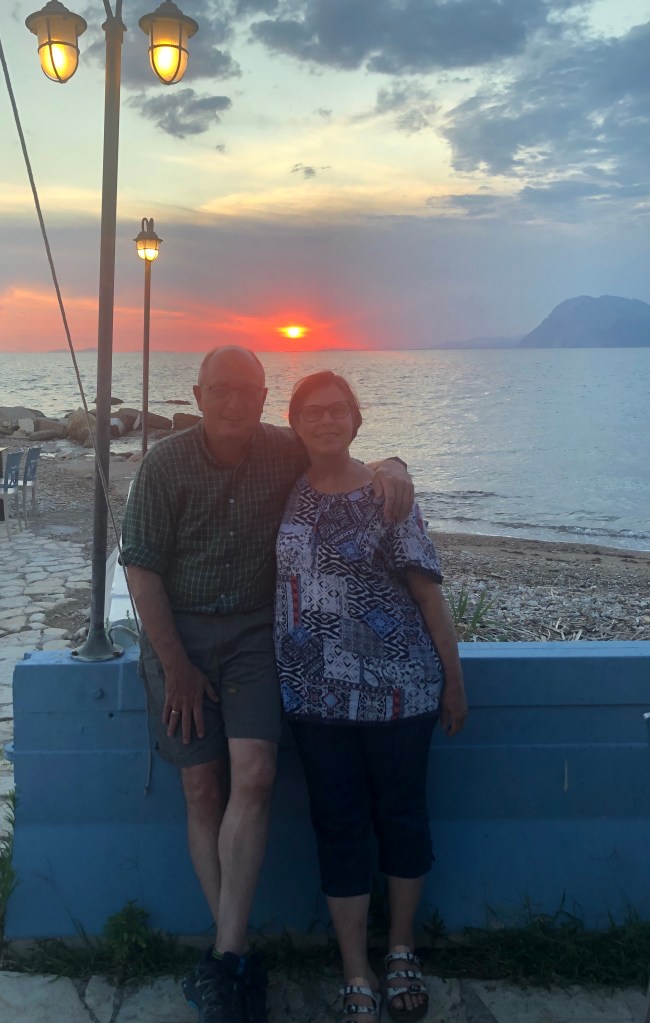
Weiter südlich fuhren wir nicht, sondern machten uns dann über Messene und Olympia an der Westküste Griechenlands wieder nördlich auf den Weg nach Patras, wo wir wieder eine Dachwohnung mit toller Aussicht über gleichnamige Bucht hatten. Von dort ging es wieder an den Strand und über die kunstvoll gestreckte Rio-Andirrio-Brücke zum Heldenacker nach Mesolóngi, wo nicht nur der gefallene Lord Byron, sondern fast alle europäischen Länder wegen ihrer Unterstützung der griechischen Unabhängigkeitsbewegung gegen die Türkei in Gedenksteinen verewigt sind. Zum Schauplatz der Schlacht von Lepanto, wo der linke Arm von Miguel de Cervantes (Don Quichote) gelähmt wurde, fuhren wir dann nicht mehr. Wir hatten genug Heldenverehrung für ein Wochenende!
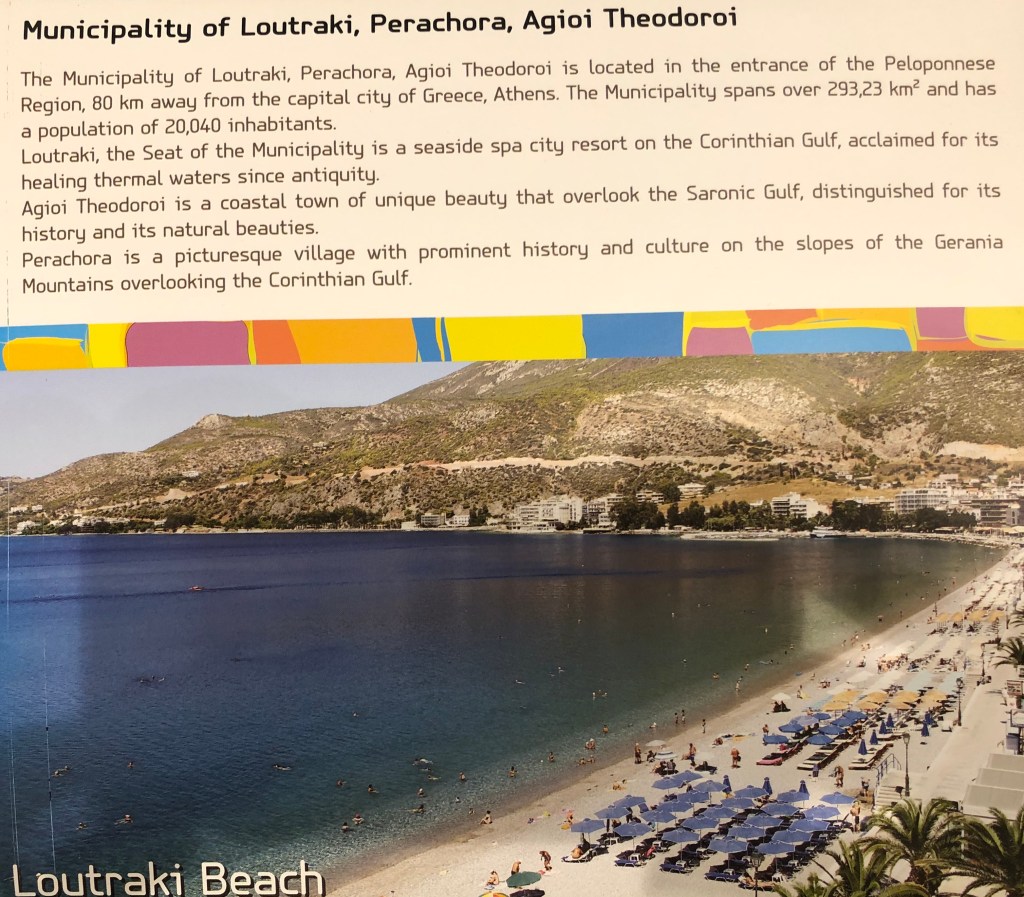
In „Tranquility“ (Olive Grove) in Lautraki waren wir zu Gast bei einem griechisch-polnischen Ehepaar, das sich in Kanada kennen gelernt hatte. Richard ist Fahrradfahrer und Anastasia freischaffende Künstlerin. Nun sind sie wieder im alten Europa und offensichtlich sehr erfolgreich, sich dort zu etablieren. Wir hatten wiederholt Schwierigkeiten die genaue Adresse zu finden, da der GPS uns dort durch kleine und kleinste Gässchen führte – fast wie wenn man zu Gonter & Rita auf den Plot fährt – aber im großen und ganzen war dieses einer unserer Lieblingsorte.
Hier konnten wir all unsere Wäsche erstmals waschen – und zwar in einer top Waschmaschine. Die Küche war hervorragend eingerichtet und das Haus sehr geschmackvoll und ansprechend. Wir fühlten uns also puddelwohl, auch wenn es nur im Schlafzimmer eine Klimaanlage gab und Christoph auf einer Couch schlafen musste, die nur per Fan gekühlt wurde. Ich habe mich auf der Veranda auf eine der Liegesessel zur Nacht hingelegt, aber irgendwann bin ich doch ins Schlafzimmer umgezogen. Die Nächte sind in Griechenland ziemlich bewegt und geräuschvoll. Da gibt’s immer wieder was zum Hinhören und Ablenken.
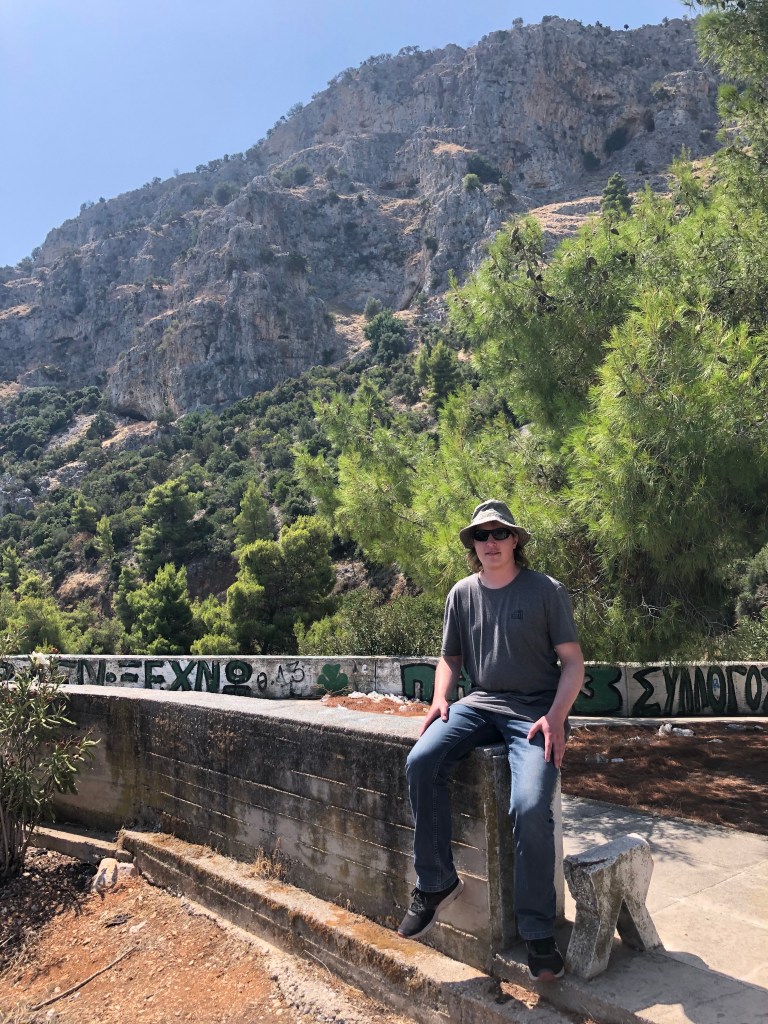
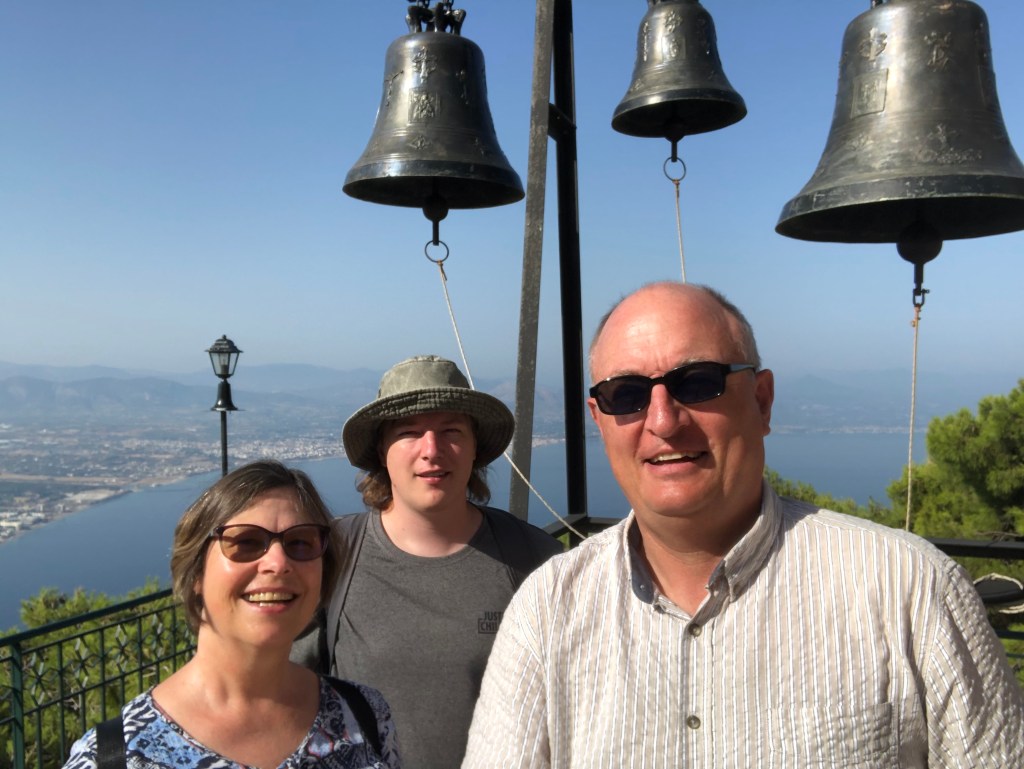
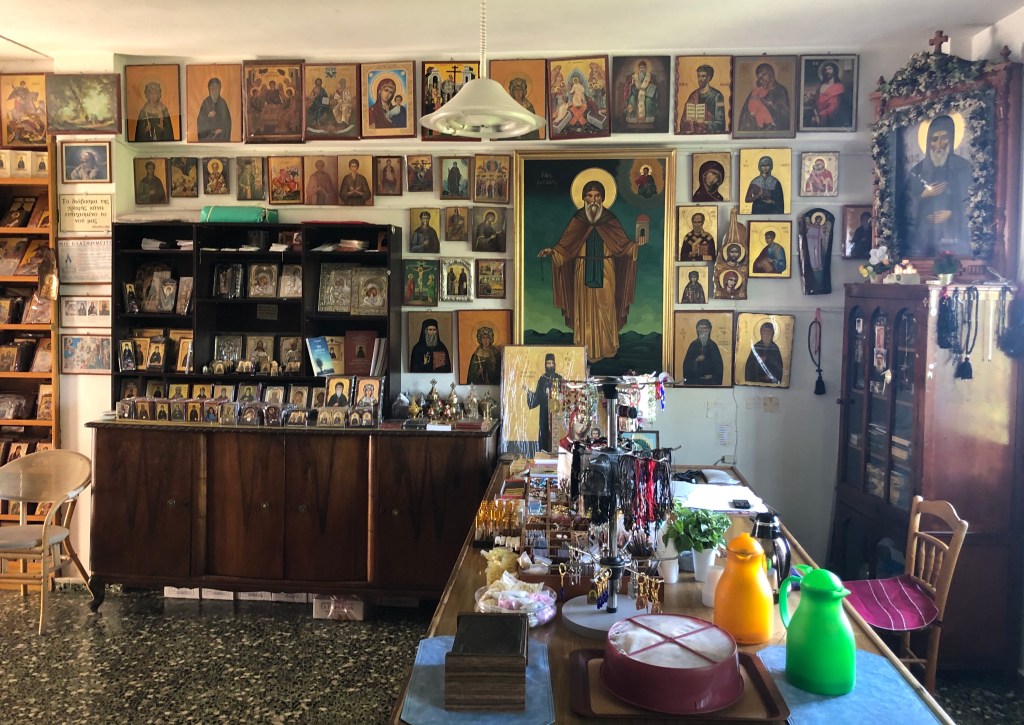
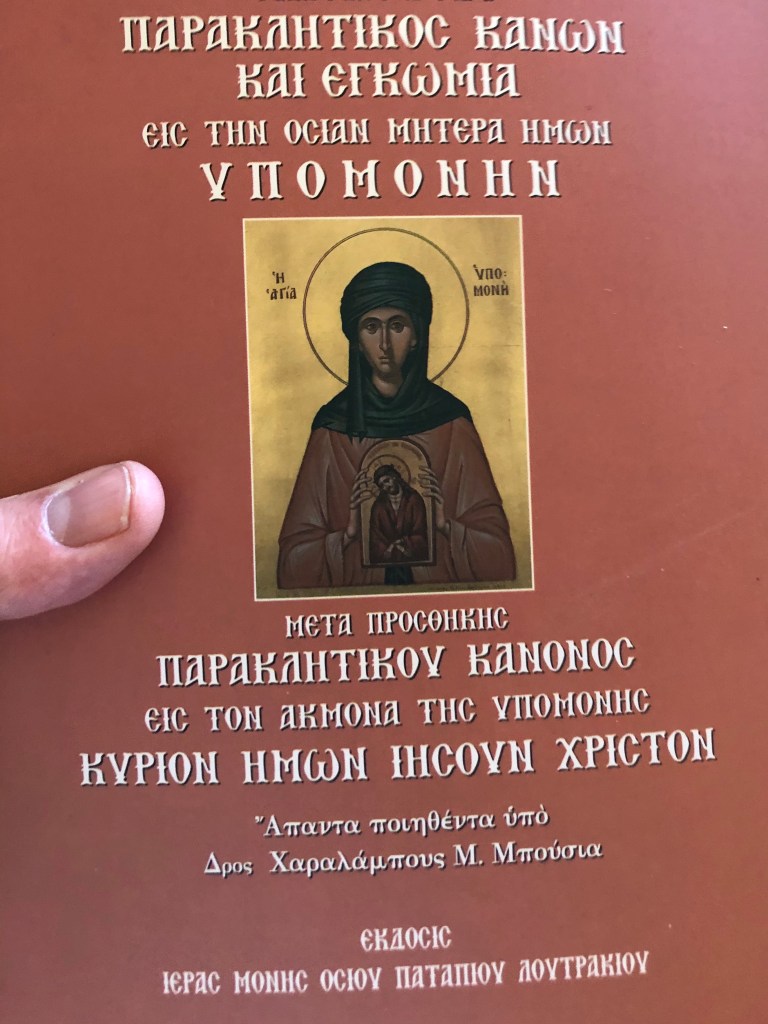
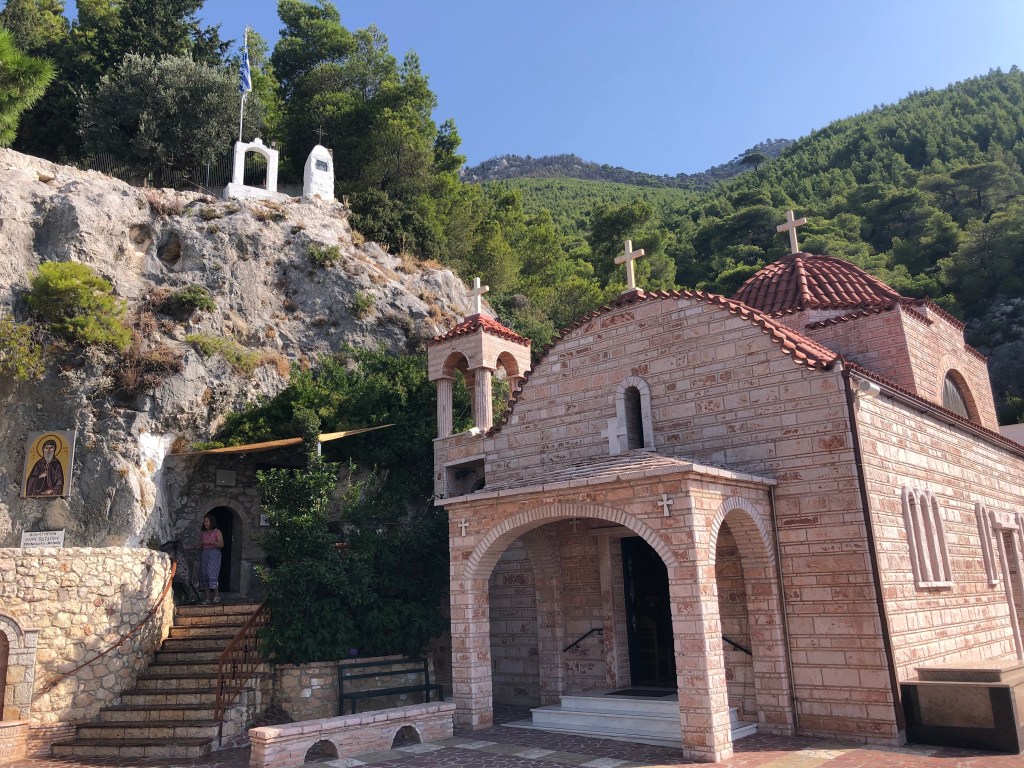
Unsere Gastgeber haben uns wärmstens empfohlen ein Kloster hoch am Geraniaberg zu besuchen. Darum sind wir rechtzeitig aufgebrochen und zum Konvent der Nonnen von St OsiosPatapios, die dort von Sonnenaufgang bis zum Untergang ein offenes Haus betreiben – und griechischen Kaffee, Sweets und Zwieback anbieten und natürlich auch Ikonen, Texte und sonstige Devotionalien, gefahren. Von dort hatten wir den schönsten Blick über den Golf von Korinth, den Hafen und das tief blaue Meer – eine Augenweide, wo man nur hinschaut.
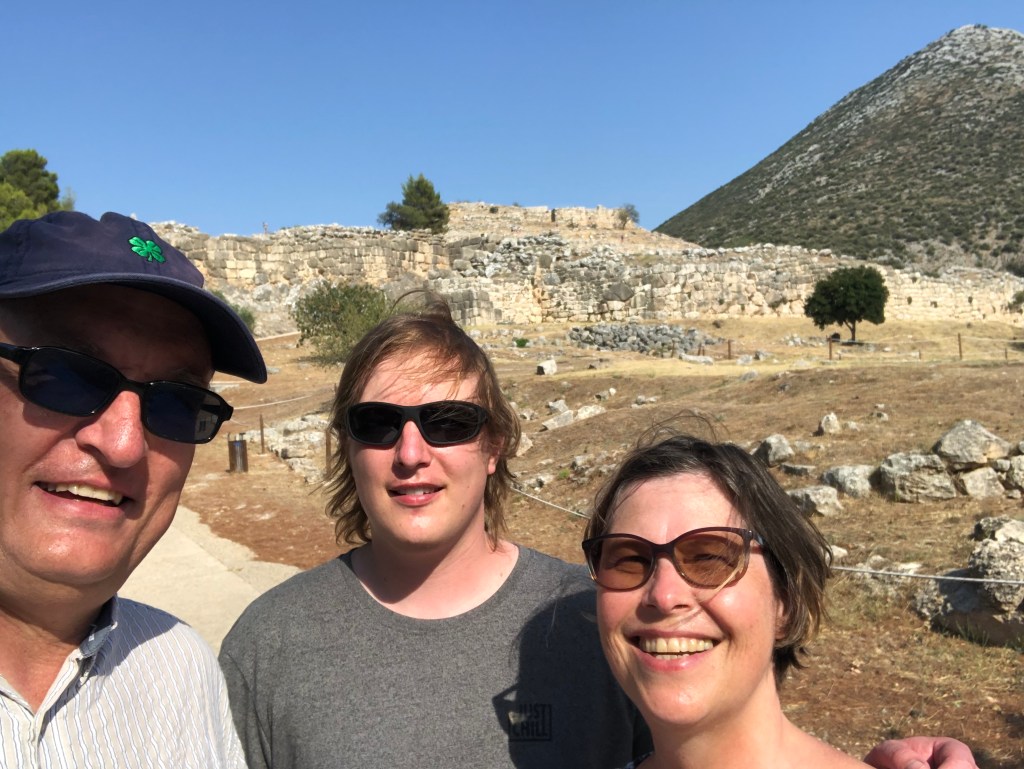
Außerdem haben wir uns Epidauros, Mykene und dann auch noch zu den Ausflugszielen Perachora Heraion und der Lagune von Heraion angeschaut. Das war ein volles Tagesprogramm. Schließlich sind wir auch noch zur Ruhe in Meer gekommen in der blauen Bucht des Heraion. Endlich. Das war herrlich und längst nicht so windig und von Hochzeitsleuten gekappert wie die bei den Tempel Ruinen des Heraion. Das wir unterwegs in einer Taverne zur Olive herrlich Schaf gegessen haben – einen ganzen großen Teller voller Tjobs – gehört auf ein anderes Mal, aber zu meinen besten Mahlzeiten hier.