Francesco Ubertini (Bachiacca): Jesus vor dem Hohen Rat
Ecce Homo
Nikolai Astrup (1880-1928): Getsemane
1 Go to dark Gethsemane, You who feel the tempter’s pow’r; Your Redeemer’s conflict see; Watch with Him one bitter hour; Turn not from His griefs away; Learn of Jesus Christ to pray.
2 Follow to the judgment hall; View the Lord of life arraigned; O the worm-wood and the gall! O the pangs His soul sustained! Shun not suff’ring, shame, or loss; Learn of Him to bear the cross.
3 Calv’ry’s mournful mountain climb There’ adoring at His feet, Mark the miracle of time, God’s own sacrifice complete: “It is finished!” Hear the cry; Learn of Jesus Christ to die.
4 Early hasten to the tomb Where they laid his breathless clay; All is solitude and gloom; Who hath taken Him away? Christ is ris’n! He meets our eyes: Savior, teach us so to rise.
James Montgomery (1771-1854)
1 Folg Jesus nach Gethsemane, wo er für Dich blutend ringt; Deines Heilands Leiden seh. Wache mit durch bittere Stund; Wend´nicht ab Dein Angesicht; Bleib, vertrau, er hört Gebet!
2 Folg ihm nach zum Richtersaal;
Oh, wie wurd´ er dort geschmäht;
der doch herrschet überall.
Oh, die Schmerzen, die er litt!
Flieh nicht Leiden, Scham, Verlust.
Trag wie er den Sündenfrust.
3 Golgotha gehorsam steig
Da halt still am Kreuzesstamm,
Merk das Wunder aller Zeit:
Gottes Opfer ganz vollkomm´!
Hört den Ruf: “Es ist vollbracht!”
Lernt von ihm wie sterben geht.
4 Haste früh zum Grabe dort,
Wo sie legten hin sein Leib.
Alles scheint da grau und tot,
weil jeder denkt, im Grab der bleibt.
„Christus lebt!“ tönt Osterjubel schier.
Heiland, zieh uns durch den Tod zu Dir.
James Montgomery (1771-1854) übersetzt Wilhelm Weber, Wittenberg 2019
1 When I survey the wondrous cross on which the Prince of glory died, my richest gain I count but loss, and pour contempt on all my pride.
2 Forbid it, Lord, that I should boast save in the death of Christ, my God! All the vain things that charm me most, I sacrifice them through his blood.
3 See, from his head, his hands, his feet, sorrow and love flow mingled down. Did e’er such love and sorrow meet, or thorns compose so rich a crown?
4 Were the whole realm of nature mine, that were a present far too small. Love so amazing, so divine, demands my soul, my life, my all.
Du, Ehrenkönig Jesus Christ / Verurteilt Du, weil Heiland der Welt / Des Vaters Zorn dort auf Dich zogst / Sein Urteil daher uns gnädig trifft.
Die Dornenkron ziert Dich bitterschön / All Schmerz uns vertretend Du littst / Dein Leib zermartert Gott zu versöhn / Du, Mensch und Gott in Dir verbindst.
Dein Tod der Brunn unseres Lebens nun ist / Da Liebe, Gnade, Fried uns zugut / Zufließen uns in Deinem Blut / Heilsströme Seligkeit Lebensmut.
Wenn ich Dich dort am Kreuze betracht / Wo Du für mich Gotts Strafe ertrugst. Alles sonst in gar Nichts verblasst / Eigenruhm flaut, neu Zutrauen sprosst.
Wäre die Welt zu verschenken nur mein / So wär sie zu klein als Vergeltung Dir / Dein Lieb, so wundersam, so fein / Mein Leben gehört so verdient Dir.
Where to stay?Old Latin School provides comfortable accommodation in the middle of town. There are single and double rooms, but also an apartment – if you need a bit more space and privacy to work or just relax and enjoy. Divine services are every Sunday at 8h30 and Saturdays every fortnight at 16h00. For more information on bookings and visits contact per email or telephone +49 3491 420 290
What to do?Lutherstadt Wittenberg is a great venue for working, relaxing or just doing fun stuff – like visiting, sightseeing and spending holidays. We at the Old Latin School have great facilities for workshops, team-building and retreats for groups of up to 25 participants, but we also offer various packages like our favourite: “10 days with Luther in Wittenberg – and more!”
What is it about? We invite you to enrol in a 10 day stay in the Old Latin School – with devotions, lectures, seminars, work and discussion groups, films, fun-and-games, excursions, hikes, walks and field trips. You get to know Luther´s world, theology and life firsthand and right there, where he spent most of his life – getting to know other Lutherans from across the globe, learning from theological experts, hearing about Lutheranism worldwide and the ongoing story of confessional Lutherans associated with the International Lutheran Council (ILC) and at home in the Old Latin School. The International Lutheran Center housed in the Old Latin School is a joint project of The Lutheran Church—Missouri Synod, Germany’s Independent Evangelical Lutheran Church: Selbständige Evangelisch-Lutherische Kirche, and the International Lutheran Council (ILC).
You can support mission outreach in Wittenberg through the International Lutheran Council through online giving. Just select “Wittenberg Outreach.” You can also donate by mail: International Lutheran Council, PO Box 18775, St. Louis, MO 63118 or directly into the account of the International Lutheran Society of Wittenberg at IBAN DE05 8607 0024 0822 2135 00 and BIC (SWIFT) DEUTDEDBLEG
There are 4 World Heritage Sites right here in the old town of Wittenberg – and you should visit them all. They are all four very well worth it – and all just a few minutes apart walking. To see more such sites, you can stay on and visit around in the vicinity: Wörlitz, Dessau… Wartburg etc.
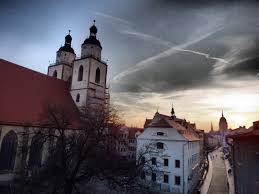
The central city church is called St. Mary´s. This is where Bugenhagen was Pastor and Luther preached regularly. It´s were the controversy on indulgences started in the confessional and got the Reformation going. They´ve got daily prayers at noon – but otherwise they are open from 10h00.
OLS just across St.Marys
Dr. Martin Luther´s House: The old Augustinian monastry, where Luther stayed and lived with his wife Katie on the eastern far side of town. There is a lot to see, browse and suck-up: – You should make time to enjoy this at good leisure.
Luther House, but that´s not “the” tower
Melanchthon´s House: It´s the most authentic, but you can get away with the least time input. If you are pressed for time, this would be the first one to drop – even though I really like the garden, the various rooms and nice bookshop.
Castle Church: That´s the old university, where Luther published the 95 theses and where he is buried. It is very well renovated and well worth a visit too.
The memorial door at the old Aula of the University (Castle Church) commemorating the 95 Theses.
If you have more time, I suggest the following as add-ons:
If you stay overnight and have some time to go for some hikes, I suggest the following walks or Bicycle rides:
Walk around the old Wittenberg (Altstadt) town wall: Takes about 45-60 minutes walking briskly.
Walk to and along the river Elbe on the Elbradwanderweg. The bicycle path is excellent and takes you all along the Elbe from Hamburg to Czechia – and across all of Germany. Cycle your heart out!
Walk into the newer parts of Wittenberg: Hundertwasser Schule, Villas, Russian block etc.
Other sites and destinations for day-trips from Wittenberg: Google Maps is fairly reliable and gives good orientation.
Leipzig, Halle, Berlin, Dresden are easily accessible by train.
More Luther sites: Eisleben, Eisenach, Wartburg, Erfurt…
You see, you could easily spend a week or two here – and not get around to see all there is to see. I do recommend a guided tour if you want to really learn something. They know their job and are fluent in English too.
We are grateful for your support and we need it. You can support mission outreach in Wittenberg through the International Lutheran Council through online giving. Just select “Wittenberg Outreach.”
You can also donate by mail: International Lutheran Council, PO Box 18775, St. Louis, MO 63118 or directly into the account of the International Lutheran Society of Wittenberg at IBAN DE05 8607 0024 0822 2135 00 and BIC (SWIFT) DEUTDEDBLEG
The iconoclasts – radical reformers under the raving extremism of Dr.Andreas Karlstadt – were throwing out the baby with the bath water. Trying to introduce the precious gospel of our Lord, they went overboard and started to attack art work, trappings, vestments etc in their misguided attempt to clean up the church. They were not reforming the church, but overthrowing it, pulling it down and destroying it.
Dr. Martin Luther was busy translating up on the Wartburg – his Patmos -, where his benefactors had hid him as “Junker Jörg” from emperor Charles V in his vindictive quest to implement the papal bull, banning Luther since he had resisted recanting in Worms & insisted on confessing before kings and princes:
Now after several months there was no time to lose. The little flame of the reformation was in danger of being consumed in the flames of revolt. Wittenberg without Dr. Martin Luther was about to loose it all to the hell hounds turned loose. So, the biblical prophet and church reformer returned to Wittenberg to quench the billowing flames of the demagogues and other mad men – despite protests from his friends and contrary to the express commands of his landlord and prince.
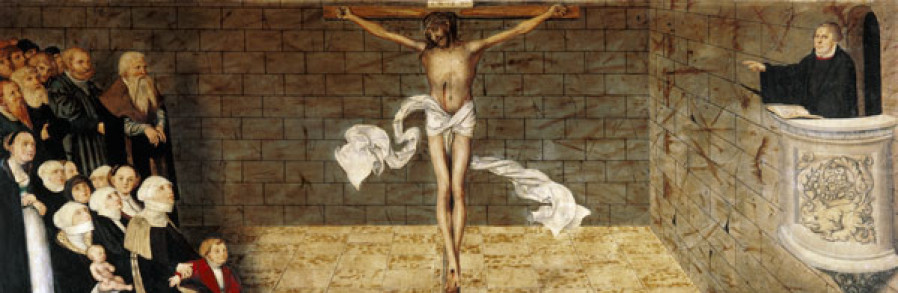
And what did Luther do on returning? He preached. Right there in St.Marys. The city church of Wittenberg. Starting on the first Sunday in Lent (Invocavit) he started a series called the Invocavit sermons
“The summons of death comes to us all, and no one can die for another. Every one must fight his own battle with death by himself, alone. We can shout into another’s ears, but every one must himself be prepared for the time of death, for I will not be with you then, nor you with me. Therefore every one must himself know and be armed with the chief things which concern a Christian. And these are what you, my beloved, have heard from me many days ago.”
And – thank God – peace returned to Wittenberg – at least for the time being. Hallelujah! It was as Luther had said: “God and His word did all and everything – even as he together with Johannes Bugenhagen & Co were at peace enjoying God´s goodness and grace +
Hier ist die Predigt zur Einführung während der Vesper:
Erkennt doch, dass der Herr seine Heiligen wunderbar führt (Ps.4,6) im Großen und Kleinen, im Allgemeinen und Speziellen, aber auch Alleine und Gemeinsamen.
Trotz der Warnung „Träume sind Schäume“, hören wir immer
wieder „Träume werden wahr“ und nicht nur der „American dream“ oder wie ist es sonst zu erklären, dass immer noch
hunderte und sogar tausende sich auf den Weg machen – ihr Glück in der Fremde
zu suchen. Bestimmt nicht nur wegen Fernweh! Es ist wohl eher die große
Triebfeder, die den anderen Dr. Luther schwärmen ließ: „I have a dream!“
Aus dunkler Vorzeit kennen wir die geschichtsträchtigen
Träume des großen „King of dreams“.
Seinen Vätern – die uns als Erzväter der Kirche bekannt sind – war das
vertraut. Sie wussten dies und das Lied oder zwei von Träumen, Wunschbildern
und göttlichen Vorstellungen zu singen. Sie waren dennoch keineswegs verträumte
„day dreamer“. Vielmehr war ihnen viel bedeutsamer, was der Herr der Geschichte
– der Gott von Anfang an, der derselbe ist gestern und heute und in Ewigkeit – der
dreieinige Gott Vater, Sohn und hl. Geist selbst in Erscheinung tritt. Nicht
als Fiktion menschlicher Spekulation oder Wunschgebilde. Nein, Er gab ihnen wirkliche
Einblick in sein Wesen, Wollen und Vorhaben. Wie durch einen Schleier, gewiss.
Nicht so oft von Angesicht zu Angesicht, wenn auch das tatsächlich vorkam. Vor
allem bei seinem Knecht Mose mit dem er sprach wie zu seines gleichen –
praktisch von Mann zu Mann. Oft blieb es aber beim ansatzweisen Staunen wie im
rauchgefüllten Thronsaal Gottes, wo der Prophet Jesaja die Füße Gottes schauen
durfte In dieser Reihe steht dann auch der allerletzte vor der herrlichen
Erfüllung: Johannes der Täufer, der von sich bekannte, dass er nicht wert war,
dem Herrn die Schnürriemen zu lösen, der aber dennoch der Größte in der Reihe
war und doch vom Kleinsten im Himmelreich weit übertroffen.
Gott zeigte Sternbilder bei Nacht. Malte Figuren, Ziffern
und Hochrechnungen in den Sand: So viele Nachkommen wie Sand am Meer. Da konnte
der Erzvater Abraham, dessen jahrhundertjahralter Leib schon recht betagt bzw
bejahrt war mit 10 Dekaden, nur staunen. Doch er glaubte dem Versprechen Gottes
als noch nichts zu sehen war als nur weiter Sandstrand am Meer und zahllose Sterne
am Himmelszelt. Das rechnete Gott ihm zur Gerechtigkeit an. Ja, der lebendige Gott – der ist, wer er ist; der
alles geschaffen hat und auch noch regiert, erhält und führt – er lässt seine
Auserwählten schauen, was er sich vorgenommen und was er haben will. Und sie
erfahren es am eigenen Leibe, dass Gott seine Hl. wunderbar führt – zielsicher,
effektiv und höchst verlässlich – „Und ob ich gleich nichts fühle von Deiner
Macht, Du führst mich doch zum Ziele auch durch die Nacht“ singt die Gräfin
Jahrtausende später auf dem Weg auf das asiatische Missionsfeld, wo ihr
vorausgegangener Bräutigam, bereits gestorben und ihr also endgültig voran
gegangen und an unser aller Ziel und Gott gewollte Bestimmung gekommen war.
Selbst in diesen ausweglosen Situationen, waren Gottes
Menschen – sein erwähltes Volk – Väter und Mütter, Eltern und Kinder –
Familien, Stämme und Völker – selbst in der Fremde nicht auf sich selbst
gestellt. Gott blieb dran. Er blieb bei, mit und unter ihnen. Wohnte mitten
unter ihnen. Wurde in ihrer Mitte sesshaft. Ließ sich dort unter ihnen sein
Zelt, seine Hütte, seinen Tempel konstruieren. Damit sie auf dem Weg, auf der Wanderschaft in
die ewige Heimat, ins himmlische Vaterland und göttliche Zion, dem wahren
Jerusalem – ihn nicht vergessen, aus dem Auge und Herzen verlieren würden. Vielmehr
sollten sie in seiner unmittelbaren Nachbarschaft, ja mehr noch in echter Hausgemeinschaft
mit ihm wohnen als Familienmitglieder, Freunde des Hauses, dazugehörig. Siehe
da die Hütte Gottes bei den Menschen und er selbst Gott mit ihnen.
Er zeigte mit der Himmelsleiter, dass er den garstigen
Graben der selbstverschuldeten Heimatlosigkeit, der andauernden Fremdlingsschaft,
der Exilsbürde überbrücken konnte, wollte und tatsächlich auch immer wieder überwand.
Er hat die, die draußen vor dem paradiesischen Tor, außerhalb des familiären Kreises,
der heimatlichen Stadtmauer und vertrauten Umfriedung, jenseits der Grenze waren,
heimgesucht und aufs barmherzigste heim ins Vaterhaus geleitet: Ist er nicht
auch Abrahams Sohn, sie Abrahams Tochter? Er sucht und macht selig, was verloren ist! Da
ist auch eigene Schuld und Ungerechtigkeit, List und Gaunerei, Feindschaft,
Hass, Neid und Streit, die in den besten Familie Ausgrenzung, Vertreibung,
Flucht und Exil verursacht, nicht endgültig. Gott selber überwindet das. Stellt
Kreuze in den Weg, baut Himmelleitern, schafft Ruhestätten mitten in der Wüste,
überwindet Mauern und Grenzen, gibt Wege Lauf und Bahn – durchs wilde Meer,
durch dürren Wüsten, selbst durchs tiefe Tal des Todes. Sein Stecken und Stab trösten
uns gerade dort.
In merkwürdiger Gestalt ließ er dort in Pnüel nächtlicherweile mit sich leibhaftig ringen, sich in göttlicher Gestalt schauen und sogar überwinden – zur nachhaltigen Segenserbschaft und wunderbaren Namensgebung: Nicht mehr nur Jakob, sondern Israel. Ja, Gott ließ sich schauen, anfassen und erwies sich als überaus vertrauenswürdig, verlässlich und glaubwürdig. Machte seine Verheißungen und Versprechen Schritt für Schritt wahr. Führte ins gelobte Land. Schenkte seine gnädige Gegenwart immer wieder aufs Neue und machte die Tore des Himmels wieder auf, damit sein Haus voll würde, die von ihm längst schon vorherbestimmten Ehrenplätze besetzt und sein Volk von aller Welt Enden gesammelt endlich zur Ruhe gebracht würde.
Ja, er tat das, bis dass der Apostel zu unserer Erbauung im Glauben mit der ganzen Kirche und der Wolke der wahrhaftigen Zeugen bekennen konnte: „Was von Anfang an war, was wir gehört haben, was wir gesehen haben mit unsern Augen, was wir betrachtet haben und unsre Hände betastet haben, vom Wort des Lebens – und das Leben ist erschienen, und wir haben gesehen und bezeugen und verkündigen euch das Leben, das ewig ist, das beim Vater war und uns erschienen ist –, was wir gesehen und gehört haben, das verkündigen wir auch euch, damit auch ihr mit uns Gemeinschaft habt; und unsere Gemeinschaft ist mit dem Vater und mit seinem Sohn Jesus Christus. Und dies schreiben wir, auf dass unsere Freude vollkommen sei. Amen. Amen.
“Anbetung der Könige”, which was commissioned by Friedrich the Wise from the German painter Albrecht Dürer for the town of Wittenberg in the middle of the 16th century.
Before the Christmas holiday´s we used Dr. Martin Luther´s translation of Bishop Ambrose of Milan´s composition “Veni redemptor genitum” to introduce the Adventide and the glorious incarnation of our Lord and saviour Jesus Christ in Bethlehem promised from of old and at last fulfilled in our world and age. Now after the high holidays the festive season continues in the Epiphany of the very same Lord. He, who did not just arrive for the benefit of those Jews in Judea – but also for the heathen nations and whole world, shows himself as who his is. In him, we can visualize God, who in Jesus Christ has himself effectively cancelled his old commandment by giving us a living image (Icon) of himself in flesh and blood.
Albrecht Dürer depicts the venerable magoi from the East as royal representatives of the old world (cf. Ps.72:10ff): Africa, Asia and Europe falling down in reference before the King of kings and Lord of Lords – a little baby boy on the holy Virgin´s lap – she the mother of God and humble maid-servant of the Highest. Three kings Melchior, Balthasar and Caspar deduced from the threefold gifts: Gold, incence and myrrhe. They are there just like the ox and ass mentioned in Isaiah 1,3, because they have come to see the King of the Jews. Obviously, like all symbolism, this trilogy is subject to some interpretation, which can be true or false, misleading or right on target. Caelius Sedulius uses it to reflect on the natures of Christ – the duality of divine and human is complemented by the category of royality in vers 2 of his memorable canticle: Hostius Herodes, impie… (5th Century) again translated by Dr. Martin Luther and available in the SELK Hymnal 423. It is a good outline of our Lord´s Epiphany – a short catechism of his appearance among us – bringing us life and salvation aplenty from on high.
Was fürchtst du, Feind Herodes, sehr, Daß uns geborn kommt Christ der Herr? Er sucht kein sterblich Königreich, Der zu uns bringt sein Himmelreich.
King Herod did not make it into either the Apostolic nor Nicene Creed as Pontius Pilate did. Still, he gained further notoriety by setting off the persecution of the Christ, although this “King of the Jews”, whose star the men saw in the East, clearly doesn´t seek a worldly kingdom as he confesses at the end of his short career when suffering under Pilate: “My kingdom is not of this world!”. King Herod sent his legions to kill him – and just to make sure murders the Holy Innocents in Bethlehem, sending little baby Jesus off to Egypt in full flight after the angelic warning and fulfilling a further prophecy, this time the one from Jeremiah 31:15-17:
“A voice is heard in Ramah, mourning and great weeping, Rachel weeping for her children and refusing to be comforted, because they are no more.”
This holy Gospel for the 28th December (Holy Innocents) underlines with the Gospel of St. Stephen´s Holiday on the 2nd Day of Christmas (26th December) that the high and holy festive season of Christmas is not some sentimental and emotional feel-good myth designed by Hollywood & Co, but rather shows realistically that our Lord came into this very world – not some illusionary utopia. It is a world, where innocent babies are killed by the high and mighty. It is a world, where innocent servants of the Lord are stoned, poisoned and keelhauled by those, who fancy themselfs as special envois from onhigh – like the high-priests serving Herod on his mission of death and Saul, who presided gleefully at the merciless killing of St. Stephen.
Little Jesus being carried off to Egypt and the Holy Innocents carried all the way home into heaven.
Dem Stern die Weisen folgen nach, Solch Licht zum rechten Licht sie bracht. Sie zeigen mit den Gaben drei, Dies Kind Gott, Mensch und König sei.
The wintery skies show a meriad of stars – if you´re view is not clouded. Yet, one was of special significance and the wise men from East were able to tell it´s meaning. After all it was the heavenly sign to announce “The new-born king of the Jews!” We don´t hear of any others being able to read this godly message. Not even the scribes and high priests in Jerusalem could make it out. Thankfully, however they had the Holy Scriptures – the Old Testament and they knew, that the promised Messiah was to be born in Bethlehem – the house of Bread – accourding to the prophet Micah. The Holy Bible – the Old and New Testament – is the true light on our path to find eternal life, because it points us – like the holy star up in the Christmas sky did to the blessed men from the East – directly, perfectly, clearly and authoritatively to our Lord Jesus Christ. He, himself calls us through this witness – and blessed are all, who do not take offense at Him.
“But you, Bethlehem Ephrathah, though you are small among the clans of Judah, out of you will come for me one who will be ruler over Israel, whose origins are from of old, from ancient times.”
He will stand and shepherd his flock in the strength of the Lord, in the majesty of the name of the Lord his God. And they will live securely, for then his greatness will reach to the ends of the earth. And he will be our peace”
(Micah 5:2ff)
The people walking in darkness have seen a great light; on those living in the land of deep darkness a light has dawned.
You have enlarged the nation and increased their joy; they rejoice before you as people rejoice at the harvest, as warriors rejoice when dividing the plunder. For as in the day of Midian’s defeat, you have shattered the yoke that burdens them, the bar across their shoulders, the rod of their oppressor. Every warrior’s boot used in battle and every garment rolled in blood will be destined for burning, will be fuel for the fire.
For to us a child is born, to us a son is given, and the government will be on his shoulders. And he will be called Wonderful Counselor, Mighty God, Everlasting Father, Prince of Peace.
Of the greatness of his government and peace there will be no end. He will reign on David’s throne and over his kingdom, establishing and upholding it with justice and righteousness from that time on and forever. The zeal of the Lord Almighty will accomplish this.
(Isaiah 9:1-6)
Die Tauf im Jordan an sich nahm Das himmelische Gotteslamm, Dadurch, der nie kein Sünde that, Von Sünden uns gewaschen hat.
Our Lord´s Baptism by St. John the Baptist in the Jordan
Our Lord IX did not come to dissolve the law, but to fulfill it. Therefore, he requested Holy Baptism from the hands of St. John the Baptist – to fulfill all requirements of God´s holy Law “for us and our salvation”. He did that at the start of his public ministry – when he was about 30 years old. It was ongoing appearance of our Lord, showing himself as who he was, so that we would recognize God´s own and very beloved Son – listen to him, obey him and follow his ways. He, who was without sin, took upon him the sins of the world, so that everybody, who trusts in him, will be saved. This is not just for the Jews in Israel, but rather for all nations – right to the ends of the world. For as he said in his final testament: “Therefore go and make disciples of all nations, baptizing them in the name of the Father, the Son and the Holy Spirit – and teach them everything, that I have entrusted to you!” (cf. Mt.28:18ff). This gospel of Jesus´Baptism is dedicated to the 1st Sunday after Epiphany.
Ein Wunderwerk da neu geschah: Sechs steinern Krüge man da sah Voll Wassers, das verlor sein Art, Roter Wein durch sein Wort draus ward.
Our Lord at the wedding in Cana
The first miracle Jesus did, was changing water into wine. Here depicted in a Greek icon, showing the married couple, the wine jars and holy mother of God talking to her son. It´s the gospel for the 2nd Sunday after Epiphany. We will hear more then. For now it´s time to join in God´s praises for sending us His son – and have him appear among us, so we would recognize, how good, friendly, merciful, gracious, loving and compassionate is our God – the Father, Son and Holy Spirit! Amen.
Lob, Ehr und Dank sei dir gesagt, Christ geborn von der reinen Magd, Mit Vater und dem Heilgen Geist Von nun an bis in Ewigkeit.
Wir Wittenberger Webers aus der Alten Lateinschule inmitten der winterlichen Lutherstadt Wittenberg im Herzen Europas wünschen Euch alles Gute + freuen uns auf ein frohes Wiedersehen. Mit dem üblichen Jahresrückblick teilen wir unser Freud und Leid mit Euch, aber nehmen gleichzeitig die Gelegenheit, um Euch herzliche Glück- und Segenswünsche zum neuen Jahr des Herrn 2019 zu übermitteln. Hier nun endlich der versprochene Rückblick zu 2018: Webers Rundbrief aus Wittenberg 2018
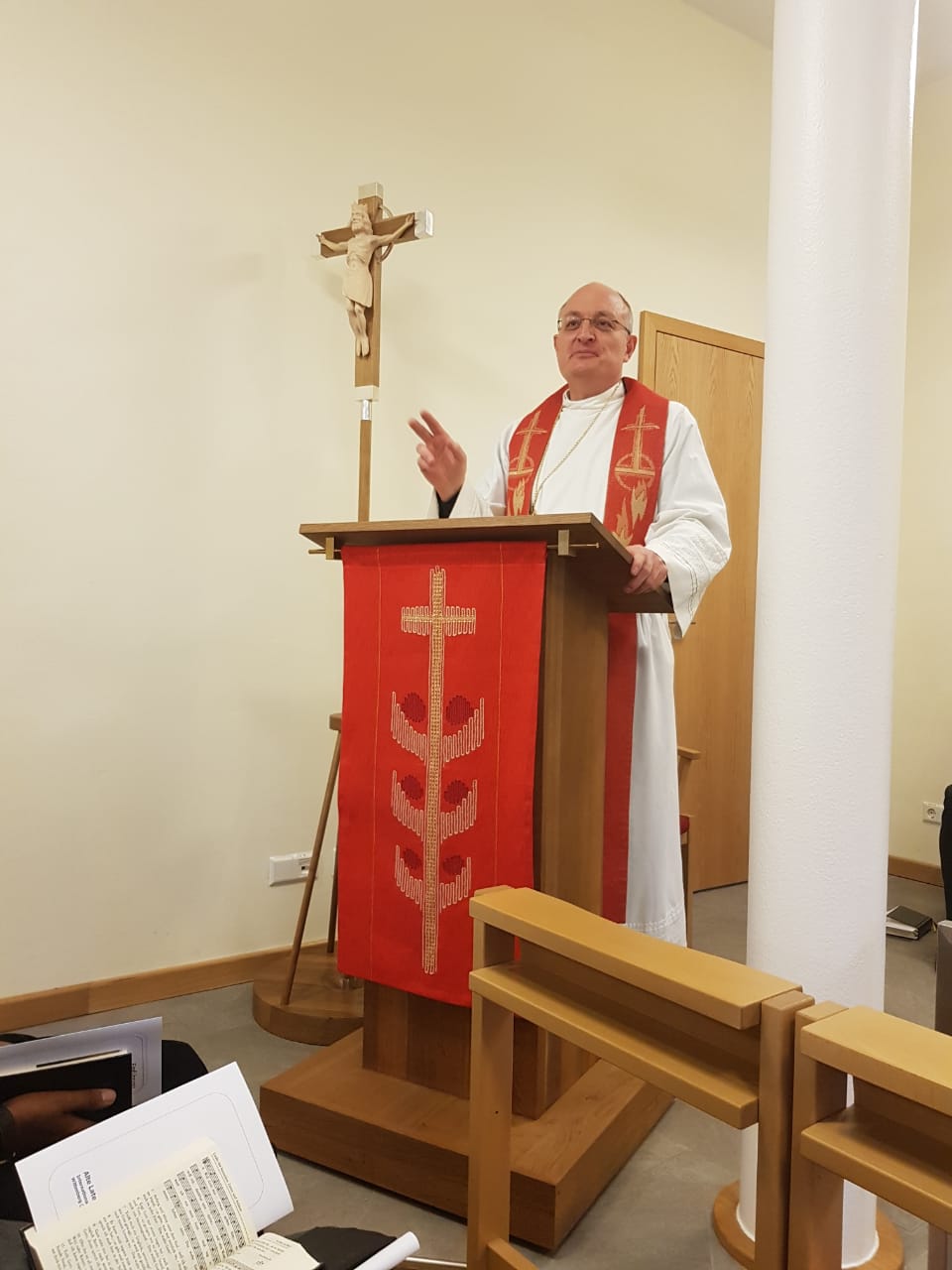
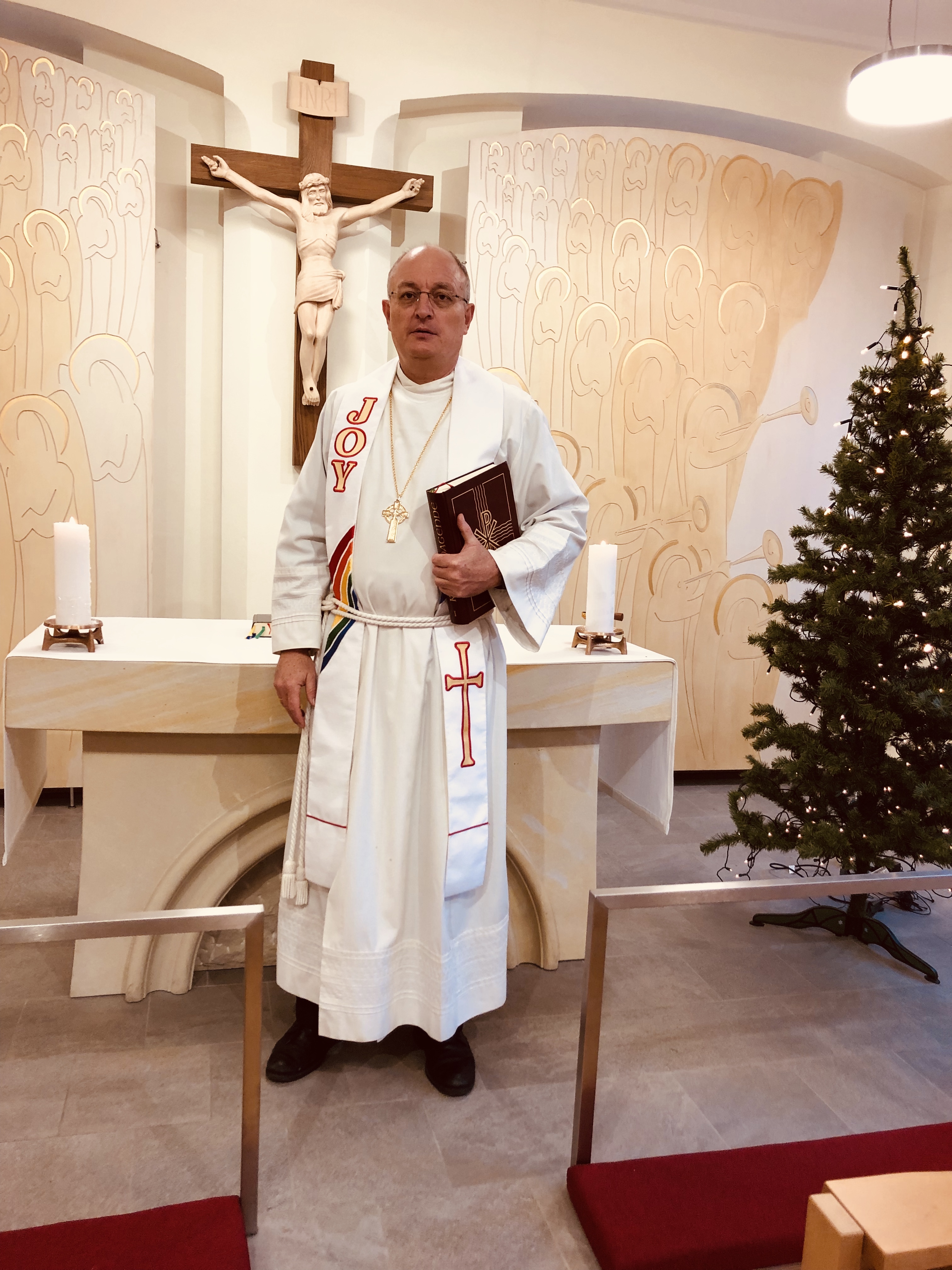
Unsere Kapelle
Auf dem Riesenrad
In Mikulov
Rehefelde
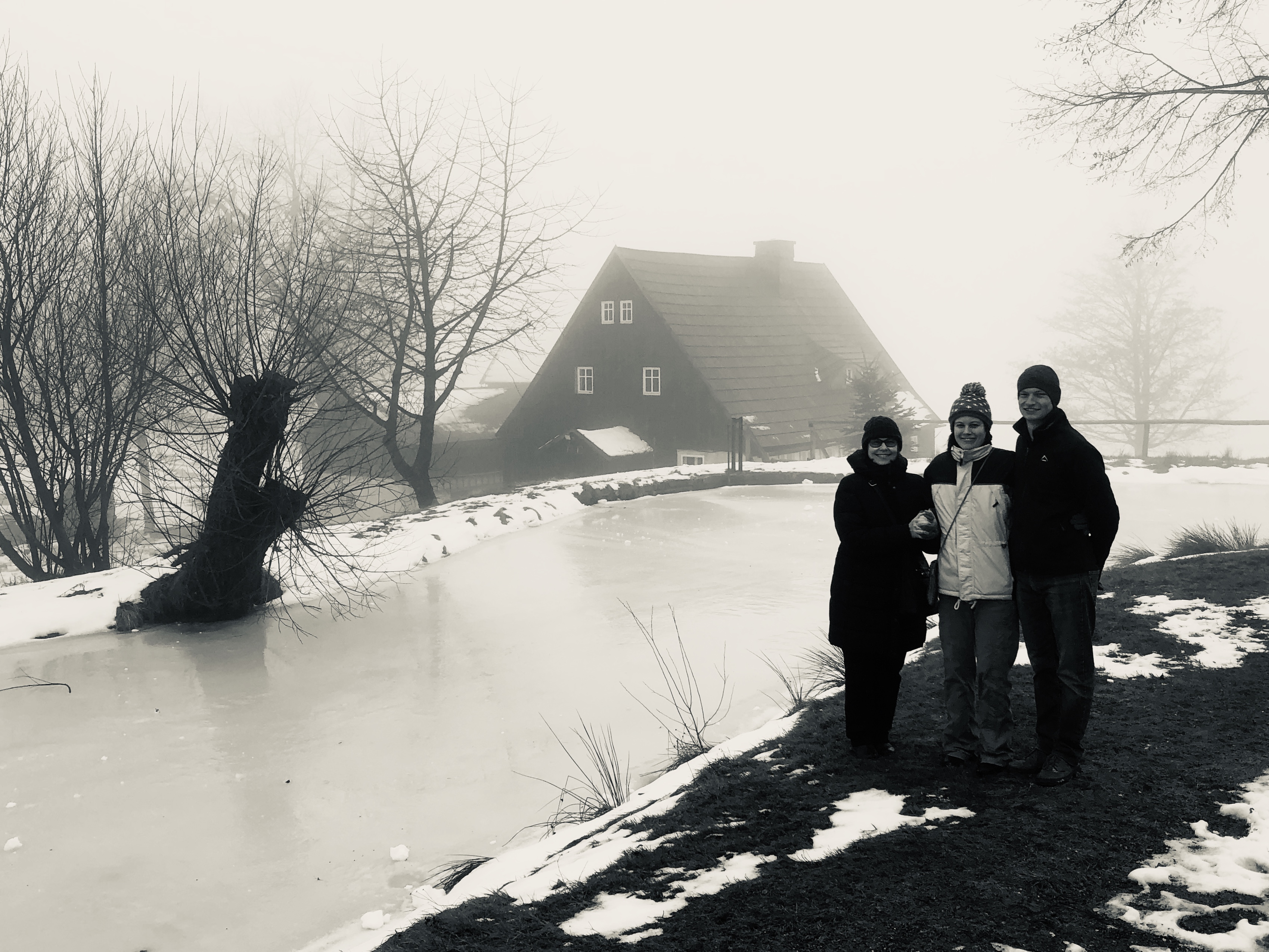
Seiffen
Mutter & Tochter
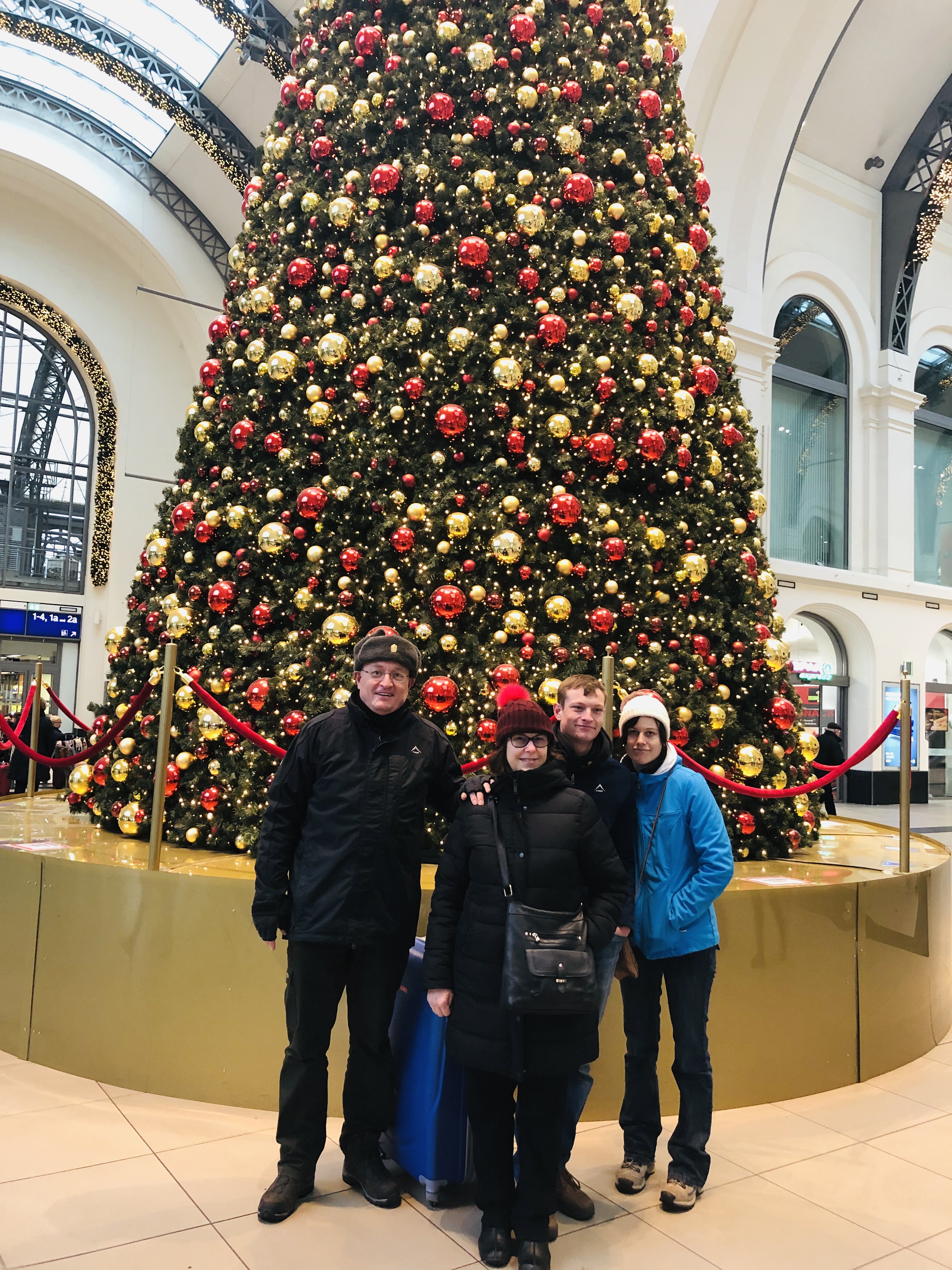
Dresden Hbf: Abschied
Meißen
Freudendienst
Zu Luthers Füßen
In Guben
Beim Bach-Haus
Unterwegs
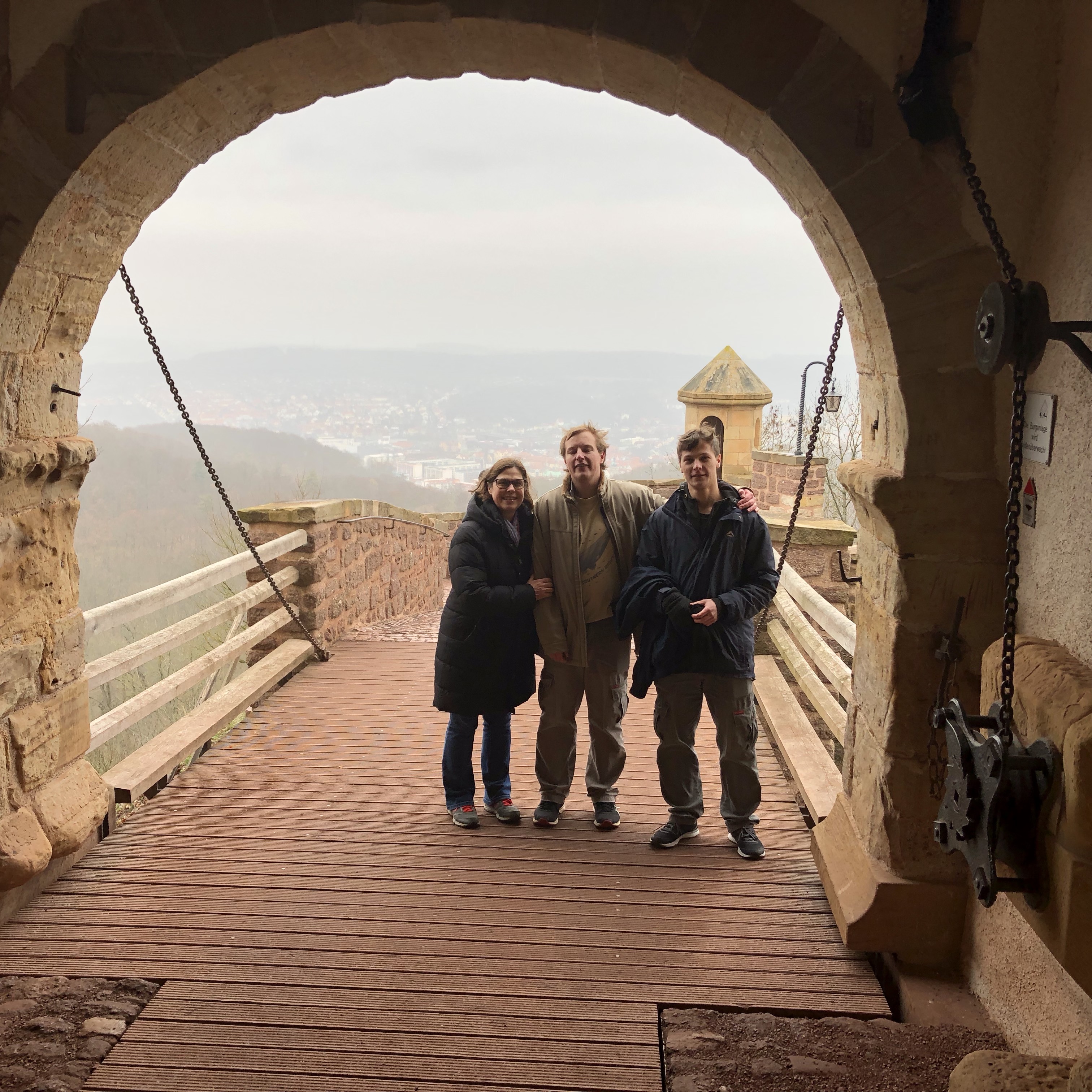
Auf der Wartburg
In der guten Stube
Psalm 133
Freilichtmuseum in Seiffen
In herzlicher Verbundenheit verbleiben wir Eure Angelika und Wilhelm an diesem 1. Sonntag nach Weihnachten, dem 30. Dezember 2018. Wir grüßen Euch mit Wort aus dem Hl. Psalter: „Er gedenkt an seine Gnade und Treue für das Haus Israel, aller Welt Enden sehen das Heil unsres Gottes.“ (Ps.98:3) In diesem Sinne stimmen wir fröhlich ein in Paul Gerhardts Weihnachtslied, das für diesen Sonntag als Graduallied bestimmt ist: Fröhlich soll mein Herze springen…
Der Predigttext aus dem Matthäus Evangelium im 3. Kapitel ist “Der Kindermord in Bethlehem und die Flucht Jesu nach Ägypten”. Das ist zu sehen auf dem Melker Altarbild gemalt von Jörg Breu dem Älteren, 1502 und paßt ja wieder 100% ins Leben und unserer erlebten Wirklichkeit. Der Herr kennt die Seine. Er führet Seine Heiligen wunderbar und leitet sie mit Mutterhänden stetig hin und her bis sie ihr Heimatland erlangen…
















 Wilhelm's space