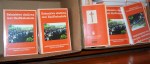
Lutheran Order of service in isiZulu and seTswana for this the 3rd Sunday after Trinity

For the Son of Man came to seek and to save the lost. Lk.19,10

This 3rd Sunday after Trinity carries the watchword from saint Luke’s gospel 19,10, where our Lord and savior is quoted stating: “For the Son of Man came to seek and to save the lost.” The Introit for this Sunday is the well know Psalm 103,8.10-12. The Old Testament reading is Ez.18,1-4.21-24.30-32; Epistle from the 1st letter of St.Paul to Timothy 1,12-17 and the gospel from the evangelist St. Luke 15,1-3.11b-32 (The good father and the two sons) The sermon is based on God’s holy word from the 1st letter of St.Peter 1,8-12 and the liturgical colors are green as normal for this non-festive season. I am happy to have the order of the Lutheran order in both isiZulu and seTswana available – thanks to the Lutheran Heritage Foundation (LHF). Here they are. Today it comes with a sermon written in isiZulu on 1.Peter 1,8-12 by Rev. K.G. Tiedemann (LKM) – wz1233120624 n Tr 3 – and translated as usual into seTswana by Rev. E.A.W.Weber DD – wt1233120624 n Tr 3

Posted in Uncategorized | Tagged , , , , , , , , , , , , , , | Leave a comment

Think about it: Fragments from Charles Taylor’s “A secular age” Chapter VIII

“Part of the self-consciousness of modern anthropocentrism is this sense of achievement, of having won through to this invulnerability out of an earlier state of captivity in an enchanted world.” (p. 301).

“What this reflects is that in face of the opposition between orthodoxy and unbelief, many, and among them the best and most sensitive minds, were cross-pressured, looking for a third way. This cross-pressure is, of course, part of the dynamic which generates the nova effect, as more and more third ways are created.” (p. 302).

“We can understand, however, why melancholy (or “ennui” or “spleen”) can take an important place in the art which has formed the consciousness of our age, as with Baudelaire.” (p. 303).

“Homogeneity and instability work together to bring the fragilizing effect of pluralism to a maximum.” (p. 304).

“For a monk to suffer from acedia in his vocation was a sin; it was not a form of questioning of God.”  (p. 308).

“Some people indeed, want to reject the first way of framing the issue, the “one thing needful” way, the way of post-Axial culture. We shouldn’t try to force life into a single over-riding purpose; we should be suspicious of questions about the meaning of life. These people want to take up an anti-Axial position, they want to rehabilitate “paganism”, or “polytheism”. But whatever one’s stand on this polemic, the malaise is felt on both these levels, and we all can recognize what is going on when it is.” (pp. 308-309).

“Rousseau is a hinge figure in this. He spoke up, very eloquently and persuasively, for a more demanding standard of justice and benevolence; and he was the inspiration of a whole tradition of radical humanist views, starting with those of the French Revolutionaries…”  (p. 311).

“Kant is an important resource for a whole gamut of these. In spite of the continuing place of God and immortality in his scheme, he is a crucial figure also in the development of exclusive humanism, just because he articulates so strongly the power of inner sources of morality. And yet, we cannot be surprised when we learn that Kant came from a Pietist background. His philosophy goes on breathing this sense of the stringent demands of God and the good, even while he puts his Pietistic faith through an anthropocentric turn.” (p. 312).

“…. appeal against the moral to a genuine self-realization can then be played out in a host of forms, both spiritual and naturalistic, as we see with Nietzsche, among others-and, of course, with Lawrence.”… “But then Schiller argues that the highest mode of being comes where the moral and the appetitive are perfectly aligned in us, where our action for the good is over-determined; and the response which expresses this alignment is just the proper response to beauty, what Schiller calls “play” (Spiel). We might even say that it is beauty which aligns us.” (p. 313).

“Recognizing the tragedy in life is not just having the nerve to face it; it is also acknowledging some of its depth and grandeur. There is depth, because suffering can make plain to us some of the meaning of life which we couldn’t appreciate before, when it all seemed swimmingly benign; this is after all what tragedy as an art form explores.” (p. 318). After going in to Nietzsche he then writes: “There is a dark side to creation, to use this (Barthian) expression; along with joy, there is massive innocent suffering; and then on top of this, the suffering is denied, the story of the victims is distorted, eventually forgotten, never rectified or compensated. Along with communion, there is division, alienation, spite, mutual forgetfulness, never reconciled and brought together again.” (p. 319)

“Human beings, however much they try, cannot really be happy this way. Their attempt to be so will be frustrated, either by the natural, unavoidable occurrence of suffering and death, or by the stifled sense within them that they were born for something higher. This latter criticism has been frequently levelled by Christian writers; but it can also be seen as implicit in Nietzsche’s scornful picture of the last man.” … and then finally the issue of “Death”.  “Death is simply the negation, the ultimate negation, of flourishing; it must be combated, and held off till the very last moment. Against this, there have developed a whole range of views in the post-Enlightenment world, which while remaining atheist, or at least ambivalent and unclear about transcendence, have seen in death, at least the moment of death, or the standpoint of death, a privileged position, one at which the meaning, the point of life comes clear, or can be more closely attained than in the fullness of life. Mallarme, Heidegger, Camus, Celan, Beckett: the important thing is that these have not been marginal, forgotten figures, but their work has seized the imagination of their age.” (pp. 320-321)


Posted in Uncategorized | Leave a comment

Lutheran Order of service for the 2nd Sunday after Trinity in isiZulu and seTswana

This coming Sunday is the 2nd Sunday after Trinity and the 3rd after Pentecost. It stands under the watchword quoting our Lord Jesus Christ with his comforting promise: “Come to me, all you who are weary and burdened, and I will give you rest.” (Mat 11:28 NIV)

The sermon for this Sunday is based on St. Paul’s first letter to the Corinthians 14,1-3.20-25 and was written by the Dean of the LCSA diocese in Gauteng Rev. Siphiwe Danisa: Order of worship in isiZulu 17th June 2012 and in seTswana by Rev. Radikobo Ntsimane: Order of worship in seTswana 17th June 2012.

Our Lord and savior invites you: “Come … it is all prepared!”

The gospel is the wonderful invitation of our Lord to the divine banquet (Lk.14,16-24).

Wishing you a very blessed Sunday at the Lord’s table and in his delightful and gracious presence +

Bishop Weber

Posted in Uncategorized | Tagged , , , , , , , , , , , , , , , , , , , , | Leave a comment

LTS Newsletter

Dr. Rockrohr has finished another LTS Newsletter (LTS News 2012, II)

It’s the 2nd one of 2012 and rings in the end of the 1st Semester. Catch up on the things happening at LTS – at least in broad outlines and look forward to the ongoing good stories from this Lutheran Seminary in Southern Africa as the LTS continues to train Lutheran pastors and deaconesses for Africa +

Posted in Uncategorized | Tagged , , , , , , , , , , , , , , , , , , , , , , | Leave a comment

“Letter to the churches” from the European Lutheran Conference: “How to read and study the Bible”

(NL) In bijlage de kerknieuwsbrief van vandaag.
Alsmede een “Brief aan de kerken” van de Europese Lutherse Conferentie: “Hoe de Bijbel lezen en bestuderen”. In de originele Engelse versie en in de Nederlandse vertaling.
Een gezegende week toewensende,
(E) Attached today’s church newsletter. Also a “Letter to the churches” from the European Lutheran Conference: “How to read and study the Bible”: 2012 ELC LetterToTheChurches – English
Posted in Uncategorized | Leave a comment

Daily rations …

Losung und Lehrtext für Montag, den 11. Juni 2012

Rede, HERR, denn dein Knecht hört. 1.Samuel 3,9

Christus spricht: Wer mein Wort hört und glaubt dem, der mich gesandt hat, der hat das ewige Leben und kommt nicht in das Gericht, sondern er ist vom Tode zum Leben hindurchgedrungen. 
Johannes 5,24

And from Bagster’s Daily Light for June 11, 2012 – Monday Morning

He arose, and came to his father.

And he arose and came to his father. But while he was still a long way off, his father saw him and felt compassion, and ran and embraced him and kissed him. 1

The LORD is merciful and gracious, slow to anger and abounding in steadfast love. He will not always chide, nor will he keep his anger forever. He does not deal with us according to our sins, nor repay us according to our iniquities. For as high as the heavens are above the earth, so great is his steadfast love toward those who fear him; as far as the east is from the west, so far does he remove our transgressions from us. As a father shows compassion to his children, so the LORD shows compassion to those who fear him. 2

For you did not receive the spirit of slavery to fall back into fear, but you have received the Spirit of adoption as sons, by whom we cry, “Abba! Father!” The Spirit himself bears witness with our spirit that we are children of God, 3

But now in Christ Jesus you who once were far off have been brought near by the blood of Christ. So then you are no longer strangers and aliens, but you are fellow citizens with the saints and members of the household of God, 4
______________

1Luk 15:20; 2Psa 103:8-13; 3Rom 8:15,16; 4Eph 2:13,19;

Posted in Uncategorized | Leave a comment

Bishop’s and rector’s reports at the LCSA diocesan synod of KwaZulu/Natal in Pella, KZN

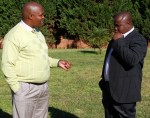
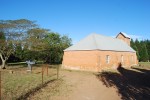
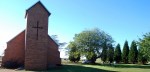
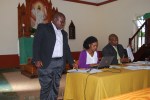
Dean Mandla Thwala and his deputy Rev. Jabulani Nkosi (pastor at the Lutheran Church, Pella) arranged and led the diocesan synod of the LCSA diocese in KwaZulu/Natal on Saturday, the 9th June 2012.

Finalizations before the synod

Pastors and delegates from most of the 11 different congregations gathered in the Lutheran Church at Pella under God’s word and in his presence to listen to reports from the bishop on the work of the LCSA (Bishop Report 2012.6 Pella), the dean on the work in the diocese and also from the treasurer (Mr. Thomas Mabasa) and Rev. Peter C. Weber (Ohlangeni) on the status and work of ALPIK, which helps to grant sustainable incomes to the pastors of the diocese with the help of LCSA and FELSiSA congregations – but also from every pastor from the various parishes and congregations.

KwaZulu/Natal is the only diocese in the LCSA, which has Lutheran churches amongst Indian people. Their pastor Missionary Rainald Meyer reported on the work in both congregations in the Durban area: Chatsworth and Phoenix.

Besides the LCSA diocese in Botswana the diocese in KwaZulu/Natal has a significant contingent of missionaries from the Mission of Lutheran Churches (MLC), which is the official partner and mission agency of the LCSA. Yes, the LCSA is an official member of the MLC – together with the FELSiSA – and this is a very helpful, fruitful and blessed co-operation and partnership in full church fellowship for many years and even decades already. Yesterday Rev. Roger Zieger (Director of Missions from the “Lutherische Kirchenmission” Bleckmar – an official branch of the SELK) was an official guest at yesterday’s meeting too. He greeted the synod with words from 1.Cor.12,4-7 and is today preaching at the Mission festival at the Lutheran Church in Kirchdorf, which is a neighbouring congregation of that in Pella, where the synod gathered yesterday.

As rector of the Lutheran Theological Seminary in Tshwane (Pretoria) I also gave an overview of the latest developments at our Seminary and especially about our plans to expand the facility with adjacent property to accommodate the growing numbers of students in both the theological and diaconic programs, but also to raise sustainable income by providing accommodation to volunteers, students and visitors on mission and educational trips to Southern Africa (Rector’s Report 2012 KZN Pella).


Posted in Uncategorized | Tagged , , , , , , , , , , , , , , , , | Leave a comment

Losung und Lehrtext für Freitag, den 8. Juni 2012

Gleichwie ich über sie gewacht habe, auszureißen und einzureißen, so will ich über sie wachen, zu bauen und zu pflanzen, spricht der HERR. Jeremia 31,28

Jesus fing an, in Gleichnissen zu reden: Ein Mensch pflanzte einen Weinberg und zog einen Zaun darum und grub eine Kelter und baute einen Turm und verpachtete ihn an Weingärtner und ging außer Landes. Markus 12,1 

Posted in Uncategorized | Leave a comment

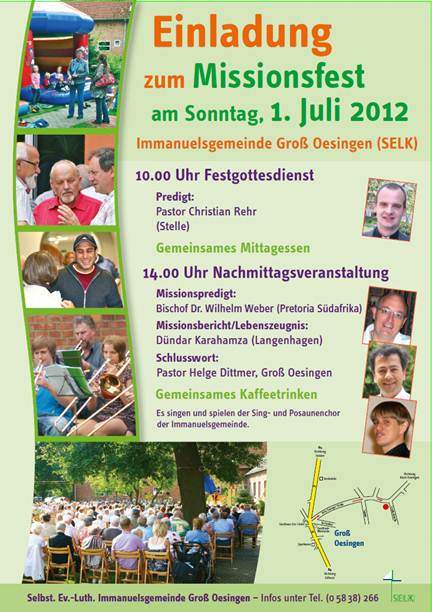
Missionsfest in Gr.Oesingen

So Gott will und wir leben soll In weniger als einem Monat Missionsfest in Gr.Oesingen sein. Hier eine Vorschau und Einladung:

Posted in Uncategorized | Leave a comment

Herzliche Segenswünsche zum Geburtstag +

Bischof Hans-Jörg Voigt wird 50: Seit 2006 leitender Geistlicher der SELK

Hannover, 6.6.2012 – selk – Bischof Hans-Jörg Voigt (Hannover) wird am morgigen Donnerstag 50 Jahre alt. Der leitende Geistliche der Selbständigen Evangelisch-Lutherischen Kirche (SELK) wurde am 7. Juni 1962 in Dresden geboren.

Nach dem Theologiestudium absolvierte Voigt sein Lehrvikariat in Cottbus, ehe er als Pfarrvikar und seit 1993 als Gemeindepfarrer im Pfarrbezirk Greifswald der SELK tätig war. In dieser Zeit übernahm er nebenamtlich von 2001 bis 2003 die Funktion des Superintendenten im Kirchenbezirk Berlin-Brandenburg und von 2004 bis 2006 die Leitung des Praktisch-Theologischen Seminars der SELK. Seit 2006 hat der Jubilar das Bischofsamt der SELK inne.

Voigt ist verheiratet mit seiner Frau Christiane, geborene Junker. Das Ehepaar hat vier Kinder.
——————–
Eine Meldung von selk_news /
Redaktion: SELK – Gesamtkirche /
selk_news werden herausgegeben von der Kirchenleitung
der Selbständigen Evangelisch-Lutherischen Kirche (SELK),
Schopenhauerstraße 7, 30625 Hannover,
Tel.             +49-511-557808       – Fax +49-511-551588,  E-Mail selk@selk.de

—> Informationen aus Kirche und Gemeinden in Wort und Bild
auch unter „SELK-Aktuell“ auf http://www.selk.de

Posted in Uncategorized | Leave a comment