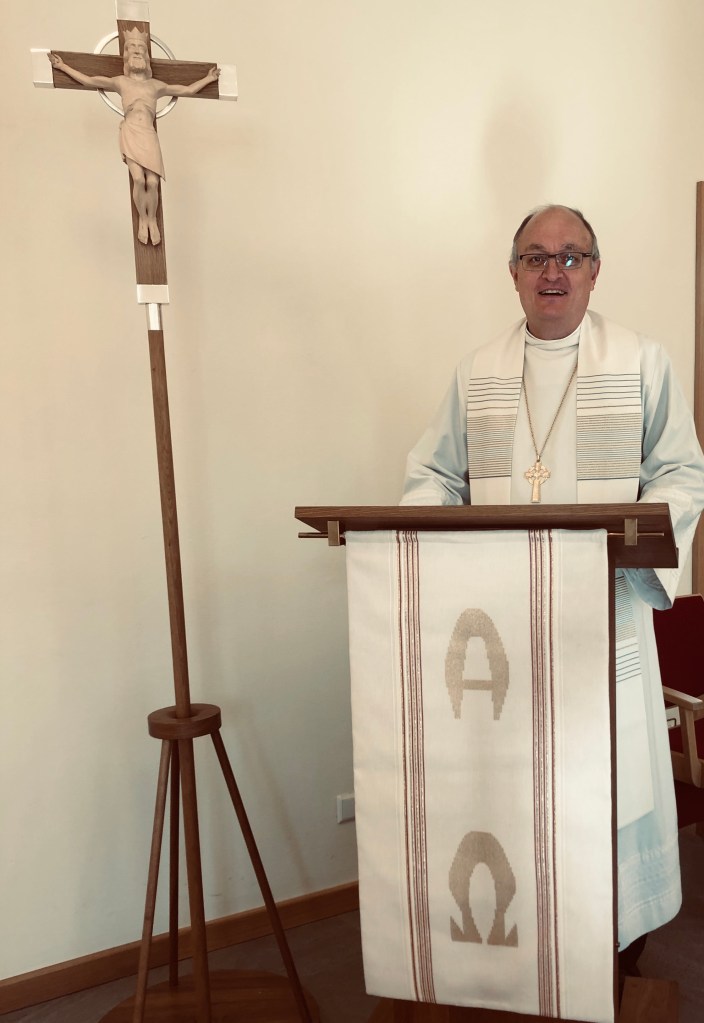
The heartbeat of our life…

Yesterday, the pastor´s convention for the SELK diocese of Saxony and Thuringia met online for hours on end. It was a very fruitful meeting all in all – especially the well-prepared exegesis of this coming Sunday´s sermon text from St. John´s gospel by Pastor Megel (Steinbach-Hallenberg) leading us right up to three well considered options for sermon outlines, but also the in-depth discussion on how to go about the divine service and celebrate the Lord´s Supper responsibly and faithfully in these sheer endless weeks of legalized social distancing.

It was very helpful to listen to the serious considerations from brothers serving in very different situations. If you consider, that it saved me about four hours travelling time to and fro – and allowed me to sleep over in my own bed – it was quite effective. Still, I missed the personal banter with friends during the lengthy sittings. No interjections, passing comments or spontaneous joking – if there is only one microphone on air at any time. It´s the control freak´s paradise and very focussed, yes, yes, but far from the vibrant exchange of personal interaction, that we pastors enjoy just as all liberated individuals in the extended community of Christian believers.

I am sure, bureaucrats love this – never mind the financial gurus – it´s cheap, it works, but it remains sterile, virtual and very close to speaking through the microphone of some window of a secured prison´s visitor´s booth. Yes, I missed shaking hands, rubbing shoulders with the brothers, hugging this and that one and breaking bread with those, who otherwise just keep their distance and remain at arm’s length like those second cousins in the otherwise close-knit Lutheran brotherhood. Superintendent Junker (Weißenfels) stressed, that this “fellowship lite” would not become the “new normal”. Thank God, it´s not yet “alternativlos!”

Isn´t it funny, how these words start creeping even into our theological vocabulary? That hit me several times yesterday. Again, and again some brother would drop these recent additions to the public discourse and use them in our ecclesial context. Some brothers are careful users of words – nearly like laying out minuscule mosaics most meticulously – whereas others paint more or less in broad strokes like old Tom Sayer with that famous whitewasher of his. Alexander Kissler (Cicero) therefore, calls on everyone to use words carefully – and not just the readers of some user manual once they notice, that they can´t get the acquired tool to work properly.

Well, coming from reading John 15 yesterday to this morning’s lesson from Dobberstein´s “Anthology” is not as far off as You might think. It´s all got to do with reading God´s Word attentively and faithfully – hearing God talking to us through the holy apostles and prophets. He gives us so many wonderful tools and devices to make us get his message. So, this morning I tried the dictate function for the first time – and it actually works well. The machine gets even my English readings – despite the foreign accent from the colonies long gone and down under. I was seriously impressed. And furthermore, I found a link on the German Bible Society´s site: https://www.academic-bible.com/en/online-bibles/about-the-online-bibles/ That is seriously brilliant. Considering, how many books and even electronic programs I have bought in the past to read these words in the original biblical wording – and here and now – it is accessible at a mouse-click for free. Hallelujah + Nota bene et tolle lege. Verbum Dei manet in aeterna. Hallelujah +

Here is a passage written by the German exegete Julius Schniewind in Dobberstein´s translation. It´s right on the mark and worth some contemplation. I think, he would have probably said – Herzstück – and indicated that it is a part of our heart and not the whole thing even as the cross in Luther´s emblem is but a part of it. Even in penning down the signs of the church in his fundamental: “On the Councils and the Church” (1539) prayer and cross are but parts of the whole… Still, Dobberstein translated it as “The heart of our ministry“ and so here is what Schniewind writes in that translation:

The pastor´s private prayer is the heart of our ministry. Paul serves God in the gospel “ἐν τῷ πνεύματί μου” (Romans 1:9), that is, in Spirit-prompted prayer. This prayer is unceasing, like breathing, and yet it has its definite hours of prayer. We know that Luther spent two hours daily in prayer. This includes the reading of the Bible: prayer originates and consists only in listening to the word. I have heard bitter complaints that in an active parish there’s no time for such meditation. Perhaps this must be overcome in faith in God, who, if we will only really hear and proclaim his Word, will give us helpers, who will relieve us of other things.

How shall we read the Bible? I follow Asmussen´s lectionary that covers the whole Bible in a year; but I am aware that this it has value chiefly in providing only the necessary knowledge of the Bible. To what extent, in this quantitative reading, do we come to the point where we really hear, where we hear the word spoken to us personally? One may choose shorter portions, such as the Bible readings which are available, despite their shortcomings. This hearing comes with practicing Luther´s principle “scriptura sui ipsius interpres” (Scripture is its own interpreter). Being at home with the Greek text of the whole New Testament gave earlier generations of ministers their power. The looking up of parallel passages in the Bible and concordance has opened up the Bible for many laymen, and for us, too, there is no better way of learning to hear, both scientifically and practically.

This listening passes over inevitably into prayer. Any application of the Word too ourselves can only be prayer. But prayer is “alert” too intercession. Ephesians 6:18f: “καὶ εἰς αὐτὸ ἀγρυπνοῦντες ἐν πάσῃ προσκαρτερήσει καὶ δεήσει περὶ πάντων τῶν ἁγίων καὶ ὑπὲρ ἐμοῦ“ (Keep alert with all perseverance, making supplication for all the saints, and also for me… RSV). And this intercession will be “alert” to the guidance of the first three petitions of the Lord´s prayer. Such intercession takes time. The concerns of our ministry, the people immediately committed to our care, the church of God, and all who serve it as pastors and teachers in the work of administration and observing love, of the people of our own country and the whole wide world: intercession takes time, and we understand how the dying Polycarp prayed for two hours in intercession and could not stop.

For such intercession there can never be any set formula. And yet it is right that we have quite generally returned to formulated prayers, especially for corporate prayer … The formulated prayer, as Bezzel said, is “the privilege of our poverty”. There are needs so bitter, some deep, that there is nothing left but a Bible verse, a hymn stanza, a psalms. But in the use of formulated prayer we must again be warned of the danger of mere quantity.  

Julius Schniewind

Together with the church let us follow Stephen P. Starke´s encouragement and sing along with all the saints worldwide:

1 Saints, see the cloud of witnesses surround us;
Their lives of faith encourage and astound us.
Hear how the Master praised their faith so fervent:
“Well done, My servant!”

2 These saints of old received God’s commendation;
They lived as pilgrim-heirs of His salvation.
Through faith they conquered flame and sword and gallows,
God’s name to hallow.

3 They call to us, “Your timid footsteps lengthen;
Throw off sin’s weight, your halting weakness strengthen.
We kept the faith, we shed our blood, were martyred;
Our lives we bartered.”

4 Come, let us fix our sight on Christ who suffered,
He faced the cross, His sinless life He offered;
He scorned the shame, He died, our death enduring,
Our hope securing.

5 Lord, give us faith to walk where You are sending,
On paths unmarked, eyes blind as to their ending;
Not knowing where we go, but that You lead us—
With grace precede us.

6 You, Jesus, You alone deserve all glory!
Our lives unfold, embraced within Your story;
Past, present, future—You, the same forever—
You fail us never!
Posted in Gedankensplitter | Leave a comment

Early in the morning – a nightingale in the woodlands

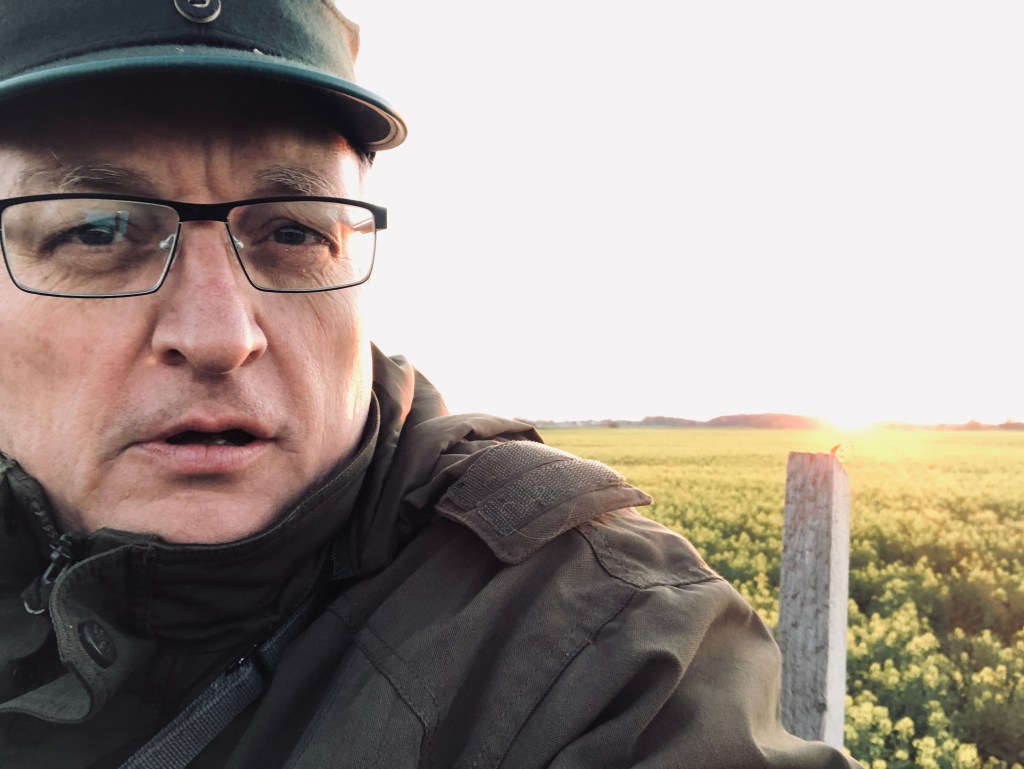
Another morning, another sunrise. Out on the Elbe flats – once again. Nights are getting shorter and you have to stay up longer or get up earlier to catch the elusive beasts of the night out in the open. I don´t care much for late sittings on some lonely hunting perch as light dwindles and sight fails. They´re not into night vision yet in Saxony-Anhalt – at least not mounted on rifles – and as this is not just about spotting, but serious stuff, the final switch back to mounted telescope for the shot is no viable option. So, long story short, I prefer getting out in the morning, even before the bus goes on its first tour, hoping that the old phrase proves true: “The early bird catches the worm.”  

Greeting some late-night revelers with “Moin, moin!” registers surprise, if not just stupor. On the parking lot I put on even more layers of warm stuff. Utensils, keys, phone and wallet are stowed in deep pockets just in case. Finally, I pull out and onto the empty streets. “Radio Brocken” blares popular tunes from times gone by. I rush past traffic lights still blacked out for the night – extra wary for late comers. I leave Martin Luther-avenue with noble flats, turn into another lined with trees, cross first over a bridge at the railways and then the big one over the “Elbe” before getting into more space and finally onto the flat lands in the “Hinterland”.

Planning this outing, I thought the hide along the “Haidelache” was perfect. It´s been my hideout before and as I´ve never been lucky there, the odds are that this would change sooner or later. My posting in the “hunting forum” shared that logic. However, as the farmer´s co-op had just put maize out in “Hermannsruh”, chances were good, that boar would invade the new plantation and wreak havoc overnight. So, my experienced colleagues suggested, I go there instead and try to catch them, before they move back into the big state forest. That´s why I didn´t pass the dairy in the end, but turned in before, circled the compound milking nearly a thousand cows daily and parked just beyond the industrial complex, right next to a game feeder and a short stretch into the farming path bordering some drainage ditch separating a ripe canola field from the freshly planted maize plot, which we were trying to protect.

Out in the East, the sky was paling. The birds were out. There´s no holding them back as Spring moves in.  I tried to be as quiet as possible. Shutting the door and loading the rifle were muffled before I shoulder the rifle and rucksack making my way down the pathway. Trying my utmost to avoid any snapping or cracking, which would go far this clear morning and might just warn ever watchful game.

Some 300 yards along the path, I got to the wooden construction (“Scherenleiter Hochsitz”), where I could mount the perch to keep a watchful eye over the area and await passing game. An advantage of having a higher shooting angle sitting up high and aiming more into the ground than standing flat on the ground and aiming far into the horizon is a “gesicherter Fangschuss”. Game doesn´t seem to register such constructions (“Jagdliche Einrichtungen”) as “human”. So, roe deer were nibbling quite fearlessly – at around 30 yards – until the pretty consistent breeze shifted whimsically and they got a whiff of me and a fright for their life. Annoyed a doe barked and the bevy moved off at speed into the ripe rape.

In the rucksack, I carry a cushion to sit on, a rolled-up blanket as back-support and a woolen one to unwrap for extra-warmth. That – and an apple plus a coffee flask – makes time pass quite comfortably on this look-out. There was no boar in sight, nor did I see any signs of them, when I got down to inspect the maize field. All was in perfect order as if smoothed over by caring hand with no irritations whatsoever. I did see some white storks fly by, crows too and some lone darting starlings. It was way too early for birds of prey – and probably to way-out for owls too.

However – and that was to be a highlight of my morning and perhaps in my hunting days – there was a nightingale in the bushes. I heard later, that they have just arrived back in these parts and are now shouting out their jubilant song with new vigor.

Untiringly the little bird went about its daily business of praising the good Lord and singing His wonders into this beautiful world of ours. I´m not an expert at identifying birds – never mind their calls – but I do have a telephone with a voice recorder. So, this morning I taped this little brown music master – and voila – my hunting friends and colleagues confirmed my hopeful guess. After checking with them, they returned with thumps-up and confirming nods: “Das ist eine Nachtigall!”

It was indeed the inconspicuous queen of variety and diva of acapella song herself – strikingly melodious, most lyrical and just so enthusiastically vibrant – as she continued to worship the creator throughout the morning. She just never tires at this. You can´t believe, how elated I was to hear her go about morning devotions in real life. In German I´d say: “Ich bin ganz aus dem Häuschen!” (Literally: “I am totally out of the little house” meaning “I am overjoyed!”) My recording is quite amateurish and here is a professional one: https://www.youtube.com/watch?v=b3iq2XrYebk

Sharing this with my mother, she related, how at the moment they were enjoying the crowned cranes on the maize fields in Welbedacht. Now, there is a bird of note. It´s the national bird of Uganda. It flouts spectacular feathers, stands tall in plumed grace and bears a crown to top it all. Yet, if You listen to its attempts at music, it’s not much to write home about. Sounds much like a chicken run or worse gaggle of geese. Compare that with the nightingale. She´s mostly solitary. She´s hardly seen, shy as she is – and if You do get ever so lucky, You´re bound to think, that´s just a poor LBJ (Little brown job), but then, when she picks up her tune and You hear her go off to sing in tremolo and hit even the highest notes without fail, rolling down and soaring up, up and even higher – well, that just makes all the difference. The drab old girl can sing!

No wonder, it has motivated artists to paint, sing and fabulate about this little Miss Grey – from the Land of the rising Sun and the Middle Kingdom right to the Danish shores and German lowlands. Just listen to the wonderful rendition of Mendelsohn in her honor: “Was Neues hat sie nie gelernt, singt alte liebe Lieder

The nightingale reminded me very much of one of my long-standing favorites – and so here goes – just like on that first Mission festival in Dreihausen (Ebsdorfergrund), where I actually sang that last stanza during the introduction 🙂

1) Jesus Christus herrscht als König,
alles wird ihm untertänig,
alles legt ihm Gott zu Fuß.
Aller Zunge soll bekennen,
Jesus sei der Herr zu nennen,
dem man Ehre geben muß.

2) Fürstentümer und Gewalten,
Mächte, die die Thronwacht halten,
geben ihm die Herrlichkeit;
alle Herrschaft dort im Himmel,
hier im irdischen Getümmel
ist zu seinem Dienst bereit.

3) Gott ist Herr, der Herr ist Einer,
und demselben gleichet keiner,
nur der Sohn, der ist ihm gleich;
dessen Stuhl ist unumstößlich,
dessen Leben unauflöslich,
dessen Reich ein ewig Reich.

4) Gleicher Macht und gleicher Ehren
sitzt er unter lichten Chören
über allen Cherubim;
in der Welt und Himmel Enden
hat er alles in den Händen,

denn der Vater gab es ihm.

5) Nur in ihm, o Wundergaben,
können wir Erlösung haben,
die Erlösung durch sein Blut.
Hört’s: das Leben ist erschienen,
und ein ewiges Versühnen
kommt in Jesus uns zugut.

6) Jesus Christus ist der Eine,
der gegründet die Gemeine,
die ihn ehrt als teures Haupt.
Er hat sie mit Blut erkaufet,
mit dem Geiste sie getaufet,
und sie lebet, weil sie glaubt.

7) Gebt, ihr Sünder, ihm die Herzen,
klagt, ihr Kranken, ihm die Schmerzen,
sagt, ihr Armen, ihm die Not.
Wunden müssen Wunden heilen,
Heilsöl weiß er auszuteilen,
Reichtum schenkt er nach dem Tod.

8) Zwar auch Kreuz drückt Christi Glieder
hier auf kurze Zeiten nieder,
und das Leiden geht zuvor.
Nur Geduld, es folgen Freuden;
nichts kann sie von Jesus scheiden,
und ihr Haupt zieht sie empor.

9) Ihnen steht der Himmel offen,
welcher über alles Hoffen,
über alles Wünschen ist.
Die geheiligte Gemeine
weiß, daß eine Zeit erscheine,
da sie ihren König grüßt.

10) Jauchz ihm, Menge heilger Knechte,
rühmt, vollendete Gerechte
und du Schar, die Palmen trägt,
und ihr Zeugen mit der Krone
und du Chor vor seinem Throne,
der die Gottesharfen schlägt.

11) Ich auch auf der tiefsten Stufen,
ich will glauben, reden, rufen,
ob ich schon noch Pilgrim bin:
Jesus Christus herrscht als König,
alles sei ihm untertänig;
ehret, liebet, lobet ihn!

(Philipp Friedrich Hiller, 1755)

I think, that eleventh stanza is a brilliant description of the nightingale´s stance. She does not make much of herself, keeps in the shadows really, but still, she´s not too bashful being in the lowest ranks and without much plumage – just as the servant, who received but one talent (Mt.25,24-28). She too has but one real talent – and that is to sing  – and so that´s what she does. Full blast! She doesn´t stop to believe faithfully. She doesn´t cease to speak her creed. Rather, she starts when the night is still dark and she continues to sing it out loud and clear: “IX is Lord and King, Hallelujah!” And she invites all and everything to praise His holy name – the living God: Father, Son and Holy Ghost + who has created us, saved us and justified us and continues to save and sanctify us until He comes again to carry us home. So we are all bound to love, fear and trust Him more than anything. He´s our Lord and our God. This sung confession of trust and confidence is a good way to start any day, don´t You think? It would even do as motto for a whole day – any day!

Posted in Eastertide, Gedankensplitter, Morning Prayer | Tagged , , , , , | Leave a comment

Quasimodogeniti +

Wow! The first Sunday after Easter (Quasimodogeniti) is coming up and it´s just getting better and better… I know, I know, that´s taking the mouth quite full, but the living and triune God is so rich in His mercies and His wisdom so profound, that week after week we can just taste and see, how friendly, merciful and good He is.
Tomorrow we´ve got a passage from the holy prophet Isaiah to preach on – and isn´t that a wonderful gospel and encouraging message of the mighty creator doing all he wills – perfectly and in good time?


Look up at the sky! Who created all these heavenly lights? He is the one who leads out their ranks; he calls them all by name. Because of his absolute power and awesome strength, not one of them is missing.
Why do you say, Jacob,Why do you say, Israel,“The Lord is not aware of what is happening to me;My God is not concerned with my vindication”?
Do you not know?
Have you not heard?
The Lord is an eternal God,the Creator of the whole earth.He does not get tired or weary;there is no limit to his wisdom.
He gives strength to those who are tired;to the ones who lack power, he gives renewed energy.Even youths get tired and weary;even strong young men clumsily stumble.
But those who wait for the Lord’s help find renewed strength;they rise up as if they had eagles’ wings, (cf Psalm 103!) they run without growing weary,they walk without getting tired.

Isaiah 40,26-31


That´s taken up with the wonderful words from first epistle of St. Peter chapter 1 and verses 3-9, which underlines God´s good and holy will to save His people and finally bring them home and to their glorious inheritance safely. Just as He promised through the prophet Isaiah.


And because we´re such a doubtful, sceptical and critical bunch really (- nothing to be proud of in the spiritual realm where God´s promises and holy ways are concerned. Rather we´re called earnestly to repent and better our sinful ways!) God cordially invites us most endearingly like he did with the apostle Thomas (John 20,19-29) to make us faithful confessors instead + and what a beautiful heritage this missionary to India started – just remember all those faithful and confessional men – of Aquinas, of Canterbury, Morus/More, Becket etc.


Oh yes, we´ve got a wonderful Lord and God – Jesus Christ – sitting at the right hand of the Father and ruling there in perfect unison with the Holy Spirit – for us and our salvation – through His marvellous works begun in us in Holy Baptism and coming to His consumation in good time. Glory be to Him now and always. Hallelujah +


So, as we commemorate our Baptism and look forward to our Lord´s coming to complete His enduring and most holy work, let´s sing the old Lutheran classic with J.J. Rambach (1693-1735):

    1. Baptized into your name most holy,O Father, Son, and Holy Ghost,I claim a place, tho’ weak and lowly,among your seed, your chosen host.Buried with Christ and dead to sin:your Spirit e’er shall live within.
    2. My loving Father, me you’ve takenfore’er to be your child and heir;my faithful Savior, me you’ve given your righteous, holy life to share;O Holy Spirit, you will be a comfort, guide, and help to me.
    3. And I have vowed to fear and love you,and to obey you, Lord, alone;because the Holy Spirit moved me,I dared to pledge myself your own,renouncing sin to keep the faithand war with evil unto death.
    4. My faithful God, your word fails never,your cov’nant surely will abide;oh, cast me not away forever,should I transgress it on my side!Though I have oft my soul defiled,in love forgive, restore your child.
    5. Yes, all I am and love most dearlyI offer now, O Lord, to you.Oh, let me make my vows sincerely,and what I say, help me to do.Let naught within me, naught I own,serve any will but yours alone.
    6. And never let my purpose falter,O Father, Son, and Holy Ghost,but keep me faithful to your altar,till you shall call me from my post.So unto you I live and dieand praise you evermore on high.

We go about the divine service in our mother tongue and so here´s the setup with the outline for the sermon too:

Hebt eure Augen in die Höhe und seht! Wer hat all dies geschaffen? Er führt ihr Heer vollzählig heraus und ruft sie alle mit Namen; seine Macht und starke Kraft ist so groß, dass nicht eins von ihnen fehlt.

Warum sprichst du denn, Jakob, und du, Israel, sagst: »Mein Weg ist dem HERRN verborgen, und mein Recht geht an meinem Gott vorüber«?

Weißt du nicht? Hast du nicht gehört? Der HERR, der ewige Gott, der die Enden der Erde geschaffen hat, wird nicht müde noch matt, sein Verstand ist unausforschlich. Er gibt dem Müden Kraft und Stärke genug dem Unvermögenden.

Jünglinge werden müde und matt, und Männer straucheln und fallen; aber die auf den HERRN harren, kriegen neue Kraft, dass sie auffahren mit Flügeln wie Adler, dass sie laufen und nicht matt werden, dass sie wandeln und nicht müde werden.

Sermon text from Isaiah 40:26-31
  1. Lieder & Lesungen:
    1. Eingang                       152,1-2.4-6 Ich bin getauft auf deinen Namen…
    2. Lessons                       036 (Ps.116) Jesaja 40,26-31; 1.Petrus 1,3-9, Johannes 20,19-29
    3. Vor der Predigt 77 Jesus Christus unser Heiland…
    4. Die heutige Predigt zu Jesaja 40,26-31
    5. Nach der Predigt       EG  117,1-3   Der schöne Ostertag!
    6. Ausgang                      81,1-3 Mit Freuden zart zu dieser Fahrt …  

Petrus, Apostel Jesu Christi, an die auserwählten Fremdlinge, die in der Zerstreuung leben, in Pontus, Galatien, Kappadozien, der Provinz Asia und Bithynien, nach der Vorsehung Gottes, des Vaters, durch die Heiligung des Geistes zum Gehorsam und zur Besprengung mit dem Blut Jesu Christi: Gott gebe euch viel Gnade und Frieden!

Context of this week´s watchword from St. Peter´s 1st Epistle 1,3

Gelobt sei Gott, der Vater unseres Herrn Jesus Christus, der uns nach seiner großen Barmherzigkeit wiedergeboren hat zu einer lebendigen Hoffnung durch die Auferstehung Jesu Christi von den Toten, zu einem unvergänglichen und unbefleckten und unverwelklichen Erbe, das aufbewahrt wird im Himmel für euch,  die ihr aus Gottes Macht durch den Glauben bewahrt werdet zur Seligkeit, die bereitet ist, dass sie offenbar werde zu der letzten Zeit.

1. Gottes Ziel: Unsere Hoffnung!

Er führt ihr Herr – die auserwählten Fremdlinge zusammen mit dem erwählten Volk Israel – vollzählig heraus und aus der Zerstreuung zurück nach Hause, dass nicht auch nur eines von ihnen fehlt…  wie St. Petrus schreibt: zu einem unvergänglichen und unbefleckten und unverwelklichen Erbe, das aufbewahrt wird im Himmel für euch,  die ihr aus Gottes Macht durch den Glauben bewahrt werdet zur Seligkeit, die bereitet ist, dass sie offenbar werde zu der letzten Zeit.

2. Wir sind unterwegs – auf dem Weg zum Ziel

  1. Ungläubige Thomas: Wenn ich nicht sehe! (Blind & Sehend)
    1. Jakob spricht: Unser Weg ist dem Herrn verborgen: Wenn der Herr nicht sieht!
    2. Israel behauptet: Mein Recht geht an meinem Gott vorüber.
  1. Bleibe im Land und nähre Dich redlich… (Paradies)
    1. Berufung: Geh in ein Land, dass ich Dir zeigen werde (Die Welt steht Dir offen!)
      1. Deutschland! (USA – heute Asien, Arabien, Australien…)
    2. Wanderweg: Wohin sollen wir gehen? (Spaziergang)
    3. Ausbildung/Lehr und Wanderjahre: Ein jeder ist seines Glückes Schmied
    4. Fluchtwege – Wo soll ich fliehen hin, weil ich beschweret bin…
  2. Wohin sollen wir gehen? (Du hast Worte des Lebens & wir haben erkannt… )
  1. Blind – auf der Flucht und suchen die Heimat – Holzwege, Irrwege – unsere Lebenswege:
    1. So weit die Füße tragen – und noch weiter: O.Sibirien nach Westen!
    2. Afghanistan/Iran nach Deutschland
    3. Mein 1.Freund von Uganda (Angus Lukeeta), S.Sudan, Liberia & Äthiopien nach Südafrika. (Dreiländereck in Mapungubwe!)
    4. Europäische Geistesgeschichte: Illias / Odysee / Odysseus
      1. Heimkehrverhinderung – von Kleinasien auf dem Weg nach Ithaka (20 Jahre) Ist da ein Leben nach dem Krieg?
      2. Seefahrt ist unvermeidlich, Leben nicht
      3. Mann der zahlreichen Wege, auf Umwege geprüfte, Dulder von Rückschlägen, Herumgeworfene – man of twists and turns. Ratschlagreiche  – Listenmächtige
      4. Ständige Leiden – Dulden – reichlich Stoff für Drama – Herz- und Weltschmerz! On 2nd toughts – Handlungshemmung durch Reflexion. „Duldete viel und tief im Gemüt die Leiden des Meeres“
    5. Das eine Resultat auf das es ankommt: vollendete Heimkehr…
      1. Aber manchmal geht es einfach nicht weiter… Holzwege
      2. Mittelmeer Grenzzaun   Abschiebung

3. Der dreieinige Gott lebt und regiertuns zugut

  1. Er ist der Schöpfer aller Ding (Starkes Argument!)
  2. Er führt und leitet alles wohl – Exodus und Wüstenwanderung! (Vorsehung/Prädestination)
  3. ER wird nicht müde noch matt!
  4. Sein Verstand ist unausforschlich.
  5. Er gibt dem Müden Kraft und Stärke genug dem Unvermögenden.
    1. Jünglinge werden müde und matt
    2. Männer straucheln und fallen;
    3. aber die auf den HERRN harren, kriegen neue Kraft,
      1. dass sie auffahren mit Flügeln wie Adler,
      2. dass sie laufen und nicht matt werden,
      3. dass sie wandeln und nicht müde werden.

Das ist eine starke Verheißung – und beinhaltet, wenn er spricht, so geschiehts & steht da.

  1. Er gibt uns das nötige „padkos“ (Bogojwane) mit auf den Weg: Abendmahl.
  2. Richtung/Orientierung/Wegweisung: Nicht auf diesen oder jenen Berg, sondern im Geist und in der Wahrheit!
  3. Trägt uns heim – um seines Namens willen! – dass wir dort sehen, was wir hier geglaubt haben.
Posted in Eastertide, Gedankensplitter, Gottesdienst, Lectionary etc | Tagged , , , , , , | Leave a comment

It´s that sort of time…

It was the best of times, it was the worst of times, it was the age of wisdom, it was the age of foolishness, it was the epoch of belief, it was the epoch of incredulity, it was the season of Light, it was the season of Darkness, it was the spring of hope, it was the winter of despair, we had everything before us, we had nothing before us, we were all going direct to Heaven, we were all going direct the other way – in short, the period was so far like the present period, that some of its noisiest authorities insisted on its being received, for good or for evil, in the superlative degree of comparison only.

Charles Dickens, Tale of two cities. 1859

Two days ago, the German chancellor – Angela Merkel – headed her public address with the words: “zerbrechlicher Zwischenerfolg – nicht mehr, nicht weniger!” Others speak of taking first steps on thin ice.

We prayerfully bring before God those suffering and facing hardships due to this pandemic – not just in Asia, S.America and Africa – but also in Italy, Spain, New York, New Orleans and other hotspots of this pandemic. May the triune God continue to grant healing and salvation as we call on Him in our good Lord Jesus´ name: Kyrie eleison. We pray for a vaccine soon. We thank Him for those many people, who have been healed and continue on the way of recovery.  

Here, politics has taken steps to open up somewhat. Small businesses (less than 800m2) are scheduled to reopen this Monday – including bookshops. The re-opening of local schools after the extended Easter holidays has been postponed until the 4th of May – for now – and then it will only be a gradual and step-by-step move i.e. one class after the other, on certain days only, extended breaks, smaller numbers etc.

Big gatherings are still a no-go. Church services remain forbidden despite growing dissent from roman-catholic bishops, vocal protestants and other liberals. House devotions are permitted as well as public baptisms and weddings with less than 20 people. Obviously, we continue as normal here in our chapel – even as we share our family´s devotional itinerary with sermons as MP3 with our regular clientele. The hospitality business – including hostels and hotels, inns and restaurants – is still shut down indefinitely.

The local state church people are discussing open-air services – especially a thanksgiving service in the near future, because matters have turned out so well after widespread anxiety. The minister of health (Spahn – one of the candidates to head the CDU) went as far as stating that they have the pandemic under control although the Robert-Koch-Institute demented this and the Bavarian minister-president Söder (CSU) would only go as far as: “We´re getting there slowly!” It is my view, that Germans are in general still rather skeptical and cautious. The economically orientated voices are trying to push for return to normal procedures, but the political reset button will probably not be activated, rather some more turning of a finely tuned reset dial.  

The monthly fraternal for Wittenberg´s 15-20 pastors is postponed unanimously. The local church gatherings for boy-scouts, other youth camps and target groups have all been cancelled until after Pentecost. Summer camps for Wittenberg are still dicey business.  Most weekly gatherings – see “Stammtisch” – have moved online, beer and all. The virtual offerings are truly overwhelming – and not just for divine services, but all sorts of presentations spiritual and otherwise.

Besides opening our little bookshop and selling some books to a Chinese film producer from Hong Kong stuck without her camera man and getting into the nitty-gritty of Lutheranism as she hopes for the up-coming film shoot, there´s not much more. The outside windows need a spring clean. That´s pretty urgent after skipping 2 years in a row and still no rain in sight or to the rescue. Inside cleaning jobs are ongoing as dust continues to settle in these desert circumstances.

After the electricians investigated our baptismal font, we have resorted to the help of architect Rademann and silversmith Heck. After a prolonged discussion, we´re hopeful, that the long-standing challenges can get sorted out. The lock-down does bring on spare time for this kind of fix and repair stuff.  

Greetings and blessings in this festive Eastertide as we continue to thankfully sing the seasonal hymns like the standing favorite from the Reformer´s pen:

Christ Jesus lay in death’s strong bands, for our offenses given;
but now at God’s right hand he stands and brings us life from heaven;
therefore let us joyful be and sing to God right thankfully
loud songs of hallelujah. Hallelujah!

Martin Luther 1483-1546 translated by Richard Massie 1800-1887
Posted in Gedankensplitter, Old Latin School in Wittenberg | Tagged , , , , , , | Leave a comment

Bucketlists, task lists and prayerlists too

Bucket lists are beautiful. They show the open world we live in. Reflections of opportunity, freedom and unending potential of divine richness in God´s creation. Yes, praise the Lord from whom all blessings flow!

Obviously, they also show in stark clarity, that we´re not in paradise yet – and that we have to deal with our human limitations of time and space, but also of chance, seasons and our passing life and approaching deadline. Sometimes, they will remind us of missed chances, missed boats and worse.

Still, I love lists. Not just shopping lists or to-do-lists, but all sorts of lists in and out of season. One of these is my ever-growing, changing and sometimes also shortening list of prayer. It´s a way to help me out as my memory fails. Funny enough from early days in my ministry, this prayer list has been a mainstay – and kept people in mind and focus, who really mattered. Something of a reality-check compared with the highly fluctuating acquaintances in fleeting lives.

But it´s not just a memory-stick of sorts, but also a helpful guideline as God answers prayers. Sometimes people reach their destination and we don´t have to remind God about attending them. Sometimes our calling changes and with it our responsibilities, duties and tasks. That will reflect in these prayer lists too. Most of the time however, this list will grow steadily covering larger areas, time spans and off course people in the church and outside of it too. I think, that´s one of the things to look forward to during retirement – we´ll have more and more time to spend in watchful prayer for those, entrusted to our prayers. I know from my fathers – physical and spiritual ones – how they spent more and more time in prayer for the tasks at hand – in the holy Christian church, especially in … and all it´s bishops, pastors, teachers and missionaries, deaconesses in churches, dioceses, districts, congregations, seminaries, colleges, schools, hospitals etc. and for all people in need, families, lonely, old and young, poor, sick and dying… There´s a lot to pray for as the apostle writes…

First of all, then, I urge that requests, prayers, intercessions, and thanks be offered on behalf of all people, even for kings and all who are in authority, that we may lead a peaceful and quiet life in all godliness and dignity. Such prayer for all is good and welcomed before God our Savior, since he wants all people to be saved and to come to a knowledge of the truth.

For there is one God and one intermediary between God and humanity, Christ Jesus, himself human, who gave himself as a ransom for all, revealing God’s purpose at his appointed time.

For this I was appointed a preacher and apostle—I am telling the truth; I am not lying—and a teacher of the Gentiles in faith and truth. So I want the men in every place to pray, lifting up holy hands without anger or dispute.

St. Paul´s letter to St. Timothy chapter 2:1-8

Well, reading the piece on „Intercession“ by James S. Stewart), I was reminded of this and was encouraged as I think of all the faithful prayers being raised in this time of quarantine. Suddenly, the church has opportunity to dedicate itself even more to this task – “Watch and prayer” – even after the Lententide and after the normal time of fasting is over. Obviously, there are many tasks unfinished and undone. Therefore let us be mindful, watch and pray – even as this churchman from Scotland encourages us:

Whether Your congregation be large or small a great part of Your task (as a vital member of the Priesthood of all believers WW) on its behalf lies in the realm of intercession. I do not simply mean asking God to bless Your people collectively – though, of course, You will do that – I mean praying for every family, each separate soul, by name. Let me assure You that this suggestion is entirely practicable, whether You have a hundred members or two thousand. Method and system, of course, are necessary; but is there any reason why prayer should not be methodical?

Take Your communion roll – or the family birthday calendar – or the area telephone book – or the town clerks registry. Use it as a directory of intercession. Single out, say, three families each day. Mention each member of these homes by name. Visualize their circumstances. Think of their work, their difficulties, their temptations. Remember very specially any who may have been growing indifferent to religious ordinances and drifting away from the church. Bear them individually upon Your heart to the mercy-seat.

From such concrete and particular intercession two results will follow. On the one hand, there will be a blessing for those for whom You pray. On the other hand, there will be revealed to You from time to time, even as You intercede for them, practical ways of helpfulness, new avenues of sympathetic understanding, opportunities of showing to this one of that other something of the kindness of God for Jesus´ sake.

And when You look into their faces on Sunday, as You lead their worship and proclaim to them afresh the all-sufficient grace of Christ, that background of Your hidden intercessions, of Your pleading for them name by name, will lift Your words and wing them with love and ardor and reality.

God will not refuse the kindling flame when secret prayer has laid its sacrifice upon the altar. And You will prove in Your own experience the truth to which that great soldier of the cross, Samuel Rutherford, gave expression long ago: “I seldom made an errand to God for another, but I got something for myself.”  

Dobberstein Pg. 376-7

Perhaps You know a good English translation for this hymn by the Reformer? Especially the 3rd stanza goes a long way to underline the previous… “He can save all those, who approach him. Lord have mercy!”

1) Jesus Christus, unser Heiland,
der den Tod überwand,
ist auferstanden,
die Sünd hat er gefangen.
Kyrie eleison.

2) Der ohn Sünden war geboren,
trug für uns Gottes Zorn,
hat uns versöhnet,
dass Gott uns sein Huld gönnet.
Kyrie eleison.

3) Tod, Sünd, Leben und auch Gnad,
alls in Händen er hat;
er kann erretten
alle, die zu ihm treten.
Kyrie eleison.

Martin Luther 1524.

Posted in Bagster's Daily Light, Gedankensplitter, psalms and spiritual songs, You comfort me + | Leave a comment

On being alone and together

The following „Solitariness & brotherhood“ is from Hermann Dietzfelbinger´s: „Pastoral care of the pastor”

One thing more must be added. It is true that Christ meets me in my brother, but that brother is not Christ. And brotherhood is not simply a formula that merely needs to be followed in order to be a good pastor. It cannot be reduced to a means, but it dare not be made a law. Therefore, in brotherhood there must also be solitude. But this will be a solitude quite different from that which we spoke of at the beginning. One of the mysteries of the Christian life is that it is realized in the polarity between solitariness and fellowship in the presence of God. Neither must be lacking. One who craves fellowship without solitariness falls into impersonality and lapses into a religious standardization that is far more legalistic than technical standardization. And one who seeks solitude without fellowship is close to the abysses of pride or despair. All pastoral care must be aware of this polarity.

Yes, flee from Your solitariness into the fellowship and seek out Your brother; but also stand alone before the Lord! Common worship and common prayer are indispensable to the Christian life; but the solitary hour of prayer is equally indispensable. There are many things that a pastor has to struggle through and suffer through in utter solitariness in the presence of God, and a man who has to confide everything to others and cannot keep anything to himself is no pastor of souls. The words we speak in pastoral care become worn, impotent, and feeble if they are not repeatedly cleansed and strengthened and renewed in the solitude of prayer. The brotherly counsel of others is good, but Jesus can care for our souls in silence and solitude too.

Quiet listening to the Word is part of common study of the Scriptures, and it may well be that I can learn more about how to deal with modern secularized men from this solitary, face-to-face conversation at the well of Jacob (John 4) than from a whole course of lectures on this problem, just as all the psychology in the world cannot give to me the key to the knowledge of men that I find in John 1,4.9: “In Him was life, and the life was the light of men. The true light that enlightens every man was coming into the world.” The way to learn other men´s hearts is to know one´s own heart in that place of solitude before God.” (Dobberstein 323f)

Jesus und die Emmausjünger (Lk.24)
Posted in Gedankensplitter | Tagged , , , , , , , , , , | Leave a comment

Wilhelm Weber: Wittenberger, Namensvetter & Hausgenosse

Wer “Wilhelm Weber” googelt wird nicht nur in Wittenberg fündig. Natürlich ist hier zuerst das geniale Stadtkind aus dem 19. Jahrhundert die Rede. Der dem Postamt Hausname und Straßenaddresse verliehen hat, aber auch in der Collegienstraße wohnhaft und in unserer Alten Lateinschule die Schulbank gedrückt hat.  

Er hieß Wilhelm Eduard Weber und wurde am 24. Oktober 1804 hier in der Lutherstadt geboren und in 1827 habilitierter er sich in Halle zum Thema „Wellen“ und wurde bereits ein Jahr später Professor der Physik. In 1831 zog er als solcher nach Göttingen, wo er die nächsten Jahre zusammen mit Professor C.F. Gauß erfolgreich forschte.

Nicht mal eine Dekade ging das gut, weil er mit den berühmten Göttinger Sieben gegen das Außerkraftsetzen des Staatsgrundgesetzes durch den König von Hannover in 1837 protestierte und deswegen amtsenthoben und entlassen wurde. Obwohl mundtot gemacht und gemaßregelt, wurde ihre Tat zum leuchtenden Fanal, das viele Mutlose aufrüttelte und für Freiheit und Selbstbestimmungsrecht aufstehen ließ. Einfach war es für ihn nicht. Der König von Hannover entschied: „Der Weber ist ohne Gehalt seines Amtes zu entheben… wie die anderen sechs auch!“ Und der preußische Minister von Rochow urteilte bezüglich dieser sieben herablassend: „beschränkter Untertanenverstand.“

“Göttinger Sieben”

Weber forschte indes auch unter erheblich erschwerten Umständen fleißig weiter, bestimmte in 1846 die sogenannten „Weberschen Gesetze“ zur elektrischen Wirkung und wurde in 1849 – ein Jahr nach der Revolution – wieder als Professor in Göttingen eingesetzt. Er starb dann am 23. Juni 1891 hochbetagt in dieser seiner Wahlheimat.

Schon als Kind machte er die französische Belagerung mit und erlebt das Niederbrennen des Familienhauses, in der die Familie alles verlor und zeitweilig nach Bad Schmiedeberg umzog. Im Jahr 1816 verstarb seine Mutter – Christiane Friedericke Wilhelmine Weber. In dem Jahr wurde die Leucorea auch nach Halle verlegt und so kam die Zeit an der Alten Lateinschule und seiner Wittenberger Kindheit zum frühzeitigen Abschluss. In 1860 wurde er zum Mitglied der Leopoldina gewählt und so hat an seinem Lebensabend sich wieder eine Beziehung zur Stätte des Beginns seiner wissenschaftlichen Laufbahn hergestellt.

Weitere Hinweise:

Auf Wikipedia: https://de.wikipedia.org/wiki/Wilhelm_Eduard_Weber

Zum Wilhelm Weber-Haus in Wittenberg: https://www.wittenberg.de/kultur-und-tourismus/qr-codes-stelen-des-tourist-leit-systems/wilhelm-weber-haus-ov4qr1.html

Hier eine umfassendere Biographie:  https://www.deutsche-biographie.de/sfz75068.html

Und Träger des Orden Pour le mérite: http://www.orden-pourlemerite.de/mitglieder/wilhelm-eduard-weber

Posted in Family and friends, Gedankensplitter, Histories, Histories, biographies and other stories, Uncategorized | Tagged | Leave a comment

The parsonage – a good place to be +

Next to the church comes the parsonage. The study window looks out upon the churchyard, and if the pastor wants to see the steeple near, he must raise his head and eyes higher than other people need. The bell that summons to prayer has, too, a louder voice for him than for the rest of the inhabitants, and the graves speak in deeper tones to his ear. The parsonage garden runs along the churchyard wall, and a door opens out of it to the bench under the old lime tree, from which one can overlook both sides of the village. Each one who passes up and down the street has an undying, soul, and of each one the pastor must give account, as to whether he has sought, urged, and allured as a good shepherd should. On that bench under the lime tree, how much silent intercession must, indeed, be poured out! Nor is this intercession all. The Lord said unto Moses, “Wherefore criest thou unto me? Speak to the people, that they go forward.” Outwardly, the parsonage is a house like others, but whenever the devil goes about the village, seeking his prey, and planning where best he can spread his net, he goes about the parsonage thrice, and looks into every window. And most of all he rejoices if the door of that house be open to him, and he cannot only make his way in accidentally, but rule there, and even hold his ground in the study, without being annoyed by prayer and the reading of the Scriptures. Watching and praying are the only bolts this thief fears. A parsonage is either a house of prayer or a very den of iniquity. There is no peace, indeed, for any of the ungodly, but a minister who lives without prayer and struggle is the poorest and most miserable man in the whole village. (Dobberstein 303f)

The parsonage (Karl Büchsel quoted by Dobberstein Pages 303-304)

That fits nicely with Luther´s explanation of the 3rd petition and explains, why Dobberstein uses this elaboration by Büchsel in his anthology to illustrate this part of the “Our Father” in the Tuesday´ section:

“Thy will be done on earth as it is in heaven.” What does this mean? The good and gracious will of God is done even without our prayer, but we pray in this petition that it may be done among us also. How is God’s will done? God’s will is done when He breaks and hinders every evil plan and purpose of the devil, the world, and our sinful nature, which do not want us to hallow God’s name or let His kingdom come; and when He strengthens and keeps us firm in His Word and faith until we die. This is His good and gracious will.”

Martin Luther´s explanation to the 3rd Petition in his Small Catechism

Let us sing with Paul Gerhardt (1607-1676) in the translation by John Kelly (1833-1890):

1 Awake, my heart, with gladness,
See what today is done;
Now, after gloom and sadness,
Comes forth the glorious sun.
My Savior there was laid
Where our bed must be made
When to the realms of light
Our spirit wings its flight.

2 The foe in triumph shouted
When Christ lay in the tomb;
But lo, he now is routed,
His boast is turned to gloom.
For Christ again is free;
In glorious victory
He who is strong to save
Has triumphed o’er the grave.

3 This is a sight that gladdens–
What peace it doth impart!
Now nothing ever saddens
The joy within my heart.
No gloom shall ever shake,
No foe shall ever take
The hope which God’s own Son
In love for me hath won.

4 Now hell, its prince, the devil,
Of all their pow’r are shorn;
Now I am safe from evil,
And sin I laugh to scorn.
Grim death with all his might
Cannot my soul affright;
It is a pow’rless form,
Howe’er it rave and storm.

5 The world against me rages,
Its fury I disdain;
Though bitter war it wages,
Its work is all in vain.
My heart from care is free,
No trouble troubles me.
Misfortune now is play,
And night is bright as day.

6 Now I will cling forever
To Christ, my Savior true;
My Lord will leave me never,
Whate’er He passes through.
He rends death’s iron chain;
He breaks through sin and pain;
He shatters hell’s dark thrall;
I follow Him through all.

7 He brings me to the portal
That leads to bliss untold,
Whereon this rhyme immortal
Is found in script of gold:
“Who there My cross has shared
Finds here a crown prepared;
Who there with Me has died
Shall here be glorified.”

https://hymnary.org/text/awake_my_heart_with_gladness

And pray:

“Almighty God, by the death of Your Son You have destroyed sin and death, and by his resurrection You have restored innocence and everlasting life, in order that, delivered from the power of the devil, we may live in Your kingdom. Grant that we may believe this with our whole heart, and, steadfast in this faith, may praise and thank You evermore; through Jesus Christ our Lord.”

Easter Collect
Posted in Gedankensplitter, Travels | Tagged , , , , , , | Leave a comment

Das Osterfest nimmt seinen Lauf…

Als unser Herr Jesus Christus vom Tode auferstanden ist und seine Jünger aufs Neue aus der Zerstreuung, der Finsternis und Schatten des Todes sammelte, hat er ihnen aus dem Alten Testament aufgezeigt, wieso und weshalb es alles so kommen musste. Da hat er angefangen bei Mose, den Propheten und Psalmen und ihnen die Schrift aufgetan. Sein wunderbarer, heilsamer und effektiver Gottesdienst macht in des Heiligen Geistes Kraft im Wesentlichen so weiter. Auch noch heute. Hallelujah +

Darum hören wir heute wieder beim Propheten Jesaja die Verheißung aus dem 25. Kapitel:

Und der HERR Zebaoth wird auf diesem Berge allen Völkern ein fettes Mahl machen, ein Mahl von reinem Wein, von Fett, von Mark, von Wein, darin keine Hefe ist. Und er wird auf diesem Berge die Hülle wegnehmen, mit der alle Völker verhüllt sind, und die Decke, mit der alle Heiden zugedeckt sind. Er wird den Tod verschlingen auf ewig. Und Gott der HERR wird die Tränen von allen Angesichtern abwischen und wird aufheben die Schmach seines Volks in allen Landen; denn der HERR hat’s gesagt. Zu der Zeit wird man sagen: »Siehe, das ist unser Gott, auf den wir hofften, dass er uns helfe. Das ist der HERR, auf den wir hofften; lasst uns jubeln und fröhlich sein über sein Heil.«

Jesaja 25,6-9

Der Apostel Paulus argumentiert überzeugend wenn auch polemisch und angriffslustig mit denen, die sich im Unglauben gegen die leibhaftige Auferstehung stemmen. Er schreibt in großer Klarheit und durchschlagender Überzeugungskraft im großen Auferstehungskapitel des 1.Korintherbriefs:

Das sage ich aber, liebe Brüder, dass Fleisch und Blut das Reich Gottes nicht ererben können; auch wird das Verwesliche nicht erben die Unverweslichkeit. 51 Siehe, ich sage euch ein Geheimnis: Wir werden nicht alle entschlafen, wir werden aber alle verwandelt werden; 52 und das plötzlich, in einem Augenblick, zur Zeit der letzten Posaune. Denn es wird die Posaune erschallen und die Toten werden auferstehen unverweslich, und wir werden verwandelt werden. 53 Denn dies Verwesliche muss anziehen die Unverweslichkeit, und dies Sterbliche muss anziehen die Unsterblichkeit. 54 Wenn aber dies Verwesliche anziehen wird die Unverweslichkeit und dies Sterbliche anziehen wird die Unsterblichkeit, dann wird erfüllt werden das Wort, das geschrieben steht (Jesaja 25,8; Hosea 13,14): »Der Tod ist verschlungen in den Sieg. 55 Tod, wo ist dein Sieg? Tod, wo ist dein Stachel?« 56 Der Stachel des Todes aber ist die Sünde, die Kraft aber der Sünde ist das Gesetz. 57 Gott aber sei Dank, der uns den Sieg gibt durch unsern Herrn Jesus Christus! 58 Darum, meine lieben Brüder und Schwestern, seid fest und unerschütterlich und nehmt immer zu in dem Werk des Herrn, denn ihr wisst, dass eure Arbeit nicht vergeblich ist in dem Herrn.

1.Korintherbrief 15:50-58

Im heutigen Evangelium für diesen 2.Ostertag hören wir die eindrückliche Schilderung von Jesu Bekehrung der Emmaus Jünger durch den Evangelisten Lukas: 

Und siehe, zwei von ihnen gingen an demselben Tage in ein Dorf, das war von Jerusalem etwa sechzig Stadien entfernt; dessen Name ist Emmaus. 14 Und sie redeten miteinander von allen diesen Geschichten. 15 Und es geschah, als sie so redeten und einander fragten, da nahte sich Jesus selbst und ging mit ihnen. 16 Aber ihre Augen wurden gehalten, dass sie ihn nicht erkannten. 17 Er sprach aber zu ihnen: Was sind das für Dinge, die ihr miteinander verhandelt unterwegs? Da blieben sie traurig stehen. 18 Und der eine, mit Namen Kleopas, antwortete und sprach zu ihm: Bist du der Einzige unter den Fremden in Jerusalem, der nicht weiß, was in diesen Tagen dort geschehen ist? 19 Und er sprach zu ihnen: Was denn? Sie aber sprachen zu ihm: Das mit Jesus von Nazareth, der ein Prophet war, mächtig in Tat und Wort vor Gott und allem Volk; 20 wie ihn unsre Hohenpriester und Oberen zur Todesstrafe überantwortet und gekreuzigt haben. 21 Wir aber hofften, er sei es, der Israel erlösen werde. Und über das alles ist heute der dritte Tag, dass dies geschehen ist. 22 Auch haben uns erschreckt einige Frauen aus unserer Mitte, die sind früh bei dem Grab gewesen, 23 haben seinen Leib nicht gefunden, kommen und sagen, sie haben eine Erscheinung von Engeln gesehen, die sagen, er lebe. 24 Und einige von denen, die mit uns waren, gingen hin zum Grab und fanden’s so, wie die Frauen sagten; aber ihn sahen sie nicht. 25 Und er sprach zu ihnen: O ihr Toren, zu trägen Herzens, all dem zu glauben, was die Propheten geredet haben! 26 Musste nicht der Christus dies erleiden und in seine Herrlichkeit eingehen? 27 Und er fing an bei Mose und allen Propheten und legte ihnen aus, was in allen Schriften von ihm gesagt war. 28 Und sie kamen nahe an das Dorf, wo sie hingingen. Und er stellte sich, als wollte er weitergehen. 29 Und sie nötigten ihn und sprachen: Bleibe bei uns; denn es will Abend werden, und der Tag hat sich geneigt. Und er ging hinein, bei ihnen zu bleiben. 30 Und es geschah, als er mit ihnen zu Tisch saß, nahm er das Brot, dankte, brach’s und gab’s ihnen. 31 Da wurden ihre Augen geöffnet, und sie erkannten ihn. Und er verschwand vor ihnen. 32 Und sie sprachen untereinander: Brannte nicht unser Herz in uns, da er mit uns redete auf dem Wege und uns die Schrift öffnete? 33 Und sie standen auf zu derselben Stunde, kehrten zurück nach Jerusalem und fanden die Elf versammelt und die bei ihnen waren; 34 die sprachen: Der Herr ist wahrhaftig auferstanden und dem Simon erschienen. 35 Und sie erzählten ihnen, was auf dem Wege geschehen war und wie er von ihnen erkannt wurde, da er das Brot brach.

Lukas 24:13-35

Ehe wir dann in der Predigt von seinen seelsorgerlichen Bemühungen um die kleine und eingeschüchterte Jüngerschar in Jerusalem hören und wie er sie zum allein seligmachenden Glauben an sich und seine Erlösungstat im siegreichen Sterben und leiblichen Auferstehen führt nach dem abschließenden Abschnitt im Lukas Evangelium:

Als sie aber davon redeten, trat er selbst mitten unter sie und sprach zu ihnen: Friede sei mit euch! 37 Sie erschraken aber und fürchteten sich und meinten, sie sähen einen Geist. 38 Und er sprach zu ihnen: Was seid ihr so erschrocken, und warum kommen solche Gedanken in euer Herz? 39 Seht meine Hände und meine Füße, ich bin’s selber. Fasst mich an und seht; denn ein Geist hat nicht Fleisch und Knochen, wie ihr seht, dass ich sie habe. 40 Und als er das gesagt hatte, zeigte er ihnen seine Hände und Füße. 41 Da sie es aber noch nicht glauben konnten vor Freude und sich verwunderten, sprach er zu ihnen: Habt ihr hier etwas zu essen? 42 Und sie legten ihm ein Stück gebratenen Fisch vor. 43 Und er nahm’s und aß vor ihnen. 44 Er sprach aber zu ihnen: Das sind meine Worte, die ich zu euch gesagt habe, als ich noch bei euch war: Es muss alles erfüllt werden, was von mir geschrieben steht im Gesetz des Mose und in den Propheten und Psalmen. 45 Da öffnete er ihnen das Verständnis, dass sie die Schrift verstanden…

Lukas 24: 36-45
  • Heute sangen wir die herrlich frohmachenden Osterlieder der lutherischen Kirche:
    • „Auf, auf mein Herz, mit Freuden, nimm wahr, was heut geschieht…“ Paul Gerhardt 1647
    • „Erstanden ist der heilig Christ, Hallelujah, Hallelujah…“ nach dem lateinischen „Surrexit Christus hodie“ aus dem 14. Jahrhundert und ins Deutsche übersetzt in Nürnberg 1544.
    • „Christ ist erstanden von der Marter allen; des solln wir alle froh sein“ aus Passau 1090.
    • „Heut triumphieret Gottes Sohn, der von dem Tod erstanden schon…“ Iglau (Mähren) 1591.
    • „Wach auf, mein Herz, die Nacht ist hin, die Sonn ist aufgegangen…“ Lorenz Lorenzen 1700.

Und hier ist auch meine Predigt zum Ostermontag in dieser Matutin:

Und hier das Gebet usw zum Fest- und Feiertag:

Posted in Eastertide, Lieder, Losung & Lehrtext, Matins, Paul Gerhardt, Predigten in der ALS, You comfort me + | Tagged , , , , , , | Leave a comment

Frohe Ostern: Der Herr lebt und wir sollen auch leben +

Der Herr ist auferstanden + Er ist wahrhaftig auferstanden und seinen Jüngern erschienen + Des sollen wir uns nicht fürchten, sondern alle fröhlich sein; denn der Herr Christus spricht: „Fürchte dich nicht! Ich bin der Erste und der Letzte und der Lebendige. Ich war tot, und siehe, ich bin lebendig von Ewigkeit zu Ewigkeit und habe die Schlüssel des Todes und der Hölle.“ (Offb.1,17-18)

Der Herr ist nicht hier. Er ist auferstanden. Geht und sagt es seinen Jüngern – und Petrus!

Auf BR-Klassik spielt auf „Laudate“ die herrliche „Oster-Historie“ von Arnold Matthias Brunckhorst mit Andrea Hornung-Boesen, Sopran; Rainer Seifert, Countertenor; Dietrich Wrase, Tenor; Sebastian Mattmüller, Bass; Ensemble musica poetica Freiburg: Hans Bergmann. Herrlich! https://www.br-klassik.de/progr…/…/ausstrahlung-2048890.html

Die Kerzen brennen. Die Blumen blühen. Alle Bücher sind aufgeschlagen und der Gottesdienst beginnt gleich. Wir folgen d.v. der Festtagsliturgie, singen diese Lieder und hören diese Lesungen: Ps.118; Hes.37,1-14; 1.Kor.15,1-11; Mk.16,1-8. Here is the order in English: https://kwaweber.org/…/hallelujah-jesus-lives-reigns-forev…/

„Erschienen ist der herrlich Tag…“ von Nikolaus Herman 1560.
„Christ lag in Todesbanden …“ in Martin Luthers Übersetzung von 1524 des „Victimae pashali laudes“ von Wipo um 1045.
„Frühmorgens da die Sonn aufgeht…“ von Johann Heermann 1630.
„Te Deum laudamus…“ in Martin Luthers Übersetzung von 1529.
„Nun freut euch hier und überall …“ von Paul Gerhardt 1653.

Und hier auch meine Predigt zum hl. Osterfest.

Da beten wir singend und jubelnd mit Worten des köstlichen 118. Psalms:

„Dies ist der Tag, den der HERR macht;
lasst uns freuen und fröhlich an ihm sein.
O HERR, hilf! O HERR, lass wohlgelingen!

Gelobt sei, der da kommt im Namen des HERRN!
Wir segnen euch vom Haus des HERRN.

Der HERR ist Gott, der uns erleuchtet.
Schmückt das Fest mit Maien bis an die Hörner des Altars!

Du bist mein Gott, und ich danke dir;
mein Gott, ich will dich preisen.

Danket dem HERRN; denn er ist freundlich,
und seine Güte währet ewiglich.

Und wünschen Euch ein gesegnetes Osterfest, denn der Herr lebt und wir sollen auch leben. Hallelujah, Hallelujah! Amen.

Posted in Eastertide | Leave a comment