Ist jemand in Christo, so ist er eine neue Kreatur; das Alte ist vergangen, siehe, es ist alles neu worden.
2. Korinther 5,17 (Wochenspruch nach Jubilate: Die neue Schöpfung)
Du starker Held, Herr Jesus Christ, des Tods nun mächtig worden bist, zerbrichst der Höllen Band und Tür und kommst am dritten Tag herfür, läßt schauen Dich ohn alle Qual bei Deinen Freunden überall, zeigst ihn´ Dein Gaben hochgeacht, die Du hast aus dem Tod gebracht: Lehr uns und alle Christenheit erkennen diese große Freud, die von Deinr Auferstehung wir bekommen haben all von Dir. Hilf uns von Sünden auferstehn und in ein heilig Leben gehn, bis wir, erlöst von aller Pein, bei Dir in ewgen Ostern sein.
Johann Mylius 1596 (LKG 165)
Fortlaufende Lese
Höre, mein Sohn, und nimm an meine Rede, so werden deine Jahre viel werden. 11 Ich will dich den Weg der Weisheit führen; ich will dich auf rechter Bahn leiten, 12 dass, wenn du gehst, dein Gang dir nicht sauer werde, und wenn du läufst, du nicht strauchelst. 13 Halte fest an der Zucht, lass nicht davon; bewahre sie, denn sie ist dein Leben. 14 Komm nicht auf den Pfad der Gottlosen und tritt nicht auf den Weg der Bösen. 15 Lass ihn liegen und geh nicht darauf; weiche von ihm und geh vorüber. 16 Denn sie schlafen nicht, wenn sie nicht Übel getan, und sie ruhen nicht, ehe sie nicht jemanden zu Fall gebracht haben. 17 Sie nähren sich vom Brot des Frevels und trinken vom Wein der Gewalttat. – 18 Der Gerechten Pfad glänzt wie das Licht am Morgen, das immer heller leuchtet bis zum vollen Tag. 19 Der Gottlosen Weg aber ist wie das Dunkel; sie wissen nicht, wodurch sie zu Fall kommen werden.
Sprüche 4:10-19
Tageslese
Er ist das Ebenbild des unsichtbaren Gottes, der Erstgeborene vor aller Schöpfung. 16 Denn in ihm wurde alles geschaffen, was im Himmel und auf Erden ist, das Sichtbare und das Unsichtbare, es seien Throne oder Herrschaften oder Mächte oder Gewalten; es ist alles durch ihn und zu ihm geschaffen. 17 Und er ist vor allem, und es besteht alles in ihm. 18 Und er ist das Haupt des Leibes, nämlich der Gemeinde. Er ist der Anfang, der Erstgeborene von den Toten, auf dass er in allem der Erste sei.
Kolosser 1, 15-18
Wir beten die Kollekte für Jubilate
Herr, allmächtiger Gott, wie Du alljährlich das Angesicht der Erde erneust, so willst Du die Welt erneuern, die der Sünde und dem Tode verfallen war; verleihe uns, wir bitten Dich, daß wir den Anbruch des wahren Lebens in Deinem Sohn erkennen und in ihm an dieser neuen Schöpfung teilhaben. Der mit Dir und dem Heiligen Geiste lebet und regieret von Ewigkeit zu Ewigkeit. Amen.
Orate fratres S.134
Es segne und behüte Euch Gott, der allmächtige und barmherzige, der Vater, Sohn + Heiliger Geist
Ist jemand in Christo, so ist er eine neue Kreatur; das Alte ist vergangen, siehe, es ist alles neu worden.
2. Korinther 5,17 (Wochenspruch nach Jubilate: Die neue Schöpfung)
Heut triumphieret Gottes Sohn, der von dem Tod erstanden schon, Halleluja, Halleluja, mit großer Pracht und Herrlichkeit, des dankn wir ihm in Ewigkeit. Halleluja, Halleluja.
Dem Teufel hat er sein Gewalt zerstört, verheert ihm allr Gestalt, Halleluja, Halleluja, wie pflegt zu tun ein großer Held, der seinen Feind gewaltig fällt. Halleluja, Halleluja.
O süßer Herre Jesu Christ, der Du der Sünder Heiland bist, Halleluja, Halleluja, führ uns durch Dein Barmherzigkeit mit Freuden in Dein Herrlichkeit. Halleluja, Halleluja.
Nun kann uns kein Feind schaden mehr, ob er gleich murrt, ists ohn Gefähr. Halleluja, Halleluja. Er liegt im Staub, der arge Feind, wir aber Gottes Kinder seind. Halleluja, Halleluja.
Dafür wir danken all zugleich und sehnen uns ins Himmelreich. Halleluja, Halleluja. Zum selgen End Gott helf uns alln, so singen wir mit großem Schalln: Halleluja, Halleluja.
Gott Vater in dem höchsten Thron samt seinem eingebornen Sohn, Halleluja, Halleluja, dem Heilgen Geist in gleicher Weis in Ewigkeit sei Lob und Preis! Halleluja, Halleluja.
Kaspar Stolshagen 1591 (LKG 164)
Fortlaufende Lese
Weigere dich nicht, dem Bedürftigen Gutes zu tun, wenn deine Hand es vermag. 28 Sprich nicht zu deinem Nächsten: Geh hin und komm wieder; morgen will ich dir geben –, wenn du es doch hast. 29 Trachte nicht nach Bösem gegen deinen Nächsten, der arglos bei dir wohnt. 30 Geh nicht mutwillig mit jemand vor Gericht, wenn er dir kein Leid getan hat. 31 Sei nicht neidisch auf den Gewalttätigen und erwähle seiner Wege keinen, 32 denn wer auf Abwegen geht, ist dem HERRN ein Gräuel, aber den Aufrechten is27t er freund. 33 Im Hause des Frevlers ist der Fluch des HERRN, aber das Haus der Gerechten wird gesegnet. 34 Er wird der Spötter spotten, aber den Demütigen wird er Gnade geben. 35 Die Weisen werden Ehre erben, aber die Toren werden Schande davontragen.
Sprüche 3:27-35
Tageslese
Ihr Lieben, lasst uns einander lieb haben; denn die Liebe ist von Gott, und wer liebt, der ist aus Gott geboren und kennt Gott. 8 Wer nicht liebt, der kennt Gott nicht; denn Gott ist Liebe. 9 Darin ist erschienen die Liebe Gottes unter uns, dass Gott seinen eingebornen Sohn gesandt hat in die Welt, damit wir durch ihn leben sollen. 10 Darin besteht die Liebe: nicht dass wir Gott geliebt haben, sondern dass er uns geliebt hat und gesandt seinen Sohn zur Versöhnung[1] für unsre Sünden. 11 Ihr Lieben, hat uns Gott so geliebt, so sollen wir uns auch untereinander lieben. 12 Niemand hat Gott jemals gesehen. Wenn wir uns untereinander lieben, so bleibt Gott in uns, und seine Liebe ist in uns vollkommen. 13 Daran erkennen wir, dass wir in ihm bleiben und er in uns, dass er uns von seinem Geist gegeben hat. 14 Und wir haben gesehen und bezeugen, dass der Vater den Sohn gesandt hat als Heiland der Welt.
1. Johannes 4,7-14
Wir beten mit der Kollekte für Jubilate
Herr, allmächtiger Gott, wie Du alljährlich das Angesicht der Erde erneust, so willst Du die Welt erneuern, die der Sünde und dem Tode verfallen war; verleihe uns, wir bitten Dich, daß wir den Anbruch des wahren Lebens in Deinem Sohn erkennen und in ihm an dieser neuen Schöpfung teilhaben. Der mit Dir und dem Heiligen Geiste lebet und regieret von Ewigkeit zu Ewigkeit. Amen.
Orate fratres S.134
Es segne und behüte Euch Gott, der allmächtige und barmherzige, der Vater, Sohn + Heiliger Geist
Olga Baranovska from the Ukrainian Lutheran Church has organised a Christian cinema club. Every Saturday elderly Ukrainian women gather in the foyer of the Old Latin School to watch a Christian movie after which they discuss important Christian topics, Bible stories, and share their private life’s experience while enjoying their tea and cookies.
A very important highlight is that they always pray for the peace in Ukraine and the victory over the enemy. The women are very grateful to the Old Latin School for an amazing room with an interactive big screen, which is a great advantage as the elderly people have poor eyesight and can’t see well.
A big gratitude to all people who help and support Ukrainians in the Old Latin School!
Ist jemand in Christo, so ist er eine neue Kreatur; das Alte ist vergangen, siehe, es ist alles neu worden.
2. Korinther 5,17 (Wochenspruch nach Jubilate: Die neue Schöpfung)
Zu dieser österlichen Zeit lasst fahren alle Traurigkeit, Ihr mühseligen Sünder. Gott hat getan groß Wunder. Sprecht im Glauben mit Freuden „Ja“ und singet Halleluja, Halleluja, Halleluja. Der Herre Jesus ist erweckt, der für uns in den Tod gesteckt. Die Sünd ist hingenommen, Gerechtigkeit ist kommen. Sprecht im Glauben mit Freuden „Ja“ und singet Halleluja, Halleluja, Halleluja. Zerstöret ist des Teufels Macht, göttlicher Friede wieder bracht. Des großen Sieges wegen sollen wir ewig leben. Sprecht im Glauben mit Freuden „Ja“ und singet Halleluja, Halleluja, Halleluja. Gelobet sei der Herre Christ, sein Auferstehung unser ist nach des Vaters Gefallen. Sein Geist sei mit uns allen. Sprecht im Glauben mit Freuden „Ja“ und singet Halleluja, Halleluja, Halleluja.
Ludwig Helmbold 1575 (LKG 163)
Fortlaufende Lese
Wohl dem Menschen, der Weisheit erlangt, und dem Menschen, der Einsicht gewinnt! 14 Denn es ist besser, sie zu erwerben, als Silber, und ihr Ertrag ist besser als Gold. 15 Sie ist edler als Perlen, und alles, was du wünschen magst, ist ihr nicht zu vergleichen. 16 Langes Leben ist in ihrer rechten Hand, in ihrer Linken ist Reichtum und Ehre. 17 Ihre Wege sind liebliche Wege, und alle ihre Steige sind Frieden. 18 Sie ist ein Baum des Lebens allen, die sie ergreifen, und glücklich sind, die sie festhalten. 19 Der HERR hat die Erde mit Weisheit gegründet und nach seiner Einsicht die Himmel bereitet. 20 Durch seine Erkenntnis quellen die Wasser der Tiefe hervor und triefen die Wolken von Tau. 21 Mein Sohn, lass sie nicht aus deinen Augen weichen, bewahre Umsicht und Klugheit! 22 Das wird Leben sein für dein Herz und ein Schmuck für deinen Hals. 23 Dann wirst du sicher wandeln auf deinem Wege, sodass dein Fuß sich nicht stoßen wird. 24 Legst du dich, so wirst du dich nicht fürchten, und liegst du, so wirst du süß schlafen. 25 Fürchte dich nicht vor plötzlichem Schrecken noch vor dem Verderben der Frevler, wenn es über sie kommt; 26 denn der HERR ist deine Zuversicht; er behütet deinen Fuß, dass er nicht gefangen werde.
Sprüche 3, 13-26
Tageslese
Darum legt die Lüge ab und redet die Wahrheit, ein jeder mit seinem Nächsten, weil wir untereinander Glieder sind. 26 Zürnt ihr, so sündigt nicht; lasst die Sonne nicht über eurem Zorn untergehen 27 und gebt nicht Raum dem Teufel. 28 Wer gestohlen hat, der stehle nicht mehr, sondern arbeite und schaffe mit eigenen Händen das nötige Gut, damit er dem Bedürftigen abgeben kann. 29 Lasst kein faules Geschwätz aus eurem Mund gehen, sondern redet, was gut ist, was erbaut und was notwendig ist, damit es Gnade bringe denen, die es hören. 30 Und betrübt nicht den Heiligen Geist Gottes, mit dem ihr versiegelt seid für den Tag der Erlösung. 31 Alle Bitterkeit und Grimm und Zorn und Geschrei und Lästerung seien fern von euch samt aller Bosheit. 32 Seid aber untereinander freundlich und herzlich und vergebt einer dem andern, wie auch Gott euch vergeben hat in Christus.
Epheser 4, 25-32
Wir beten mit der Kollekte für Jubilate
Herr, allmächtiger Gott, wie Du alljährlich das Angesicht der Erde erneust, so willst Du die Welt erneuern, die der Sünde und dem Tode verfallen war; verleihe uns, wir bitten Dich, daß wir den Anbruch des wahren Lebens in Deinem Sohn erkennen und in ihm an dieser neuen Schöpfung teilhaben. Der mit Dir und dem Heiligen Geiste lebet und regieret von Ewigkeit zu Ewigkeit. Amen.
Orate fratres S.134
Es segne und behüte Euch Gott, der allmächtige und barmherzige, der Vater, Sohn + Heiliger Geist
Ist jemand in Christo, so ist er eine neue Kreatur; das Alte ist vergangen, siehe, es ist alles neu worden.
2. Korinther 5,17 (Wochenspruch nach Jubilate: Die neue Schöpfung)
Wir wollen alle fröhlich sein in dieser österlichen Zeit; denn unser Heil hat Gott bereit’. Halleluja, Halleluja, Halleluja, Halleluja, gelobt sei Christus, Marien Sohn.
Es ist erstanden Jesus Christ, der an dem Kreuz gestorben ist, dem sei Lob, Ehr zu aller Frist. Halleluja, Halleluja, Halleluja, Halleluja, gelobt sei Christus, Marien Sohn.
Er hat zerstört der Höllen Pfort, die Seinen all herausgeführt und uns erlöst vom ewgen Tod. Halleluja, Halleluja, Halleluja, Halleluja, gelobt sei Christus, Marien Sohn.
Wir singen alle Lob und Preis dem einigen Gottessohne weis, der uns erkauft das Paradeis. Halleluja, Halleluja, Halleluja, Halleluja, gelobt sei Christus, Marien Sohn.
Des freu sich alle Christenheit und lobe die Dreifaltigkeit von nun an bis in Ewigkeit. Halleluja, Halleluja, Halleluja, Halleluja, gelobt sei Christus, Marien Sohn.
Nach dem “Resurrexit Dominus” (15.Jhd) bei Cyriakus Spangenberg 1568 (LKG 162)
Fortlaufende Lesung
Mein Sohn, vergiss meine Weisung nicht, und dein Herz behalte meine Gebote, 2 denn sie werden dir langes Leben bringen und gute Jahre und Frieden; 3 Gnade und Treue sollen dich nicht verlassen. Hänge meine Gebote an deinen Hals und schreibe sie auf die Tafel deines Herzens, 4 so wirst du Freundlichkeit und Klugheit erlangen, die Gott und den Menschen gefallen. 5 Verlass dich auf den HERRN von ganzem Herzen, und verlass dich nicht auf deinen Verstand, 6 sondern gedenke an ihn in allen deinen Wegen, so wird er dich recht führen. 7 Dünke dich nicht, weise zu sein, sondern fürchte den HERRN und weiche vom Bösen. 8 Das wird deinem Leibe heilsam sein und deine Gebeine erquicken. 9 Ehre den HERRN mit deinem Gut und mit den Erstlingen all deines Einkommens, 10 so werden deine Scheunen voll werden und deine Kelter von Wein überlaufen. 11 Mein Sohn, verwirf die Zucht des HERRN nicht und sei nicht unwillig, wenn er dich zurechtweist; 12 denn wen der HERR liebt, den weist er zurecht, und hat doch Wohlgefallen an ihm wie ein Vater am Sohn.
Sprüche 3,1-12
Tageslese für Montag nach dem Sonntag Jubilate (Die neue Schöpfung)
So sage ich nun und bezeuge in dem Herrn, dass ihr nicht mehr leben dürft, wie die Heiden leben in der Nichtigkeit ihres Sinnes. 18 Ihr Verstand ist verfinstert, und sie sind entfremdet dem Leben, das aus Gott ist, durch die Unwissenheit, die in ihnen ist, und durch die Verstockung ihres Herzens. 19 Sie sind abgestumpft und haben sich der Ausschweifung ergeben, um allerlei unreine Dinge zu treiben in Habgier. 20 Ihr aber habt Christus nicht so kennengelernt; 21 ihr habt doch von ihm gehört und seid in ihm unterwiesen, wie es Wahrheit in Jesus ist: 22 Legt von euch ab den alten Menschen mit seinem früheren Wandel, der sich durch trügerische Begierden zugrunde richtet. 23 Erneuert euch aber in eurem Geist und Sinn 24 und zieht den neuen Menschen an, der nach Gott geschaffen ist in wahrer Gerechtigkeit und Heiligkeit.
Epheser 4,17-24
Wir beten mit der Kollekte für Jubilate
Herr, allmächtiger Gott, wie Du alljährlich das Angesicht der Erde erneust, so willst Du die Welt erneuern, die der Sünde und dem Tode verfallen war; verleihe uns, wir bitten Dich, daß wir den Anbruch des wahren Lebens in Deinem Sohn erkennen und in ihm an dieser neuen Schöpfung teilhaben. Der mit Dir und dem Heiligen Geiste lebet und regieret von Ewigkeit zu Ewigkeit. Amen.
Orate fratres S.134
Es segne und behüte Euch Gott, der allmächtige und barmherzige, der Vater, Sohn + Heiliger Geist
“So then, if anyone is in Christ, he is a new creation; what is old has passed away—look, what is new has come!”
2. Corinthians 5:17
O Lord, we praise Thee, bless Thee, and adore Thee, In thanksgiving bow before Thee. Thou with Thy body and Thy blood didst nourish Our weak souls that they may flouish: O Lord, have mercy! May Thy body, Lord, born of Mary, That our sins and sorrows did carry, And Thy blood for us plead In all trial, fear, and need: O Lord, have mercy!
2. Thy holy body into death was given, Life to win for us in heaven. No greater love than this to Thee could bind us; May this feast thereof remind us! O Lord, have mercy! Lord, Thy kindness did so constrain Thee That Thy blood should bless and sustain me. All our debt Thou hast paid; Peace with God once more is made: O Lord, have mercy.
3. May God bestow on us His grace and favor To please Him with our behavior And live as brethren here in love and union Nor repent this blest Communion! O Lord, have mercy! Let not Thy good Spirit forsake us; Grant that heavenly-minded He make us; Give Thy Church, Lord, to see Days of peace and unity: O Lord, have mercy!
The Introit teaches us to pray with God´s holy Word:
Shout out praise to God, all the earth! Sing praises about the majesty of his reputation. Give him the honor he deserves! Say to God: “How awesome are your deeds! Because of your great power your enemies cower in fear before you. All the earth worships you and sings praises to you. They sing praises to your name.” (Selah) Come and witnessGod’s exploits! His acts on behalf of people are awesome. He turned the sea into dry land; they passed through the river on foot. Let us rejoice in him there. He rules by his power forever; he watches the nations. Stubborn rebels should not exaltthemselves. (Selah) Praiseour God, you nations. Loudly proclaim his praise. He preserves our lives and does not allow our feet to slip.
Psalm 66,1-9
Inspired by the triune God the holy prophet Moses writes:
In the beginning God created the heavens and the earth. Now the earth was without shape and empty, and darkness was over the surface of the watery deep, but the Spirit of God was moving over the surface of the water. 3 God said, “Let there be light.” And there was light! 4 God saw that the light was good, so God separated the light from the darkness…Then God said, “Let us make humankind in our image, after our likeness, so they may rule over the fish of the sea and the birds of the air, over the cattle, and over all the earth, and over all the creatures that move on the earth.” God created humankind in his own image, in the image of God he created them, male and female he created them. God blessed them and said to them, “Be fruitful and multiply! Fill the earth and subdue it! Rule over the fish of the sea and the birds of the air and every creature that moves on the ground. God saw all that he had made—and it was very good! The heavens and the earth were completed with everything that was in them. 2 By the seventh day God finished the work that he had been doing, and he ceased on the seventh day all the work that he had been doing. 3 God blessed the seventh day and made it holy because on it he ceased all the work that he had been doing in creation. This is the account of the heavens and the earth when they were created—when the LORD God made the earth and heavens.
Genesis 1,1-4a.26-28.31a; 2,1-4a
In Acts, we read the Holy Apostle St. Paul preaching on the Areopagus:
So Paul, standing in the midst of the Areopagus, said: “Men of Athens, I perceive that in every way you are very religious. 23 For as I passed along and observed the objects of your worship, I found also an altar with this inscription: ‘To the unknown god.’ What therefore you worship as unknown, this I proclaim to you. The God who made the world and everything in it, being Lord of heaven and earth, does not live in temples made by man,25 nor is he served by human hands, as though he needed anything, since he himself gives to all mankind life and breath and everything. 26 And he made from one man every nation of mankind to live on all the face of the earth, having determined allotted periods and the boundaries of their dwelling place, 27 that they should seek God, and perhaps feel their way toward him and find him. Yet he is actually not far from each one of us, 28 for “‘In him we live and move and have our being’; as even some of your own poets have said “‘For we are indeed his offspring.’ Being then God’s offspring, we ought not to think that the divine being is like gold or silver or stone, an image formed by the art and imagination of man. The times of ignorance God overlooked, but now he commands all people everywhere to repent,31 because he has fixed a day on which he will judge the world in righteousness by a man whom he has appointed; and of this he has given assurance to all by raising him from the dead.” Now when they heard of the resurrection of the dead, some mocked. But others said, “We will hear you again about this.” So Paul went out from their midst. 34 But some men joined him and believed, among whom also were Dionysius the Areopagite and a woman named Damaris and others with them.
Acts 17, 22-34
The Holy Gospel of our Lord IX according to the holy evangelist St. John:
“I am the true vine, and my Father is the vinedresser. Every branch in me that does not bear fruit he takes away, and every branch that does bear fruit he prunes, that it may bear more fruit. Already you are clean because of the word that I have spoken to you. Abide in me, and I in you. As the branch cannot bear fruit by itself, unless it abides in the vine, neither can you, unless you abide in me. I am the vine; you are the branches. Whoever abides in me and I in him, he it is that bears much fruit, for apart from me you can do nothing. If anyone does not abide in me he is thrown away like a branch and withers; and the branches are gathered, thrown into the fire, and burned. If you abide in me, and my words abide in you, ask whatever you wish, and it will be done for you. By this my Father is glorified, that you bear much fruit and so prove to be my disciples.”
John 15,1-8
Sermontext from the Holy Gospel of St. John:
In a little while you will see me no longer; again after a little while, you will see me.” Then some of his disciples said to one another, “What is the meaning of what he is saying, ‘In a little while you will not see me; again after a little while, you will see me,’ and, ‘because I am going to the Father’?” So they kept on repeating, “What is the meaning of what he says, ‘In a little while’? We do not understand what he is talking about.” Jesus could see that they wanted to ask him about these things, so he said to them, “Are you asking each other about this—that I said, ‘In a little while you will not see me; again after a little while, you will see me’? I tell you the solemn truth, you will weep and wail, but the world will rejoice; you will be sad, but your sadness will turn into joy. When a woman gives birth, she has distress because her time has come, but when her child is born, she no longer remembers the suffering because of her joy that a human being has been born into the world. So also you have sorrow now, but I will see you again, and your hearts will rejoice, and no one will take your joy away from you. At that time you will ask me nothing. I tell you the solemn truth, whatever you ask the Father in my name he will give you.
John 16,16-23a
Prayer of the Church: 3rd Sunday after Easter (Jubilate) 30 April 2023
Prayer of the Church—Responsive Form: 3rd Sunday after Easter (Jubilate) 30 April 2023
Gracious God, Your mercies are new every morning. Continually provide us with all we need to support this body and life, and grant that we receive Your gifts with thanksgiving. Lord, in Your mercy, hear our prayer.
Heavenly Father, grant us the gift of true teachers and servants of the Word who truly fulfill Your command and preach nothing contrary to Your Holy Word. Send forth laborers into Your harvest. Lord, in Your mercy, hear our prayer.
Lord, bless our homes. Preserve all married couples in love and faithfulness [especially _____________]; strengthen parents for their task as teachers of the faith; uphold the unmarried honorable and unashamed in their station; and with good deeds in every home, let the ignorance of foolish people be put to silence by Your divine institution. Lord, in Your mercy, hear our prayer.
O Lord of lords, You sustain every rule, authority and power as You see fit until this world’s powers pass away. Bless all whom You place in civil authority, that they would not provoke Your wrath but maintain order and justice for the peace of Your people. Lord, in Your mercy, hear our prayer.
Father, on the day when this little while ends, we will ask nothing. Now, in every need, we are bold to ask everything in the name of Your Son, Jesus Christ, our mediator. Hear our supplications and intercessions for every need [especially _____________]. Lord, in Your mercy, hear our prayer.
O Lord, You have shown us a generous heart and taught us it is more blessed to give than to receive. Accept our gratitude for Your mercies and tender care in time of need. Receive now the gifts of our hands with our voices raised in thanksgiving and praise. Lord, in Your mercy, hear our prayer.
Give joy in the midst of sorrow here at the Sacrament of the Altar. Grant us repentance, a firm faith and a united confession, that we may have honest fellowship in the blessings of Christ’s testament. With consciences thus cleansed from evil and renewed in You, enable us to stand undaunted until the day of visitation. Lord, in Your mercy, hear our prayer.
Lord God, of Your fatherly goodness You allow Your children to come under Your chastening rod to conform us to Your only begotten Son here in suffering on earth and hereafter in glory. Comfort us by Your Holy Spirit in all temptations and afflictions, that we would not despair, but trust continually in Your Son’s promise that our trials will endure but a little while and then be followed by eternal joy. Grant that we would overcome all evil in patient hope and at last obtain eternal salvation; through the same Jesus Christ, Your Son, our Lord, who lives and reigns with You and the Holy Spirit, one God, now and forever. Amen.
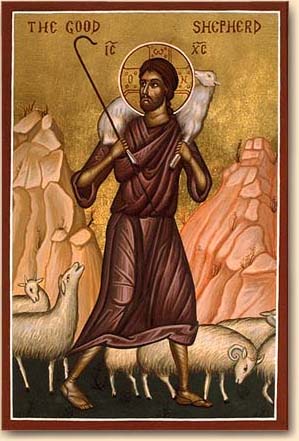
Ich bin der gute Hirte. Meine Schafe hören meine Stimme, und ich kenne sie, und sie folgen mir, und ich gebe ihnen das ewige Leben.
Johannes 10,12.27f
“The Resurrection Mass in Stavropoleos” von Theodor Aman (1831-1891) Bucharest, Rumänien.
Mit Freuden zart zu dieser Fahrt lasst uns zugleich fröhlich singen, beid, groß und klein, von Herzen rein mit hellem Ton frei erklingen. Das ewig Heil wird uns zuteil, denn Jesus Christ erstanden ist, welchs er lässt reichlich verkünden.
Er ist der Erst, der stark und fest all unsre Feind hat bezwungen und durch den Tod als wahrer Gott zum neuen Leben gedrungen, auch seiner Schar verheißen klar durch sein rein Wort, zur Himmelspfort desgleichen Sieg zu erlangen.
Singt Lob und Dank mit freiem Klang unserm Herrn zu allen Zeiten und tut sein Ehr je mehr und mehr mit Wort und Tat weit ausbreiten: so wird er uns aus Lieb und Gunst nach unserm Tod, frei aller Not, zur ewgen Freude geleiten.
Georg Vetter 1566 (LKG 161)
Fortlaufende Lesung
Mein Sohn, wenn du meine Rede annimmst und meine Gebote behältst, 2 sodass dein Ohr auf Weisheit achthat, und du dein Herz der Einsicht zuneigst, 3 ja, wenn du nach Vernunft rufst und deine Stimme nach Einsicht erhebst, 4 wenn du sie suchst wie Silber und nach ihr forschst wie nach Schätzen, 5 dann wirst du die Furcht des HERRN verstehen und die Erkenntnis Gottes finden. 6 Denn der HERR gibt Weisheit, und aus seinem Munde kommt Erkenntnis und Einsicht. 7 Er lässt es den Aufrichtigen gelingen und beschirmt die Frommen. 8 Er behütet, die recht tun, und bewahrt den Weg seiner Getreuen. 9 Dann wirst du verstehen Gerechtigkeit und Recht und Frömmigkeit und jeden guten Weg. 10 Denn Weisheit wird in dein Herz eingehen, und Erkenntnis wird deiner Seele lieblich sein, 11 Besonnenheit wird dich bewahren und Einsicht dich behüten, – 12 dich zu retten vor dem Weg der Bösen, vor den Leuten, die Falsches reden, 13 die da verlassen die rechte Bahn und gehen finstere Wege, 14 die sich freuen, Böses zu tun, und sind fröhlich über böse Ränke, 15 die krumme Wege gehen und auf Abwege kommen, – 16 dich zu retten vor der fremden Frau, einer Fremden, die glatte Worte gibt 17 und verlässt den Gefährten ihrer Jugend und vergisst den Bund ihres Gottes; 18 denn ihr Haus neigt sich zum Tode und ihre Wege zu den Schatten; 19 alle, die zu ihr eingehen, kommen nicht wieder und erreichen den Weg des Lebens nicht, – 20 dass du wandelst auf dem Wege der Guten und bleibst auf der Bahn der Gerechten; 21 denn die Aufrechten werden im Lande wohnen und die Frommen darin bleiben, 22 aber die Gottlosen werden aus dem Land ausgerottet und die Treulosen daraus vertilgt.
Sprüche 2,1-22
Tageslese
So habt nun acht auf euch selbst und auf die ganze Herde, in der euch der Heilige Geist eingesetzt hat zu Bischöfen, zu weiden die Gemeinde Gottes, die er durch sein eigenes Blut erworben hat. 29 Denn das weiß ich, dass nach meinem Abschied reißende Wölfe zu euch kommen, die die Herde nicht verschonen werden. 30 Auch aus eurer Mitte werden Männer aufstehen, die Verkehrtes reden, um die Jünger an sich zu ziehen. 31 Darum seid wachsam und denkt daran, dass ich drei Jahre lang Tag und Nacht nicht abgelassen habe, einen jeden unter Tränen zu ermahnen. 32 Und nun befehle ich euch Gott und dem Wort seiner Gnade, der da mächtig ist, euch zu erbauen und das Erbe zu geben mit allen, die geheiligt sind.
Apostelgeschichte 20,28-32
Wir beten mit der Kollekte für Misericordias Domini (Der gute Hirte)
Allmächtiger, ewiger Gott, der Du von den Toten ausgeführt hast den großen Hirten der Schafe, und durch sein Wort uns zu seiner Herde rufst. Wir bitten Dich, gib uns Deinen Heiligen Geist, daß wir die Stimme des guten Hirten erkennen und ihm von Herzen nachfolgen, daß uns weder Welt, Sünde noch Tod aus seiner Hand reißen bis zu Deinem Tage, da ein Hirte und eine Herde sein werden, der Du, dreieiniger Gott, lebest und regierst von Ewigkeit zu Ewigkeit. Amen.
Orate fratres S.133
Es segne und behüte Euch Gott, der allmächtige und barmherzige, der Vater, Sohn + Heiliger Geist
Ich bin der gute Hirte. Meine Schafe hören meine Stimme, und ich kenne sie, und sie folgen mir, und ich gebe ihnen das ewige Leben.
Johannes 10,12.27f
Die Sonn, die Erd, all Kreatur, alls, was betrübet war zuvor, das freut sich heut an diesem Tag, da der Welt Fürst darniederlag. Halleluja.
Drum wir auch billig fröhlich sein, singen das Halleluja fein und loben Dich, Herr Jesu Christ; zu Trost Du uns erstanden bist. Halleluja.
Nikolaus Herman 1560 (LKG 160,13-14)
Fortlaufende Lese
Die Weisheit ruft laut auf der Straße und lässt ihre Stimme hören auf den Plätzen. 21 Sie ruft im lautesten Getümmel, am Eingang der Tore, sie redet ihre Worte in der Stadt: 22 Wie lange wollt ihr Unverständigen unverständig sein und ihr Spötter Lust zu Spötterei haben und ihr Toren die Erkenntnis hassen? 23 Kehrt euch zu meiner Zurechtweisung! Siehe, ich will über euch strömen lassen meinen Geist und euch meine Worte kundtun. 24 Wenn ich aber rufe und ihr euch weigert, wenn ich meine Hand ausstrecke und niemand darauf achtet, 25 wenn ihr fahren lasst all meinen Rat und meine Zurechtweisung nicht wollt, 26 dann will ich auch lachen bei eurem Unglück und euer spotten, wenn Schrecken über euch kommt; 27 wenn Schrecken über euch kommt wie ein Sturm und euer Unglück wie ein Wetter; wenn über euch Angst und Not kommt. 28 Dann werden sie nach mir rufen, aber ich werde nicht antworten; sie werden mich suchen und nicht finden. 29 Weil sie die Erkenntnis hassten und die Furcht des HERRN nicht erwählten, 30 meinen Rat nicht wollten und all meine Zurechtweisung verschmähten, 31 darum sollen sie essen von den Früchten ihres Wandels und satt werden an ihren Ratschlägen. 32 Denn den Unverständigen bringt ihre Abkehr den Tod, und die Toren bringt ihre Sorglosigkeit um; 33 wer aber mir gehorcht, wird sicher wohnen und ohne Sorge sein und kein Unglück fürchten.
Sprüche 1,20-33
Tageslese
Als Jesus das geredet hatte, ging er hinaus mit seinen Jüngern über den Bach Kidron; da war ein Garten, in den gingen er und seine Jünger. 2 Judas aber, der ihn verriet, kannte den Ort auch, denn Jesus versammelte sich oft dort mit seinen Jüngern. 3 Als nun Judas die Schar der Soldaten mit sich genommen hatte und Knechte der Hohenpriester und Pharisäer, kommt er dahin mit Fackeln, Lampen und mit Waffen. 4 Da nun Jesus alles wusste, was ihm begegnen sollte, ging er hinaus und sprach zu ihnen: Wen sucht ihr? 5 Sie antworteten ihm: Jesus von Nazareth. Er spricht zu ihnen: Ich bin’s! Judas aber, der ihn verriet, stand auch bei ihnen. 6 Als nun Jesus zu ihnen sprach: Ich bin’s!, wichen sie zurück und fielen zu Boden. 7 Da fragte er sie abermals: Wen sucht ihr? Sie aber sprachen: Jesus von Nazareth. 8 Jesus antwortete: Ich habe euch gesagt: Ich bin’s. Sucht ihr mich, so lasst diese gehen! 9 Damit sollte das Wort erfüllt werden, das er gesagt hatte: Ich habe keinen von denen verloren, die du mir gegeben hast.
Johannes 18,1-9
Wir beten mit der Kollekte für Misericordias Domini (Der gute Hirte)
Allmächtiger, ewiger Gott, der Du von den Toten ausgeführt hast den großen Hirten der Schafe, und durch sein Wort uns zu seiner Herde rufst. Wir bitten Dich, gib uns Deinen Heiligen Geist, daß wir die Stimme des guten Hirten erkennen und ihm von Herzen nachfolgen, daß uns weder Welt, Sünde noch Tod aus seiner Hand reißen bis zu Deinem Tage, da ein Hirte und eine Herde sein werden, der Du, dreieiniger Gott, lebest und regierst von Ewigkeit zu Ewigkeit. Amen.
Orate fratres S.133
Es segne und behüte Euch Gott, der allmächtige und barmherzige, der Vater, Sohn + Heiliger Geist
Ich bin der gute Hirte. Meine Schafe hören meine Stimme, und ich kenne sie, und sie folgen mir, und ich gebe ihnen das ewige Leben.
Johannes 10,12.27f
Heut gehn wir aus Ägyptenland, aus Pharaonis Dienst und Band, und das recht Osterlämmelein, wir essen heut im Brot und Wein. Halleluja.
Auch essen wir die süßen Brot, die Mose Gottes Volk gebot, kein Sauerteig soll bei uns sein, daß wir leben von Sünden rein. Halleluja.
Der schlagend Engel vorübergeht, kein Erstgeburt er bei uns schlägt, unsrer Türschwelln hat Christi Blut, bestrichen, das hält uns in Hut. Halleluja.
Nikolaus Herman 1560 (LKG 160,10-12)
Fortlaufende Lese
Mein Sohn, gehorche der Zucht deines Vaters und verlass nicht das Gebot deiner Mutter; 9 denn das ist ein schöner Schmuck für dein Haupt und eine Kette an deinem Halse. 10 Mein Sohn, wenn dich die bösen Buben locken, so folge nicht. 11 Wenn sie sagen: »Geh mit uns! Wir wollen auf Blut lauern und den Unschuldigen nachstellen ohne Grund; 12 wir wollen sie verschlingen wie das Totenreich die Lebendigen, und die Frommen sollen sein wie die, welche hinunter in die Grube fahren; 13 wir wollen kostbares Gut finden, wir wollen unsre Häuser mit Raub füllen; 14 wage es mit uns! Einen Beutel nur soll es für uns alle geben« 15 mein Sohn, wandle den Weg nicht mit ihnen, halte deinen Fuß fern von ihrem Pfad; 16 denn ihre Füße laufen zum Bösen und eilen, Blut zu vergießen. 17 Denn es ist vergeblich, das Netz auszuspannen vor den Augen der Vögel. 18 Sie aber lauern ihrem eigenen Blut auf und trachten einander nach dem Leben. 19 So geht es allen, die nach unrechtem Gewinn trachten; er nimmt ihnen das Leben.
Sprüche 1,8-19
Tageslese
Die Ältesten unter euch ermahne ich, der Mitälteste und Zeuge der Leiden Christi, der ich auch teilhabe an der Herrlichkeit, die offenbart werden soll: 2 Weidet die Herde Gottes, die euch anbefohlen ist, und achtet auf sie, nicht gezwungen, sondern freiwillig, wie es Gott gefällt, nicht um schändlichen Gewinns willen, sondern von Herzensgrund, 3 nicht als solche, die über die Gemeinden herrschen, sondern als Vorbilder der Herde. 4 So werdet ihr, wenn erscheinen wird der Erzhirte, die unverwelkliche Krone der Herrlichkeit empfangen.
1. Petrus 5,1-4
Wir beten mit der Kollekte für Misericordias Domini (Der gute Hirte)
Allmächtiger, ewiger Gott, der Du von den Toten ausgeführt hast den großen Hirten der Schafe, und durch sein Wort uns zu seiner Herde rufst. Wir bitten Dich, gib uns Deinen Heiligen Geist, daß wir die Stimme des guten Hirten erkennen und ihm von Herzen nachfolgen, daß uns weder Welt, Sünde noch Tod aus seiner Hand reißen bis zu Deinem Tage, da ein Hirte und eine Herde sein werden, der Du, dreieiniger Gott, lebest und regierst von Ewigkeit zu Ewigkeit. Amen.
Orate fratres S.133
Es segne und behüte Euch Gott, der allmächtige und barmherzige, der Vater, Sohn + Heiliger Geist
Ich bin der gute Hirte. Meine Schafe hören meine Stimme, und ich kenne sie, und sie folgen mir, und ich gebe ihnen das ewige Leben.
Johannes 10,12.27f
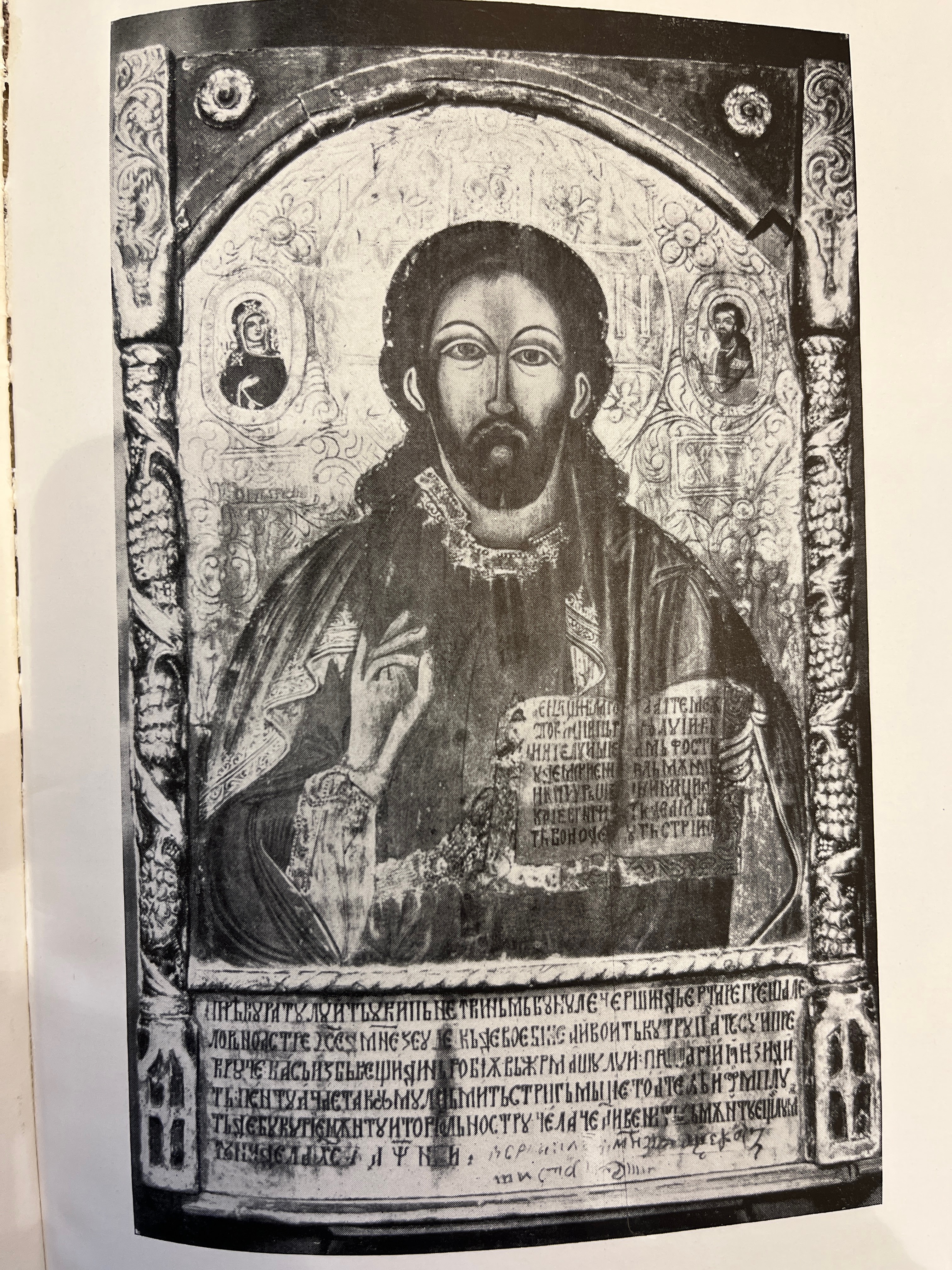
“Christus Pantokrator” (Allherrscher) Rumänische Ikone aus dem 18.Jhd (C.Heinrich Wendt, 1953
Unser Simson, der treue Held, Christus, den starken Löwen fällt, der Höllen Pforten er hinträgt, dem Teufel all sein Gwalt erlegt. Halleluja.
Jonas im Walfisch war drei Tag, so lang Christus im Grab auch lag, denn länger ihn der Tod kein Stund in seim Rachen behalten kunnt. Halleluja.
Sein Raub der Tod mußt fahren lan, das Leben siegt und gwann ihm an, zerstört ist nun all seine Macht. Christ hat das Leben wiederbracht. Halleluja.
Nikolaus Herman 1560 (LKG 160,7-9)
Fortlaufende Lese
Dies sind die Sprüche Salomos, des Sohnes Davids, des Königs von Israel, 2 um zu lernen Weisheit und Zucht und zu verstehen verständige Rede, 3 dass man annehme Zucht, die da klug macht, Gerechtigkeit, Recht und Redlichkeit; 4 dass die Unverständigen klug werden und die Jünglinge vernünftig und besonnen. 5 Wer weise ist, der höre zu und wachse an Weisheit, und wer verständig ist, der lasse sich raten, 6 dass er verstehe Sprüche und Gleichnisse, die Worte der Weisen und ihre Rätsel. 7 Die Furcht des HERRN ist der Anfang der Erkenntnis. Die Toren verachten Weisheit und Zucht.
Sprüche 1,1-7
Tageslese
Da sie nun das Mahl gehalten hatten, spricht Jesus zu Simon Petrus: Simon, Sohn des Johannes, liebst du mich mehr, als mich diese lieb haben? Er spricht zu ihm: Ja, Herr, du weißt, dass ich dich lieb habe. Spricht Jesus zu ihm: Weide meine Lämmer! 16 Spricht er zum zweiten Mal zu ihm: Simon, Sohn des Johannes, hast du mich lieb? Er spricht zu ihm: Ja, Herr, du weißt, dass ich dich lieb habe. Spricht Jesus zu ihm: Weide meine Schafe! 17 Spricht er zum dritten Mal zu ihm: Simon, Sohn des Johannes, hast du mich lieb? Petrus wurde traurig, weil er zum dritten Mal zu ihm sagte: Hast du mich lieb?, und sprach zu ihm: Herr, du weißt alle Dinge, du weißt, dass ich dich lieb habe. Spricht Jesus zu ihm: Weide meine Schafe! 18 Wahrlich, wahrlich, ich sage dir: Als du jünger warst, gürtetest du dich selbst und gingst, wo du hinwolltest; wenn du aber alt bist, wirst du deine Hände ausstrecken und ein anderer wird dich gürten und führen, wo du nicht hinwillst. 19 Das sagte er aber, um anzuzeigen, mit welchem Tod er Gott preisen würde. Und als er das gesagt hatte, spricht er zu ihm: Folge mir nach!
Johannes 21,15-19
Wir beten mit der Kollekte für Misericordias Domini (Der gute Hirte)
Allmächtiger, ewiger Gott, der Du von den Toten ausgeführt hast den großen Hirten der Schafe, und durch sein Wort uns zu seiner Herde rufst. Wir bitten Dich, gib uns Deinen Heiligen Geist, daß wir die Stimme des guten Hirten erkennen und ihm von Herzen nachfolgen, daß uns weder Welt, Sünde noch Tod aus seiner Hand reißen bis zu Deinem Tage, da ein Hirte und eine Herde sein werden, der Du, dreieiniger Gott, lebest und regierst von Ewigkeit zu Ewigkeit. Amen.
Orate fratres S.133
Es segne und behüte Euch Gott, der allmächtige und barmherzige, der Vater, Sohn + Heiliger Geist