
 Truly the righteous attain life, but whoever pursues evil finds death. (Pro 11:19 NIV)
I have the same hope in God as these men themselves have, that there will be a resurrection of both the righteous and the wicked. (Act 24:15 NIV)
Truly the righteous attain life, but whoever pursues evil finds death. (Pro 11:19 NIV)
I have the same hope in God as these men themselves have, that there will be a resurrection of both the righteous and the wicked. (Act 24:15 NIV)
 And if what was transitory came with glory, how much greater is the glory of that which lasts! (2Co 3:11 NIV)
Just look at those millions of grateful believers, who living and dying have saluted the office of the ministry – this wonderful service of the New Testament – over the past millennia. Can you behold the blessing, trust and recognition this most holy office found with those, who made use of it most and then needed it least? When finally that blessed crowd of uncountable saints is assembled before his heavenly throne will there be something else that they will praise higher and be more thankful for than the means of grace in word and sacraments offered to them by this holy office of the ministry? I don’t believe so. The prophet Daniel proclaims ages ago: “Those who are wise will shine like the brightness of the heavens, and those who lead many to righteousness, like the stars for ever and ever.” (Dan 12:3 NIV) Then it will become manifest for all to see, what was shrouded in invisibility here. St. Paul the apostle writes that the clarity and dignity of the ministry will remain. So this honor must be there already. It is firmly set in the heavens, but the believers also nurture it most devotedly here on earth.
Now that St. Paul has magnified this office of the ministry before your very eyes – much more than I could ever have – I ask you, whether this office of the ministry is with you in clarity and honor and glory too? The lofty praises and glories of political parties and powers is fleeting indeed. While many have written off the office of the ministry before, it still holds its own throughout the world and wherever God doesn’t punish us as we deserve it, but rather is gracious and merciful preserving this wonderful ministry in good stead and health too.
We pray o faithful God for all your pastors, bishops and teachers, whom you have called to serve your people with the preaching and teaching of your most holy word in law and gospel. Grant and promote in and through them your Holy Spirit, so that they will be faithful in guiding, keeping and nurturing your flock under your care and protection – you the good shepherd and archbishop himself. Build your church even among us. Through Jesus Christ your Son our Lord. Amen. (Strassbourg 1565)
Preserve your Word and preaching. The truth that makes us whole, The mirror of your glory, The power that saves the soul. Oh, may this living water, This dew of heavenly grace, Sustain us while here living Until we see your face. (Andreas Gryphius 1616-1664)
This is a rather free translation of Wilhelm Löhe’s devotion for Friday after the twelfth Sunday after the high holiday and festival of the Holy Trinity. It is found on Pg. 303 in Lob sei Dir ewig, o Jesu! (Eternal Praise to you o Jesus!) edited by A. Schuster and published in the Freimund Verlag, Neuendettelsau 1949.
 The LORD sends poverty and wealth; he humbles and he exalts. (1Sa 2:7 NIV)
Give, and it will be given to you. (Luk 6:38 NIV)
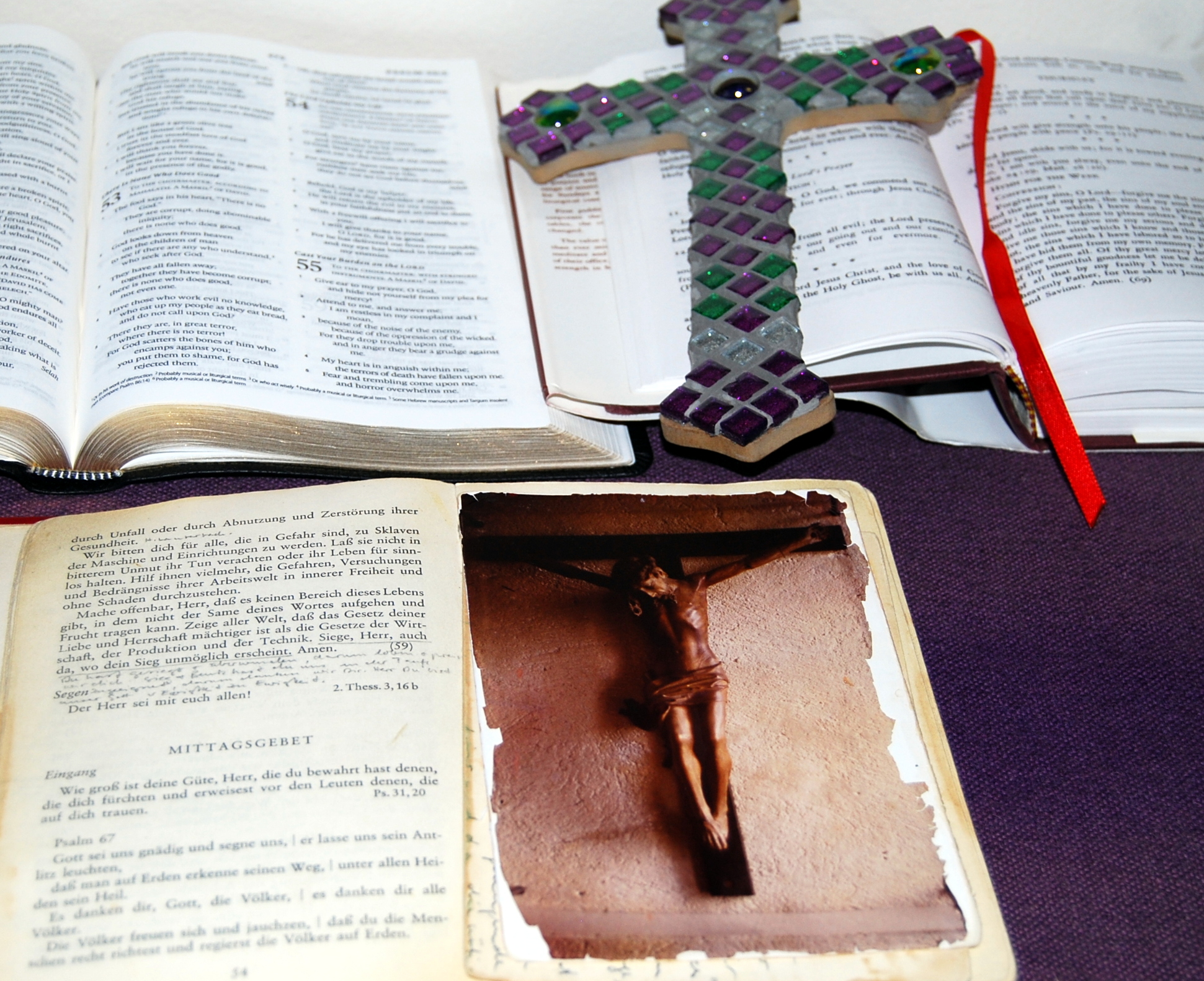 If the ministry that brought condemnation was glorious, how much more glorious is the ministry that brings righteousness! (2Co 3:9 NIV)
The office of the ministry has clarity and grants clarity too. Yet those brethren carrying the yoke of this office are like Moses – the most troubled amongst people. That will be revealed one day. Then the Lord will let some of them shine like the heavens glory, then we will recognize from what dark night of dire straights and heavy burdens of sorrow and distress they were delivered to everlasting light and gladness. If I had time and space I would sing the praises of this office. Now it is but a sigh pertaining its glory and a tear shed for our sinfulness that I can offer for this wonderful passage. I know, many have not plucked the fruits of Word and Sacrament and therefore despise the office of the ministry – if they take note of it at all. However the apostle writes about the office of the ministry in the most elaborate fashion and highest praises – and the Church follows him in this as she has done throughout the ages. The saints in heaven as well as those on earth too speak the same language and are of filled with similar gratitude and joy that God has blessed them so magnificently through the precious gifts of this ministry of his and his called and ordained servants. They are all of the same mind that this delightful ministry is so precious because of the means of grace entrusted to it. That is the fruitful tree granting life and Spirit. That is their experience. This they share with those, who have ears to hear. They sing the praises of the office, which by the grace of God will remain to the very end – just like the holy Christian Church. It will serve and bless until the Lord returns in glory. It will prepare his holy bride for the eternal wedding bliss in heaven.
Merciful God, heavenly Father! We thank you from the bottom of our heart, that your Son instituted the holy office of the ministry here on earth and that you have preserved and promoted it throughout the ages even until this very time. We ask you, lead all faithful preachers and teachers in your holy Christian Church so that they would proclaim your word purely and truthfully and thus build your kingdom in this world and also among us. Through Jesus Christ, your Son our Lord. Amen. (Prussian Agenda 1895)
Come – those loyal to the king – gather under his banner and let his praises sound even in sorrow and grief. He has entrusted us the priceless treasure of his truth and love. That’s why we are gathered here – and if your afraid? – just lift your eyes and behold your King.
May he embolden our faith and purify our love, ignite our hearts and let our tongues aglow proclaim his grace amongst his people to waken those asleep. Even if our eyes don’t behold his future plans in detail yet, he leads us through the darkness to eternal light. No lock or barrier will stop his progress, so let’s sing glad and grateful. (Friedrich Spitta, 1852-1924)
This is a rather free translation of Wilhelm Löhe’s devotion for Thursday after the twelfth Sunday after the high holiday and festival of the Holy Trinity. It is found on Pg. 303 in Lob sei Dir ewig, o Jesu! (Eternal Praise to you o Jesus!) edited by A. Schuster and published in the Freimund Verlag, Neuendettelsau 1949.
 Then we cried out to the LORD … and the LORD heard our and saw our misery, toil and oppression. (Deu 26:7 NIV)
During the days of Jesus’ life on earth, he offered up prayers and petitions with fervent cries and tears to the one who could save him from death, and he was heard because of his reverent submission. (Heb 5:7 NIV)
 This mornings confessional address on James 5,13-18 can be heard here:
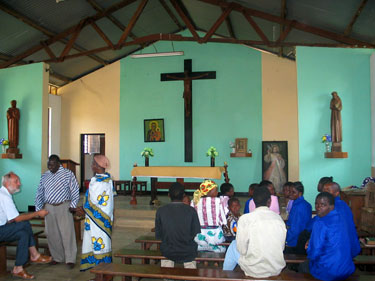 Will not the ministry of the Spirit be even more glorious? (2Co 3:8 NIV)
Wherever the Spirit is, there life is too. And vice versa: Wherever there is not life, there no Spirit is either. That is why Luther translated the expression “ministry of the Spirit” appropriately as the “ministry, which gives the Spirit”. Emperors and kings have an office pleasing to God and instituted by him also. However these forms of government and political authority don’t have a “ministry of the Spirit”. They don’t propagate that and nobody looks for that with them either. Let us look even further back in history and time – right into the age of the Old Testament and concentrate on the office of Moses and his brother Aaron, but also at that of the priests and prophets. Is it justified to call their office and ministry a service that gives the Spirit? The apostle Paul rejects this notion outright. He calls the office of the Old Testament an office of the letter. Therefore the office of the New Testament, the ministry that Jesus Christ instituted by calling the apostles is unique. There is no other office or ministry that gives and transmits the Holy Spirit. That quiet pastor, who serves rather unobtrusively at the altar and preaches faithfully from the pulpit is perhaps disregarded by the high and mighty and all that count in the eyes of men. He might even seem rather helpless if not even a poor burden to most outsiders, who would not consider his demise a loss at all. Yet – in the eyes of God and also in the eyes of those, whom he serves – he has a very precious and high calling and vocation: To preach and to administer the most holy sacraments by which God gives the only saving faith where and when it pleases him in those who hear the gospel. May he never forget it and carry out his duty and obligation joyfully and with gladness and conviction!
Almighty and eternal God, by your inexpressible grace and mercy of your dear Son you have called us to the testament of the Holy Spirit. We plead you: Take the haze and obstructions from our eyes that we may see the clarity of your precious gospel and that it may mirror itself in our lives and we enlightened from one clarity to the next. We ask this in the name of your Son Jesus Christ, who lives and reigns with you and the Holy Spirit now and forever. Amen. (Evangelical Hymn- and Prayerbook 1817)
Equip us poor children with your gifts that we have strength and courage of faith added to a passion for your house and people. Yes, grant that we would gladly give a world with many treasures, all human honour and recognition, our time, body and life for this big and holy challenge.
Grant us that lofty spirit of those early confessors in the apostolic band, who readily defied all ridicule and shame to preach the blood of Christ to all! Let us confess this truth that has made us free and full of joy – oh grant that we don’t give it up, but rather stay in league with you and yours. (Karl Johann Philipp Spitta, 1801-1859)
This is a rather free translation of Wilhelm Löhe’s devotion for Wednesday after the twelfth Sunday after the high holiday and festival of the Holy Trinity. It is found on Pg. 302 in Lob sei Dir ewig, o Jesu! (Eternal Praise to you o Jesus!) edited by A. Schuster and published in the Freimund Verlag, Neuendettelsau 1949.
 He will proclaim peace to the nations. (Zec 9:10 NIV)
Let the peace of Christ rule in your hearts, since as members of one body you were called to peace. And be thankful. (Col 3:15 NIV)
 The Lutheran Order of Service for the 13th Sunday after Trinity is available here in isiZulu and seTswana. Today it comes with a sermon based on God’s word in the gospel of St. Matthew the 6th chapter verses 1-4 by the late Rev. Aaron Ntuli (LC Enhlanhleni, KZN) in isiZulu (wz1343130825 n Tr 13) and translated as usual into seTswana (wt1343130825 n Tr 13) by my father Rev. E.A.W.Weber DD (Welbedacht, KZN).
The readings for this Sunday are:
Old Testament: Genesis 4:1-16a
The Epistle: 1.John 4:7-12
The Gospel: Luke 10:25-37
The liturgical colour is green.
May you have a very blessed weekend and have time to meditate on the watchword for this Sunday: “The King will reply, ‘I tell you the truth, whatever you did for one of the least of these brothers of mine, you did for me.’ (Mat 25:40 NIV) – and if you are called to preach this weekend, may the triune God give you joy and strength, enthusiasm and wisdom, knowledge and insight – and the true words and pictures to preach his holy will purely and his promises faithfully! However if you are not preaching, but listening – then listen as if God is talking to you + His precious gospel is “the power of God for the salvation of everyone who believes.” (Rom 1:16 NIV)
We thank the Lutheran Heritage Foundation for supporting the distribution of hard-copies of these orders of worship and sermons throughout Southern Africa. If you also want a copy please do not hesitate to subscribe by writing to EAWWeber@bundunet.co.za.


Political comment: Economic freedom fighters
Adv Johan Kruger, Director: Centre for Constitutional Rights
The Economic Freedom Fighters (EFF) was established earlier this year by ousted African National Congress Youth League (ANCYL) leader, Julius Malema and others with the objective of “pursuing the struggle for economic emancipation“. The EFF is now applying to the Independent Electoral Commission (IEC) for registration as a political party. Although, according to their “Founding Manifesto”, the EFF will “contest political power…in order to capture the state“, their “primary role of mass organisation and activism, as a means to raise the political consciousness of the people, will remain the bedrock of [their] political practice“.
Our constitutional democracy is founded upon a multi-party system of government in which the right to participate in all aspects of this system of democratic government is recognised by, and enshrined in, the Constitution.
Section 19 of the Constitution, for instance, provides that “every citizen is free to make political choices, which includes the right to form a political party; to participate in the activities of, or recruit members for, a political party; and to campaign for a political party or cause“. In turn, section 18 determines that everyone has the right to freedom of association, whilst section 16 provides for freedom of expression – of course subject to the provision that the latter freedom does not extend to propaganda for war, incitement of imminent violence, or advocacy of hatred – based on race, ethnicity, gender or religion – and that constitutes incitement to cause harm. In addition, section 17 allows everyone the right to assemble, demonstrate, picket and present petitions in a manner that is peaceful and unarmed. The EFF and similar groupings to the left and right thus, in principle, have a right to participate and engage in politics of the day.
Our constitutional democracy is, however, also founded upon the values of human dignity, the achievement of equality, the advancement of human rights and freedoms, non-racialism, non-sexism, the supremacy of the Constitution and the rule of law. The Bill of Rights consequently enshrines the rights – including political rights – of all people, which may only be limited in terms of section 36 and other specific provisions of the Bill. As such, section 19 and the right to form a political party which is to be registered as such, is for example limited by section 16 theElectoral Commission Act of 1996 (the Act) which prohibits the chief electoral officer from registering a political party in terms of that Act under certain circumstances. This includes instances where the proposed name, distinguishing mark or symbol, or constitution or deed of foundation of that party contains anything which, among others, “portrays the propagation or incitement of violence or hatred“, or which “causes serious offence to any section of the population” on a number of grounds – including race, ethnic origin, culture or language.
Therein rests the possible predicament for the EFF and the IEC, given the EFF’s unique and peculiar posture and proposals, as expressed in their “Founding Manifesto”.
Does the EFF’s proposed name, distinctive symbols, or “Founding Manifesto” contain anything which represents such “propagation or incitement of violence or hatred“, or which could cause “serious offence to a section of the population” due to the EFF’s take on race, ethnic origin, culture or language? The answer probably differs depending on whether you view yourself, or are believed to be, the “enemy“. I.e. “white monopoly capital and their political co-optees“, “British and Afrikaner capital“, “colonists”, “the post-1994 government [which] has maintained the apartheid and white-supremacist state” and so forth, or the rest – which apparently includes everyone else including “soldiers and the police“.
First, the name. A fighter can be many things. Someone inclined to punch your lights out, or a fiery member of the school debate or sports team not admitting defeat in spite of difficulties or opposition. A freedom fighter, however, may have a more limited meaning. In general and according to the Oxford English Dictionary, the latter is “a person who takes part in a revolutionary struggle to achieve a political goal, especially in order to overthrow their government“. The Oxford US English Dictionary goes even further and describes this designation as “a person who takes part in a violent struggle to achieve a political goal, especially in order to overthrow their government“. A freedom fighter certainly has a particular meaning in context of South Africa’s history. Hence, whether the term, in the case of the EFF in particular, should be viewed as a poetic metaphor or an ominous statement of intent, is open for interpretation. One man’s freedom fighter may well be another’s rebel without a cause.
Secondly, the distinctive logo. Like beauty, it is in the eye of the be(ret)holder. Open for interpretation. It could possibly, if viewed together with the name, assist in clarifying any incorrect interpretations. Whether or not a raised fist clenching an imposing, forward-pointing spear could be seen as representative of a nation’s resolve to live in peace and harmony, may depend on which side of the spear one finds oneself. The EFF logo thus arguably only adds to the ambiguity.
Thirdly, the manifesto. Does the EFF’s “Founding Manifesto” then perhaps clarify any incorrect interpretation of the meaning of their name and logo? That also requires elucidation. According to the Preamble of its 25-page “Founding Manifesto”, the EFF “locate” their proposed “struggle for economic emancipation…within the long resistance of South Africans to racist colonial and imperialist, political, economic, and social domination“. Accordingly, the EFF “intend to elevate this resistance to a decisive victory to vindicate the justness of the cause of liberation wars“. It also intends to “with determination and consistency, associate with the protest movement in South Africa and will join in struggles that defy unjust laws“. One could possibly contend that the text and apparent support for a continued liberation struggle, merely reflects the thoughts and ideas of the spirited and feisty “commissars” of the movement – albeit in a rather warring tone. However, the EFF’s description of its own “character” as a “radical and militant economic emancipation movement that brings together revolutionary, fearless, radical, and militant activists” aimed at “pursuing the struggle for economic emancipation” against its “enemy” (which is identified as “white monopoly capital and their political co-optees“), does appear to be coming pretty close to calling a spear a spear.
Moreover, the statement that the EFF is “guided by revolutionary internationalism and solidarity that defined the politics of the July 26 Movement which led the Cuban Revolutionary struggles” may further shed some light. The “July 26 Movement” derived its name from the failed armed attack on the Moncada Barracks, a military facility in the city of Santiago de Cuba, on 26 July 1953. That movement was subsequently reorganized by, among others, Fidel Castro, Raúl Castro, and Ernesto “Che” Guevara into a guerrilla force who overthrew Cuban dictator Fulgencio Batista. When the EFF’s “Commander-in-Chief” and his “Central Command Team” state that “you are going to be forced to share” after describing themselves as a “militant” movement comprising “militant activists“, inspired by “the July 26 Movement”, one cannot help but wonder whether the order of battle, modus operandi and intended tactics are just hot air, or a pressure cooker about to blow.
The EFF is obviously right about the fact that South Africa remains a deeply unequal society – especially in relation to socio-economic conditions. They are also spot-on when they say that under the watch of the African National Congress (ANC) government, corruption has proliferated, service delivery has declined and quality of services – especially to the poor – has deteriorated. The persistent inequality perpetuated by, among others, failed policies of affirmative action and Black Economic Empowerment, has to be remedied. This, however, must be done in context of the Constitution. The Constitution enshrines the rights to create a political party, to organise political activity, to associate and to speak freely. It does, however, also require of everyone in South Africa to respect the Constitution, the Bill of Rights and each other. Not that the EFF’s proposed policies are necessarily unconstitutional (never mind that the EFF refrains from referring to the Constitution even once), but the manner in which those policies are communicated does appear to be ignorant of the fundamental value of non-racialism.
Accordingly, the EFF’s manifesto could be interpreted as a bona fide and boisterous call for socio-economic equality. It could, however, also be construed as a very militaristic and racist call for forceful and violent action aimed at reclaiming wealth and economies from “colonial and neo-colonial masters“. Depending on the reader, that is. What needs no interpretation, however, is the highly polarising and offensive choice of words in the text of the manifesto. The offensive references to a great number of South Africans – white South Africans in particular – who are being referred to, without any distinction, as “white supremacists“, “colonists” and “imperialists“, even in context of our post-1994 constitutional democracy, needs little explanation. Besides, unfounded assertions such as “those political parties whose agenda and political programme is to continue with white supremacy and the imperialist domination of South Africa” and that “between 1994 and 2004, white farmers evicted more than 1 million farm workers from land“, can hardly be viewed as furthering mutual respect or unity in our diversity. These statements go beyond the realm of addressing persistent inequality and skewed socio-economic conditions and arguably border on outright racism.
The IEC now has to consider whether, in terms of the Act, the EFF is propagating or provoking violence, or evoking emotions of aversion or hatred. The IEC will also have to carefully interpret whether the EFF is causing serious offence to any section of the population on grounds of race, ethnic origin, culture or language. If so, the IEC may of course not register the EFF as a political party. All things are obviously subject to interpretation. Following Nietzche, “whichever interpretation prevails at a given time is a function of power and not truth“. Whether based on the balance of power, or truth of the matter, an interpretation that allows for the EFF’s registration may, arguably, require a stretch of the imagination. However, since the bedrock of their political practice will be “mass organisation” and “activism“, being registered as a political party should be inconsequential to the EFF.
ConsAlert is sent by the Centre of Constitutional Rights of the FW de Klerk Foundation
(Registration number: 031-061-NPO)
Telephone : +27 (0)21 930 3622 | Fax: +27 (0)21 930 3898
info@cfcr.org.za | www.fwdeklerk.org | www.cfcr.org.za
P.O. Box 15785, Panorama, 7506, South Africa
Share this: