
 Give us aid against the enemy, for human help is worthless. (Psa 60:11 NIV)
Jesus Christ said, “Young man, I say to you, get up!” The dead man sat up and began to talk, and Jesus gave him back to his mother. (Luk 7:14-15 NIV)
Give us aid against the enemy, for human help is worthless. (Psa 60:11 NIV)
Jesus Christ said, “Young man, I say to you, get up!” The dead man sat up and began to talk, and Jesus gave him back to his mother. (Luk 7:14-15 NIV)
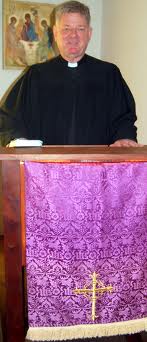 Monday in Trinity 13 (26 August 2013)
LTS Chapel: Pretoria, South Africa
The Law Allows Not Partiality (James 2:1-13)
Psalm: Psalm 24
Hymn: “O Christ, You Walked the Road”-424 LSB
Prayer: Lord of Glory, you have bought us with your blood the ransom price that we might live under You in Your kingdom and serve you in everlasting righteous, innocence, and blessedness even as You have been raised from the dead. Grant us to so hear Your words that me may in repentance and faith live with lowly hearts and minds as those who know are place in Your kingdom and welcome without partially all those whom You have redeemed. Amen.
We typically think of the New Testament letters of I and II Timothy and Titus as the Pastoral Epistles but I submit to you that the Epistle of James is also a pastoral epistle. That is James, like I and II Timothy and Titus, was written to instruct pastors as to how they were to conduct themselves in the church and so fulfill their office in a manner that would be pleasing to the Lord, edifying of His people, and exalting the saving Gospel of our Lord Jesus Christ. James exhorts the brethren “to receive with meekness the implanted word” (1:23) which is able to save their souls and later on, he warns the church saying “let not many of you become teachers, my brethren, for you know that we who teach shall be judged with greater strictness” (3:1). In our text today, James addresses a problem which continues to surface in the church; the problem of pastors showing partiality or favoritism to members or potential members on the basis of wealth and status.
You can well picture the scene. A small, Christian congregation is cramped together in a first century “house church,” and into the assembly of ordinary and generally poor Christians, walks a man whose dress and demeanor indicate that he is obviously wealthy. The pastor sees him enter and he scrambles to fine a comfortable seat – a place of honor – for this well to do visitor to sit. On the other hand, a man clothed not with finery but with thread-bare and dirty coat comes in and he is shuffled away to a corner and told to stand there or to sit not in a chair but on the floor.
Perhaps the pastors to whom James is writing are tempted to think, if we treat this rich guest well maybe he will contribute generously to our church. It could be that this person of prestige has social contacts that would be of help to the struggling congregation; people in the community will think better of our church if they know that this respected citizen, well-endowed with money, is a member of our congregation.
But James condemns this way of reasoning. He chides his readers for it is not only an offense against hospitality and good manners; it is offense against the Lord of Glory, our Lord Jesus Christ who though He was rich, became poor, humbling Himself to take on the form of a servant and give His life as a ransom for many. God has chosen the poor of this world- and here James is not limiting the poor to those who lack money- but the poor in spirit who have no means economic or otherwise to make a claim on God- to inherit His kingdom. So the Christian congregation can show no partiality for all have sinned and fall short of the mark. And God who is rich in mercy, abundant in steadfast love for all who live in the poverty of sin, wills to be gracious to all. He shows no favoritism which would allow those with status or wealth to attempt to justify themselves in His sight by their attitudes or actions.
There can be no partiality for the royal law, the rule of the heavenly kingdom is this: “You shall love your neighbor as yourself.” Making distinctions based on wealth violates God’s Law. James reminds us that this Law cannot be adjusted to fit our failures. One cannot excuse the showing of favoritism with the appeal to how well we have kept the other commandments. We cannot compensate for breaking one commandment by invoking commandments we have supposedly kept. As our text puts it, one cannot argue that because he has not committed adultery, he can be excused of murder. To break a single commandment is to sin against the whole Law. Rather the Law completely and wholly puts us under its judgment and consigns us all to condemnation. Under its strict and unerring measurement, no one is given space for boasting. What the Law demands is freedom from the Law.
That freedom is not found in compromising the Law to make it more easily fulfilled. It is not found in a cafeteria approach to God’s commandments as though we could heap up certain commandments on our plate and leave those that seem too difficult in the serving dish. No freedom from the accusation of the Law is found only under “the law of liberty,” the Word of Truth which alone is able to save your soul. Freedom from the curse of the Law is found only in Jesus Christ who as the Apostle Paul says “is the end of the Law for all who believe.” This Jesus Christ, the Lord of Glory, did not consider it beneath His dignity to come into this world, born in the poverty of Bethlehem as Mary’s Son to be your brother and stoop down to lift you up by dying your death on the cross. In his poverty, He has welcomed you. He makes you rich in the forgiveness of your sins. Yes, even the sin of favoritism. That too is forgiven by Him who showed no favor but redeemed us all not by gold or silver but with His precious blood. So you are now free. Free to welcome others as God in Christ has welcomed you. Amen.
 For if the inheritance depends on the law, then it no longer depends on the promise; but God in his grace gave it to Abraham through a promise. (Gal 3:18 NIV)
No person earns grace by way of the law. Rather grace is a gift from God through Jesus Christ – free and without any merit or worthiness on our part. I hope that there actually are congregations, who understand this doctrine of righteousness by faith alone and justification by grace alone and do not misuse it as a licence to sin. Most evangelical Christians live in carnal security and have gotten so used to the doctrine of grace alone as if it was just another of their countless family traditions and social paradigms. That is why we need to be careful in proclaiming this precious truth of this divine doctrine concerning salvation by faith alone as God’s special and free gift to his people. Too many misuse it as a pillow for their sinful conscience and licence for godless living. It’s rather frightening to hear amongst Christians that this or that sin is not that serious. Going to confession or the Lord’s table will repair the damage. This is a serious misunderstanding of God’s holy will and his ongoing desire and command that we should live holy and righteous lives according to his most holy law. The truth needs to be proclaimed that holy living comes from a true faith – proper faith in God’s grace gives rise to fruits of love and mercy just as a good tree bears good fruit. It just doesn’t fit to sing “By Grace I’m saved, grace free and boundless…” and still continue living the old sinful life. We are called to sanctification – as St. Paul writes to the Philippians: “continue to work out your salvation with fear and trembling, for it is God who works in you to will and to act in order to fulfill his good purpose. (Phi 2:12f NIV)
We bow before you o God, Father of our Lord Jesus Christ that you have given your children strength and will to live according to your commandments and to be sanctified in your truth. Inhabit our hearts o God. Teach us to recognize what we have in you our living God and Lord. Grant that we will bring forth good fruit abundantly. Sanctify, bless and fulfil in our souls the wealth of your holy Word through the power of your Holy Spirit. Amen (Hermann Bezzel)
Oh, that the Lord would guide my ways To keep his statutes still! Oh, that my God would grant me grace To know and do his will! Order my footsteps by your Word And make my heart sincere; Let sin have no dominion, Lord, But keep my conscience clear. Assist my soul, too apt to stray, A stricter watch to keep; If ever I for get your way, Restore your wandering sheep. Make me to walk in your commands, A most delightful road; Nor let my head or heart or hands Offend against my god. (Hymn # 392 from Lutheran Worship Author: William H. Havergal)
This is a rather free translation of Wilhelm Löhe’s devotion for Tuesday after the thirteenth Sunday after the high holiday and festival of the Holy Trinity. It is found on Pg. 308 in Lob sei Dir ewig, o Jesu! (Eternal Praise to you o Jesus!) edited by A. Schuster and published in the Freimund Verlag, Neuendettelsau 1949.
 Our help is in the name of the LORD, the Maker of heaven and earth. (Psa 124:8 NIV)
At the name of Jesus every knee should bow, in heaven and on earth and under the earth, (Phi 2:10 NIV)
 The Lutheran Order of Service for this years holiday of the Harvest festival scheduled for the 1st Sunday in September is available here in isiZulu, seTswana and English. Today it comes with a sermon based on God’s word from the gospel of the apostle St. Matthew in the 6th chapter verses 19-23 by myself in English (Mt 6, 9-15 Harvestfestival 2013) and translated as usual into both isiZulu (wz1344130901 umkhosi wokubonga ukuvuna) and seTswana (wt1344130901 moletlo wa go lebogela thobo) by my father Rev. E.A.W.Weber DD (Welbedacht, KZN).
The readings for the Harvest festival are:
Old Testament: Isaiah 58:7-12
The Epistle: 2.Corinthians 9:6-15
The Gospel: Luke 12,(13-14)15-21
The liturgical colour is green.
May you have a very blessed weekend and have time to meditate on the watchword for the Sunday: The eyes of all look to you, and you give them their food at the proper time. (Psa 145:15 NIV) – and if you are called to preach this weekend, may the triune God give you joy and strength, enthusiasm and wisdom, knowledge and insight – and the true words and pictures to preach his holy will purely and his promises faithfully! However if you are not preaching, but listening – then listen as if God is talking to you + His precious gospel is “the power of God for the salvation of everyone who believes.” (Rom 1:16 NIV)
We thank the Lutheran Heritage Foundation for supporting the distribution of hard-copies of these orders of worship and sermons throughout Southern Africa. If you also want a copy please do not hesitate to subscribe by writing to EAWWeber@bundunet.co.za.
 What I mean is this: The law, introduced 430 years later, does not set aside the covenant previously established by God and thus do away with the promise. (Gal 3:17 NIV)
The more eagerly we strive to attain salvation through good works, the more and clearer our reluctance to do good is revealed. This shows the depravity of the law. It is not capable of moving sinful human beings on the new level of pure, just and righteous living. It’s just not part of the law’s repertoire. This does not only pertain to the law of Moses, but also to the high and lofty ideals and prescriptions of morality and other forms of civil religion. All that is nothing else than a poor reflection of God’s commandments delivered at Mt. Sinai. Human morality only has obligatory persuasion insofar as it contains the law of him, who spoke to his elected people of Israel as an example and exhortation to the rest of the nations by far bigger and greater than this smallest of them all. Indeed morality helps even less to salvation than those archaic rules and regulations dictated to Moses. If the lightning and thunder of that tremendous sermon at Sinai was only helpful to show us our shortcomings, wrongfulness and sinful demeanor and being in the brightest light, then the dim glimmer of worldly morality will not do much more than a bit of moonshine. We are and remain a poor and lowly lineage and can’t live up to God’s lofty standards and divine benchmarks. If we were to be saved by the law, then we would be lost forever. Yet thankfully God had other plans. He didn’t rely on the law to save us, but rather on his gracious Son Jesus Christ.
Since we could not keep what God had commanded in the law, there arose wrath and great distress in many ways before God; the spirit was unwilling to get away from the flesh, especially when the law demanded, our situation was desperate.
It was a misleading delusion to think that God had given his law as if we ourselves could freely live according to his will. The law is in fact a subtle mirror that reveals to us the sinful nature hidden within our flesh
Yet the law had to be fulfilled, or else we were all ruined. God therefore sent his Son to us, who himself became man; he fulfilled the whole law, and so appeased his Father’s wrath which hung over all of us
And since the law has now been fulfilled through him who was able to keep it, each pious Christian should now understand the right form of faith. Nothing more than this: my dear Lord, your death becomes my life, you have paid the price for me.
In this matter I have no doubt, your word cannot deceive. Now you say that nobody should despair, you will never lie about this: anyone who believes in me and is baptized has heaven bought for him, so that he will not be lost. (Paul Speratus 1494-1551 tr Francis Browne 2005)
This is a rather free translation of Wilhelm Löhe’s devotion for Monday after the thirteenth Sunday after the high holiday and festival of the Holy Trinity. It is found on Pg. 306 in Lob sei Dir ewig, o Jesu! (Eternal Praise to you o Jesus!) edited by A. Schuster and published in the Freimund Verlag, Neuendettelsau 1949.
 Within your temple, O God, we meditate on your unfailing love. (Psa 48:9 NIV)
And let us consider how we may spur one another on toward love and good deeds, not giving up meeting together, as some are in the habit of doing, but encouraging one another– and all the more as you see the Day approaching. (Heb 10:24-25 NIV)
 Hier eine Predigt zum heutigen Sonntag über Mt.6,1-4 “Vom Almosengeben”: 130824 Mt6,1-4 13.SnT St.Pauls und als MP3 (es sind nur 15 Minuten. Ich weiss nicht, wie ich die Datei kürzen oder editen kann. Tipps willkommen):
 Brothers and sisters, let me take an example from everyday life. Just as no one can set aside or add to a human covenant that has been duly established, so it is in this case. (Gal 3:15 NIV)
Already in the very first book of the bible – Genesis – God concludes: “Every inclination of the human heart is evil from childhood.” (Gen 8:21 NIV) This is the result of the fall into sin. As God wanted to continue to do good to his people, he resorted to pure grace as a means and way to do this. His plan to educate his people and humanity as a whole in faith was supported by his promise of this heavenly grace as a gift. It is very similar – if not the same – to the way humans prepare a testament during their lifetime. In such a testament a person promises solemnly and legally that at this or that point in time the heir is to receive this or that. The testament therefore is not much else than a promise which precedes the actual gift. That’s the same with God’s promise of grace. He promised that a descendant of Abraham would bring salvation through the forgiveness of sins to all nations. This testament was made out to Abraham. From Abraham to Christmas we have a wonderful waiting period – even if it stretched out for a considerable time and length. Into this time of great expectations falls the bestowal of the law through Moses. This was to make the people receptive for the godly promise. The promise focuses the heart and mind onto the divine goal. The law shepherds towards this goal. The fulfillment grants it and faith receives it. That’s the divine order of salvation (Ordo salutis).
One of our faithful Lutheran Fathers demonstrated this order of salvation to the congregation and Church entrusted to him: God gives it, Christ earns it, faith receives it, works demonstrate it, the Sacraments confirm it, the faithful believer has it here in time through hope, there he will have it eternally as member of God’s household. Therefore be patient and faithful. You are called and redeemed to live with God in holiness and peace eternally.
Oh Lord our God, you are a God of order and peace. You have ordered everything in creation most wisely and wonderfully. Even after the fall into sin, you found a wonderful way of salvation and reconciliation so that your children would not be lost forever, but rather be saved and live with you rather. Thus you rectified and put back on track, what Satan and sinful man had corrupted and defiled by cunning, treachery and evil intent. Oh Lord, let us seek and find our salvation according to your good will and order – and attain it through your grace in Jesus Christ your dear Son, our Lord and savior. Amen.
The sum of all his precious thoughts are full of forbearance, grace and unshaking favour. Even as my soul is in dust and ashes you remain my comfort and my life. (Christian Gregor, 1723-1801)
This is a rather free translation of Wilhelm Löhe’s devotion for the thirteenth Sunday after the high holiday and festival of the Holy Trinity. It is found on Pg. 306 in Lob sei Dir ewig, o Jesu! (Eternal Praise to you o Jesus!) edited by A. Schuster and published in the Freimund Verlag, Neuendettelsau 1949.
 The LORD comes to judge the earth. He will judge the world in righteousness and the peoples with equity. ( Psa 98:9 NIV)
“My food,” said Jesus, “is to do the will of him who sent me and to finish his work.” (Joh 4:34 NIV)
 Wilhelm's space