
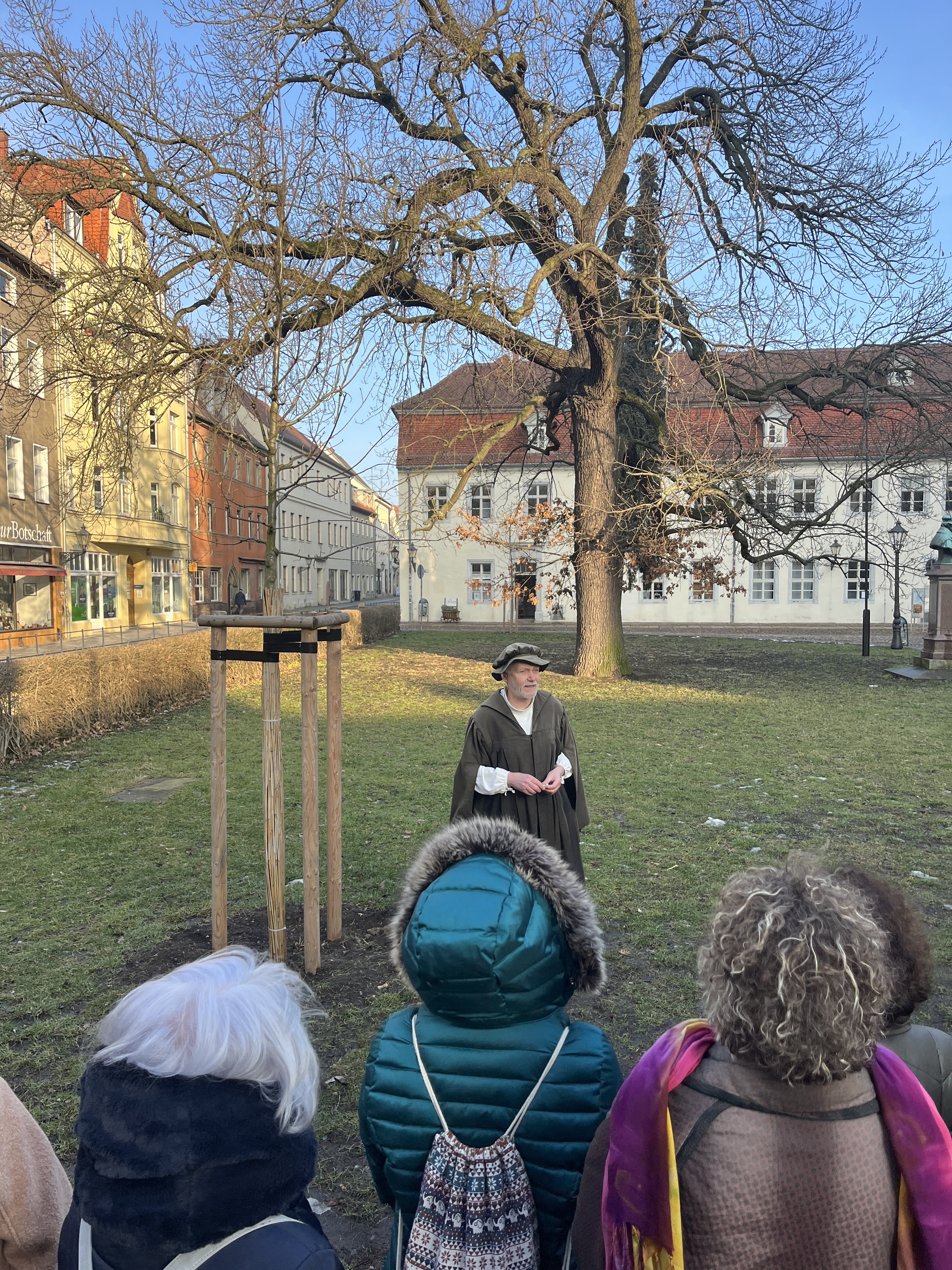
My friend Michael Schicketanz (who poses as Philipp Melanchthon) announced a guided tour of hidden treasures in the old city of Wittenberg (Wittenberger Altstadt).
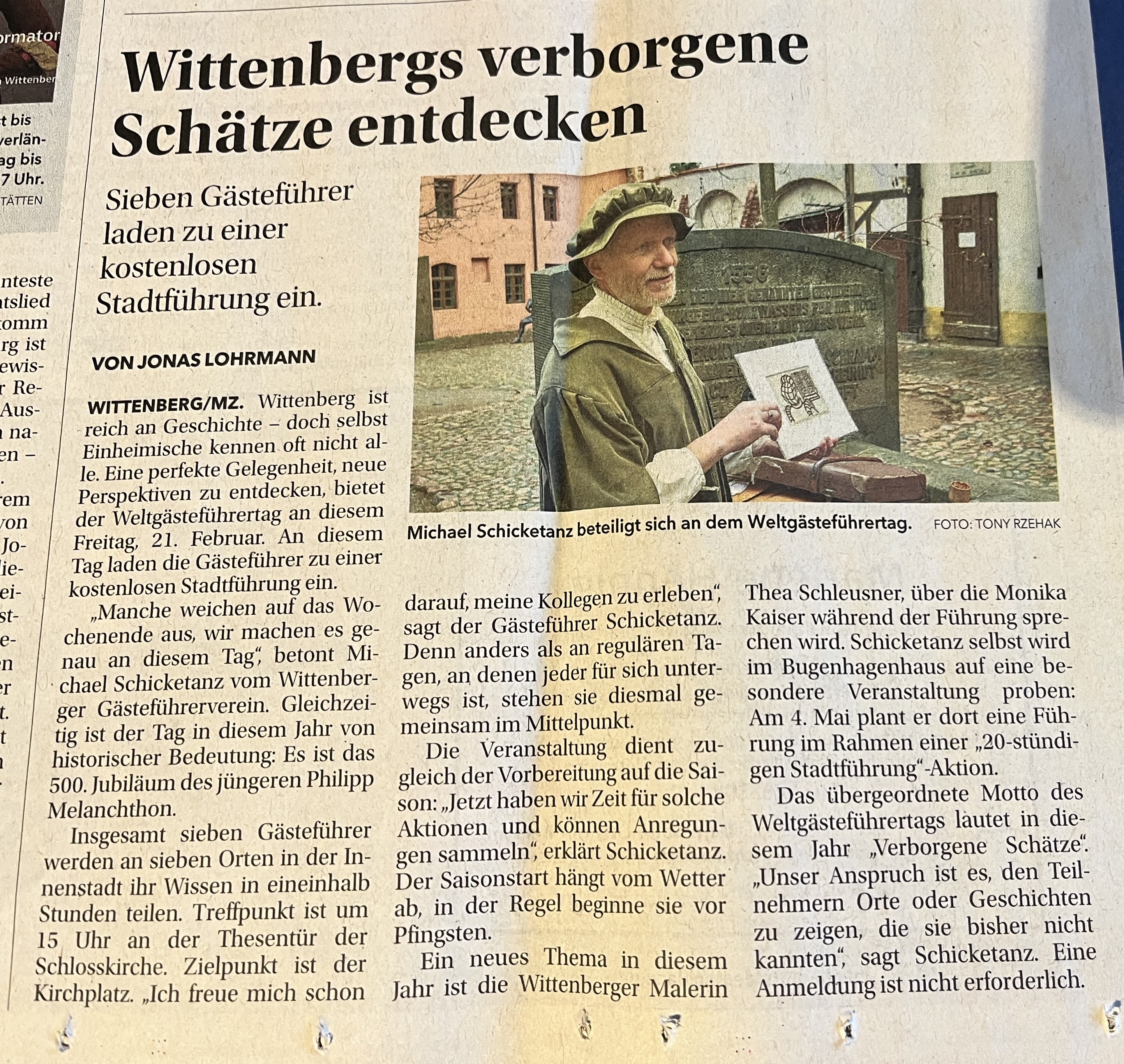
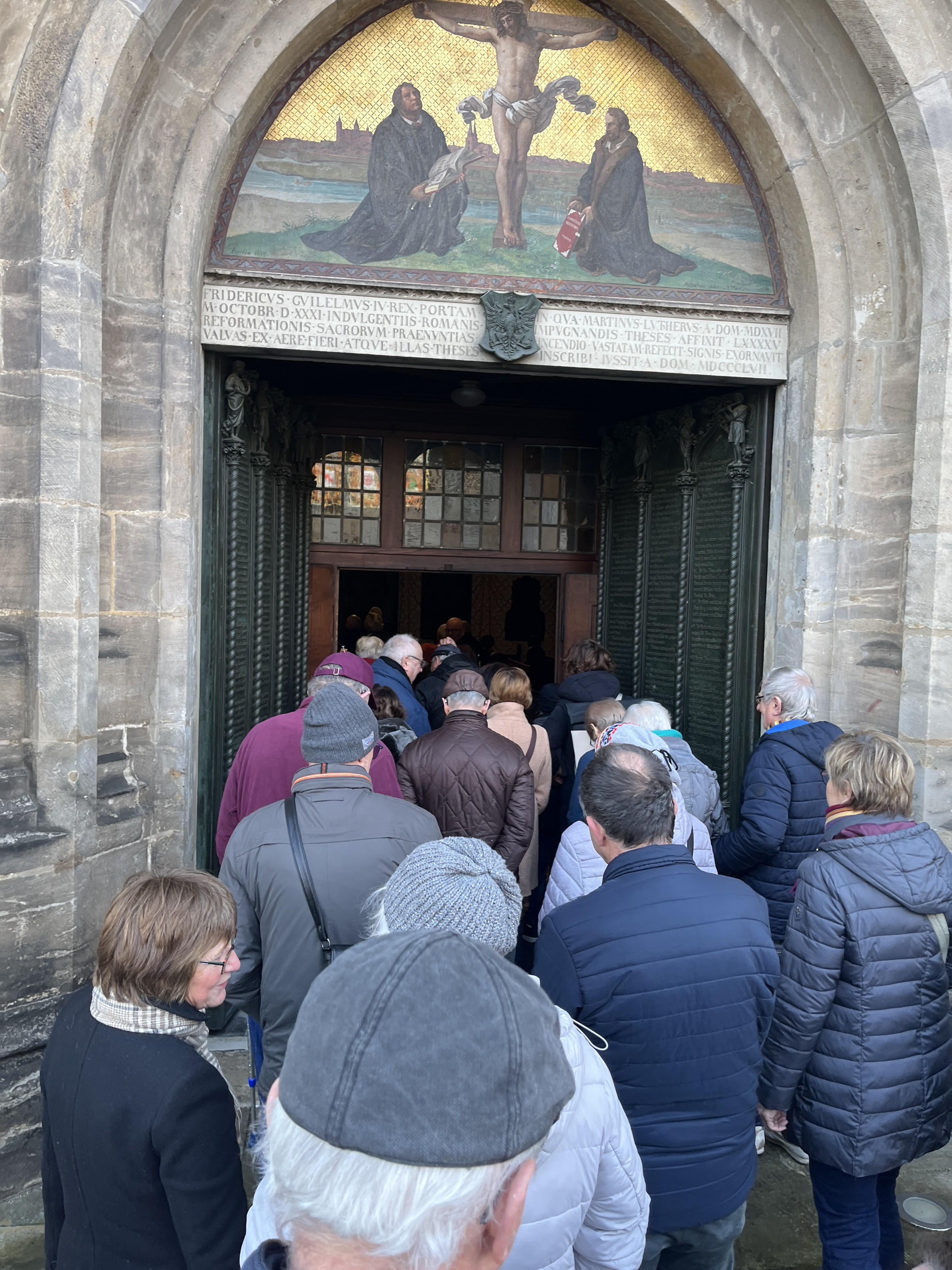
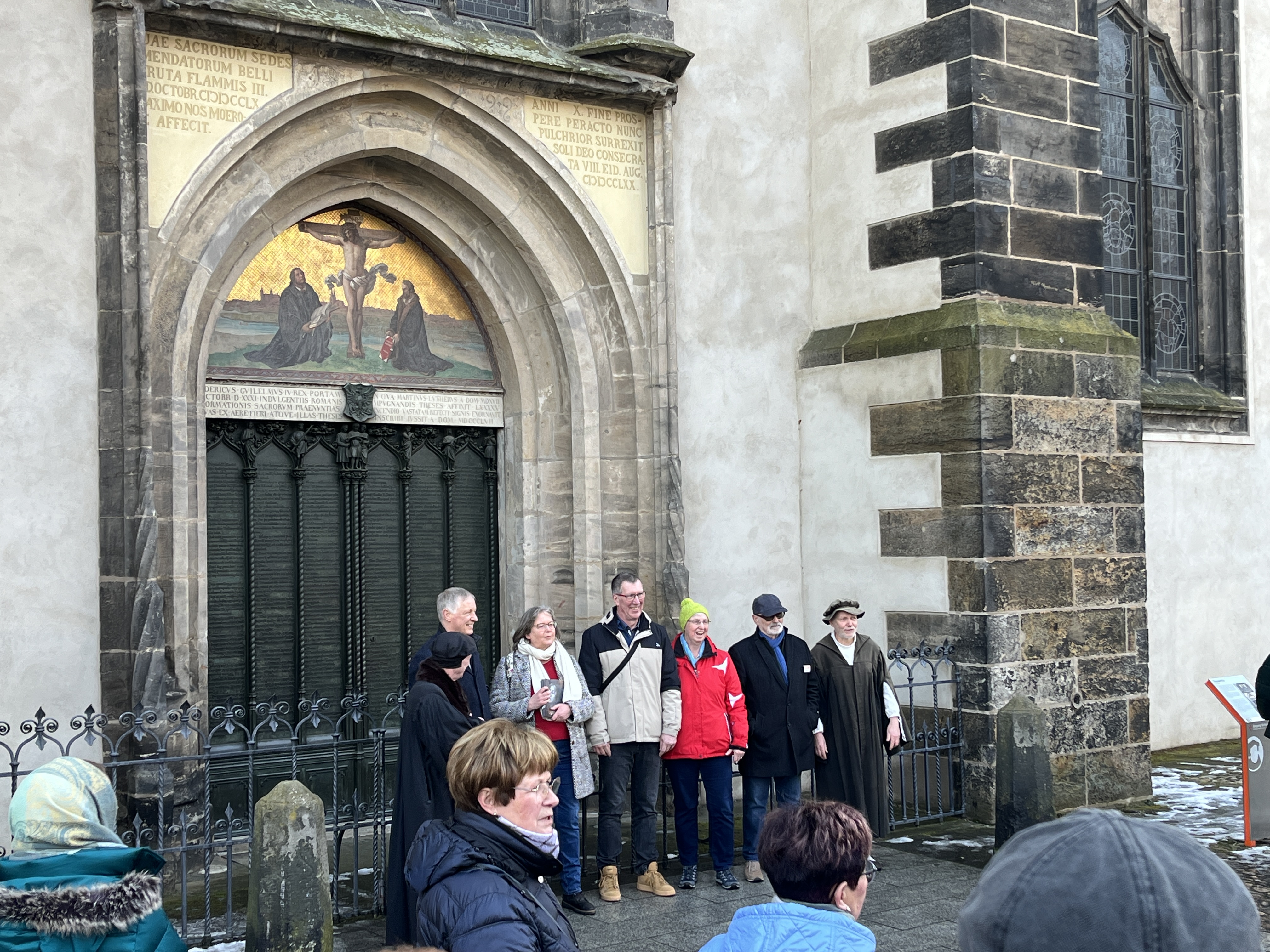
This treasure hunt was scheduled for the official holiday for tour guides (Weltgästeführertag). So Michael and six other local tour guides took us to seven hidden treasures. We started off at the thesis door of the castle church. First photos, then the bronze doors opened. We walked in. The treasure hunt was on.
First off was Helmut Schade He took us to the oldest masonry of the original fortress: A capstone of the first chapel (1340). This treasure was only found five years ago amongst rubble in the cellars. It depicts the victorious lamb of God, who bears the sins of the world – and is a remnant of the very first castle church in Wittenberg. A good start for a tour of hidden treasures.

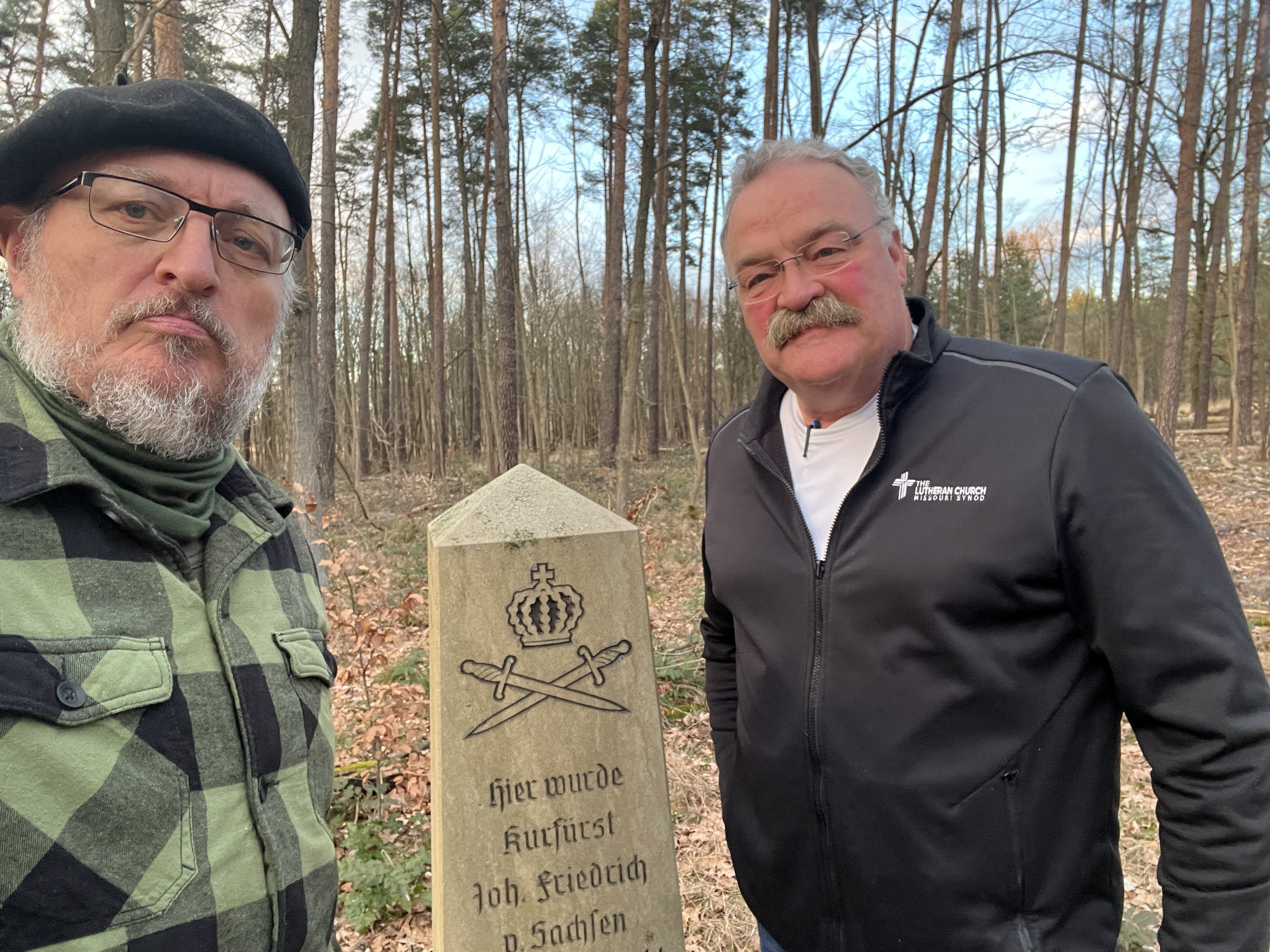
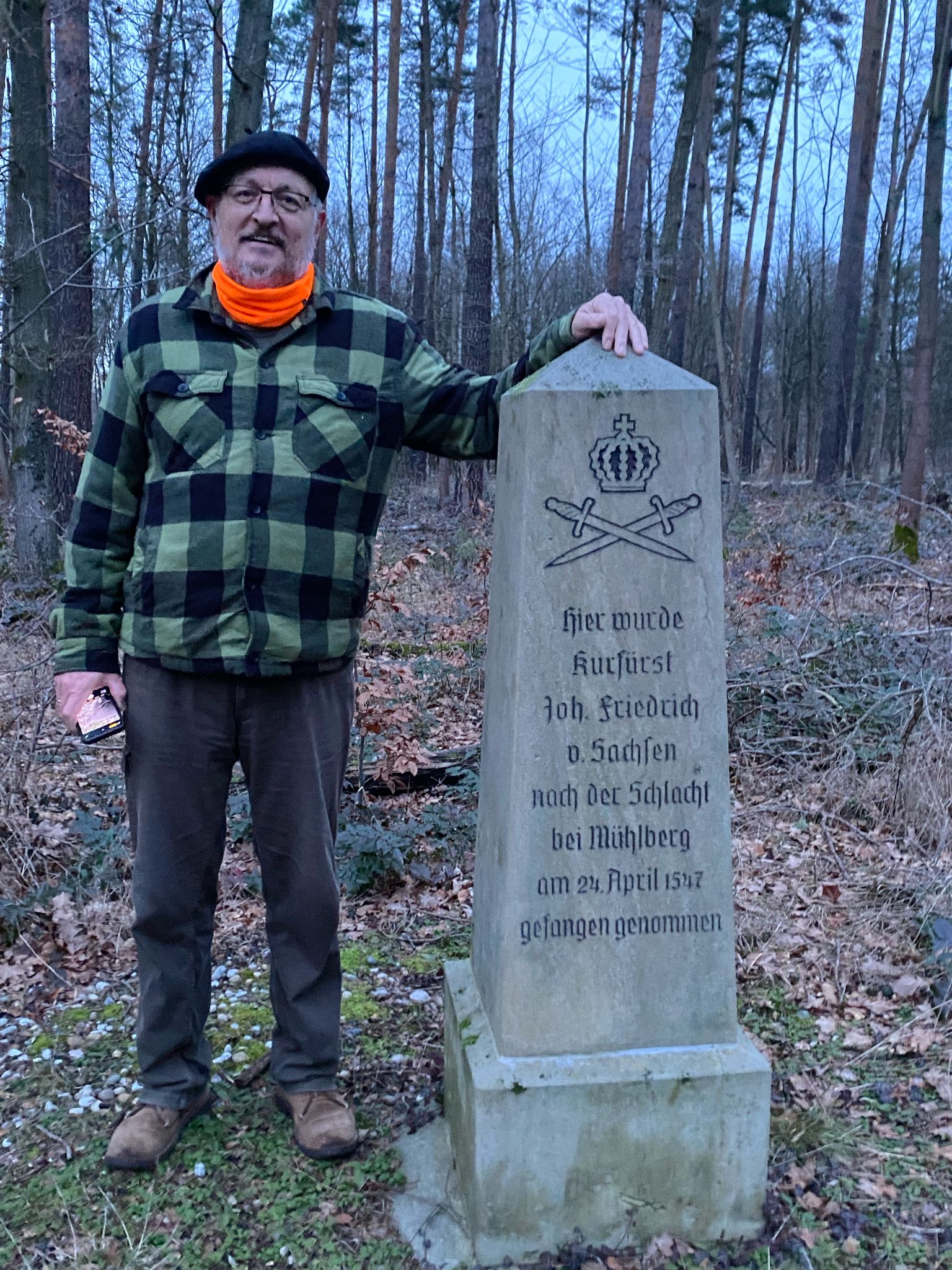
Second was Gerd Thiele. He bought a 2nd hand book in Leipzig to show us a black-and-white sketch of some monument. He had not found it, but is looking. I recognized the sketch. President Matthew Harrison (LCMS) had shared more than a year ago. He had looked for this memorial. It marked the place, where elector Johann Friedrich I, called the Constant, was captured on 24th April 1547 after he had lost the battle of Mühlberg and had fled from the Lochauer Heide – out in the Saxon wilderness north-east of Falkenberg. Looking for this pillar was like looking for a needle in a haystack, yet Angelika and I found it. Here the google coordinates: https://maps.app.goo.gl/MKgDK6XPWvcZejRg7 That was the 2nd hidden treasure on this tour.

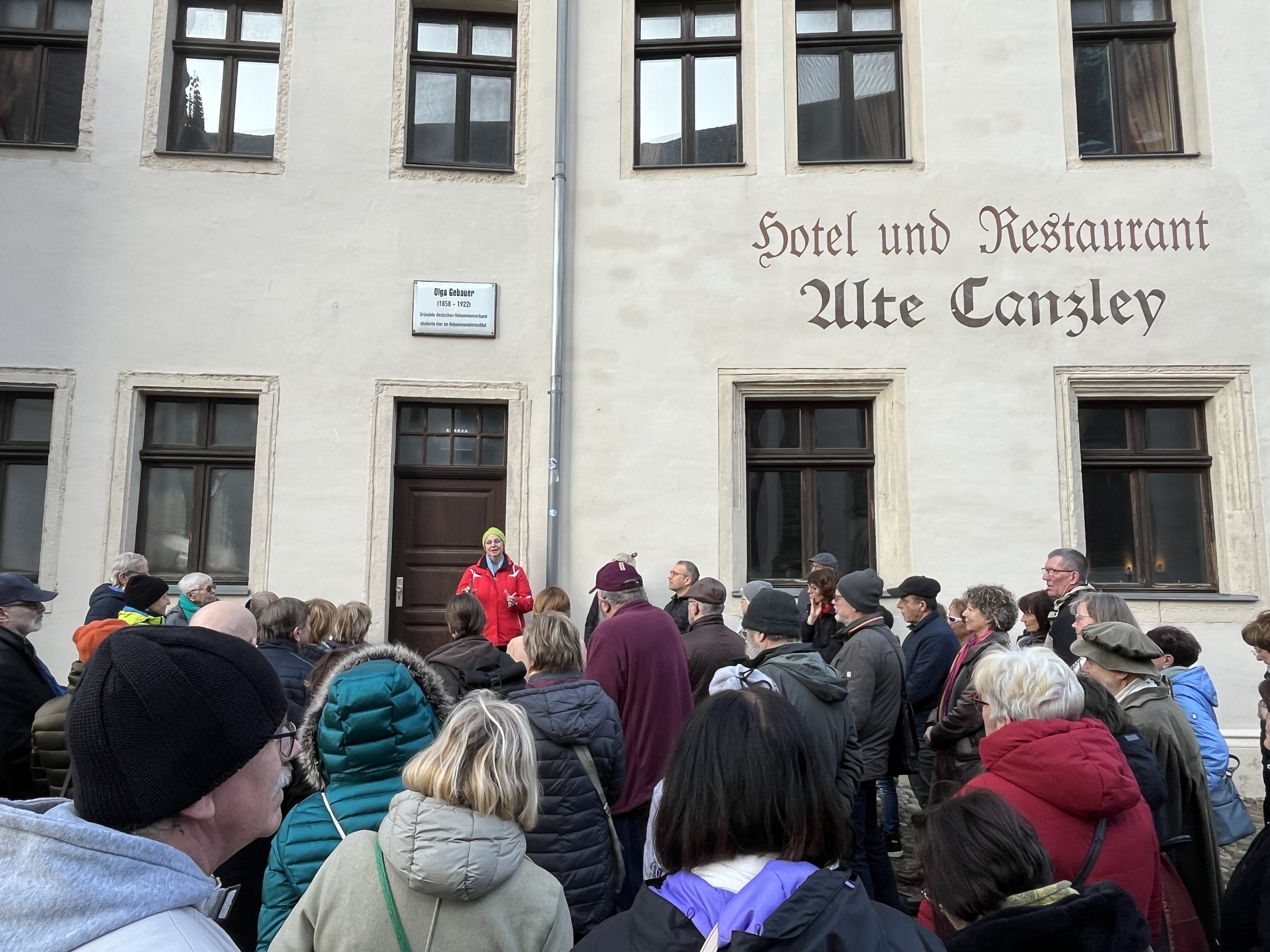
Margot Rentzsch introduced the midwife Olga Gebauer (1858-1922), who started the midwife association of Germany. By the way: The first caesarean birth in Germany was conducted in this town in 1610. Christian Neichel told us about drama queen Caroline Friederike Neuber. Against considerable opposition she promoted art with an educational goal. Dr.Monika Kaiser outlined artist and essayist Thea Schleusner (1879-1964, who lost most of her works during bombings of Berlin in 1945. Some of her paintings are still to be seen in Wittenberg, because she donated them to the city before the war. Frank Beyer told us about the alchemist Johann Faust (1480-1540) from Goethe´s famous novel. Finally Michael Schicketanz took us to Philipp Melanchthon junior´s (1525 – 1605) grave site. It is next to the Old Latin School chapel. The 21st February is Philipp´s birthday. So we sang the canon: “Viel Glück und viel Segen auf all Deinen Wegen.”
All in all, a nice tour of Wittenberg´s hidden treasures. But surely there is more to Wittenberg than that, you might ask. This was not really a feature in the category of: “Was uns unbedingt angeht!” (Schleiermacher) i.e. things of ultimate concern. Fair enough. I don´t believe that either. You could at least mention Dr. Martin Luther and the holy gospel once – although one of the guides (Mathias Tietke) promotes Wittenberg with a book subtitled: “Alles außer Luther!” – “Everything but Luther!” Well, I beg to differ.


 Wilhelm's space